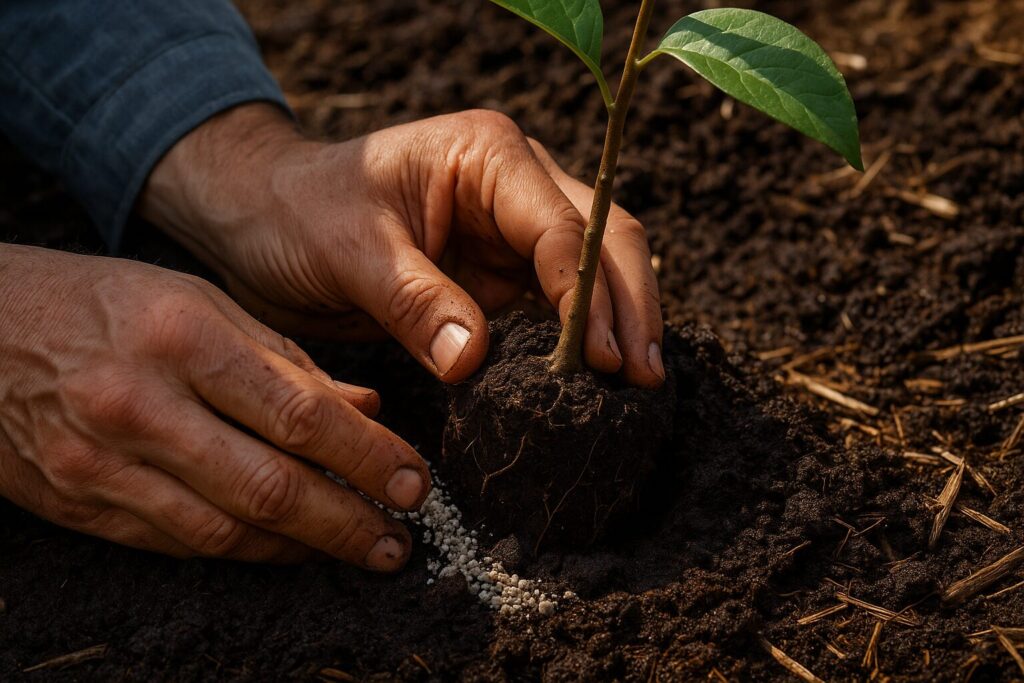
We specialize in crafting edible forest gardens that thrive in Seattle’s unique climate through thoughtful permaculture design. We begin by working closely with you to envision a multilayered landscape where every element, from the towering canopy of dwarf fruit trees to the low-growing herbaceous layer, serves both function and beauty. Our planning process incorporates guild planting, soil-building techniques, and rainwater harvesting to create a self-sustaining ecosystem. nce, and water efficiency.
Our hands-on installation and ongoing stewardship set us apart. We conduct a detailed site analysis to identify microclimates, be it a sun-drenched slope for apple varieties or a shaded nook ideal for edible ferns and mushrooms. With carefully selected native and climate-adapted plants, we build dynamic layers that contribute to continuous yield and year-round interest.
At Rutheo Designs, we ground every edible forest garden in permaculture’s three core ethics: earth care, people care, and fair share. Earth care means we work with Seattle’s native ecosystems, restoring acid-balanced soils, protecting mature conifers, and integrating salmon-safe planting practices near waterways. People care guides us to design accessible garden pathways for all ages and abilities, fostering community connection and hands-on learning. Fair share ensures that surplus yields are redistributed through neighborhood swaps or local food banks, reducing waste and strengthening food security.
We translate these ethics into practice by applying permaculture principles such as observing patterns before action, valuing edges, and stacking functions. For example, we map seasonal sunlight and rainfall on your property to position fruit trees where they intercept maximum sun in winter yet offer shade in summer. By valuing edge effects like the intersection between lawn and forest guild, we amplify biodiversity and productivity. Stacking functions means every element serves multiple roles: a bench made from coppiced alder becomes seating, wildlife habitat, and future biomass for hugelkultur mounds. Through “zone” planning, we place high-maintenance herb layers close to the house for easy harvest and low-maintenance nut trees farther out, optimizing daily interactions and reducing upkeep.
Before diving into specific design techniques, we start by getting to know your land as if it were a living system. We walk the site through every season to note how sunlight, wind, and water move across the property. We observe existing vegetation, soil health, and subtle changes in elevation to understand where moisture pools or drains quickly. These observations form the blueprint for positioning plant guilds, paths, and water-management features in ways that honor the natural flow of energy and resources on your land.
We begin every project by mapping your site’s microclimates, small zones with distinct light, temperature, and moisture patterns. In Seattle, sun exposure can vary dramatically between a south-facing slope and a shaded courtyard. We record sunlight hours, prevailing wind directions, and frost pockets to determine the ideal placement for fruit trees, berry shrubs, and shade-tolerant understory plants. Soil samples reveal pH levels, texture, and organic matter content. If a test shows a naturally acidic, clay-rich soil, we amend with lime and coarse compost to improve drainage and root health.
Seattle’s winter rains are both a gift and a challenge. To harness this resource, we contour the land with shallow swales—gentle, level channels that slow runoff and allow water to soak into tree guilds. Overflow zones feed rain gardens planted with moisture-loving natives like skunk cabbage and soft rush, protecting foundations and driveways from erosion. Roof runoff is redirected into storage barrels and permeable recharge pits, ensuring dry-season reserves for drip irrigation. We link these systems to a simple control valve network so you can adjust flow by season or crop need.
Before assembling the layers of your edible forest, we begin by matching plant functions to your site’s unique conditions: sunlight, soil, moisture, and wind. We consider each species’ growth habits, root patterns, and seasonal behavior to ensure they work together, not compete. By defining clear roles such as canopy provider, soil builder, pest repellent, or yield producer, we craft resilient plant communities that support one another year after year.
We choose dwarf and semi-dwarf fruit trees tailored to Seattle’s Zone 8 climate, such as urban-adapted apple and pear cultivars grafted on disease-resistant rootstocks. Under these, we layer nitrogen-fixing red alder or goumi (Elaeagnus umbellata) that enrich the soil without overshadowing smaller trees. Selecting spacing with canopy spread in mind, we ensure good air circulation and light penetration, reducing disease risk and promoting uniform fruit ripening.
A robust guild relies on plants that bolster soil health. We interplant Siberian pea shrub (Caragana arborescens) and goumi to capture atmospheric nitrogen, then cycle it through leaf drop. Dynamic accumulators like comfrey (Symphytum officinale) and yarrow (Achillea millefolium) mine deep minerals like potassium, calcium, phosphorus and deposit them in their leaves. We chop and drop this biomass as mulch, creating a living green manure that feeds microbes and roots alike.
Lower strata bring diversity and continuous harvests. We blend shade-tolerant crops such as ostrich fern fiddleheads, woodland strawberries, and wild leeks (Allium tricoccum) in cooler, moister pockets. Creeping thyme and sweet woodruff act as living mulch, suppressing weeds and reducing soil erosion. In sunnier glades, fast-growing vine crops—hardy kiwi and climbing raspberries—wind up supports, maximizing vertical space without impeding other layers.
To unlock nutrients and improve water uptake, we inoculate root zones with beneficial mycorrhizal fungi. Logs seeded with oyster or shiitake spawn go in shaded corners, yielding mushrooms and gradually decomposing into rich, friable substrate. These fungal networks link trees and shrubs, enhancing resilience against drought and pathogens by expanding the effective root area. By carefully selecting complementary species and arranging them in functional guilds, we create self-reinforcing ecosystems that deliver food, build soil, and foster biodiversity.
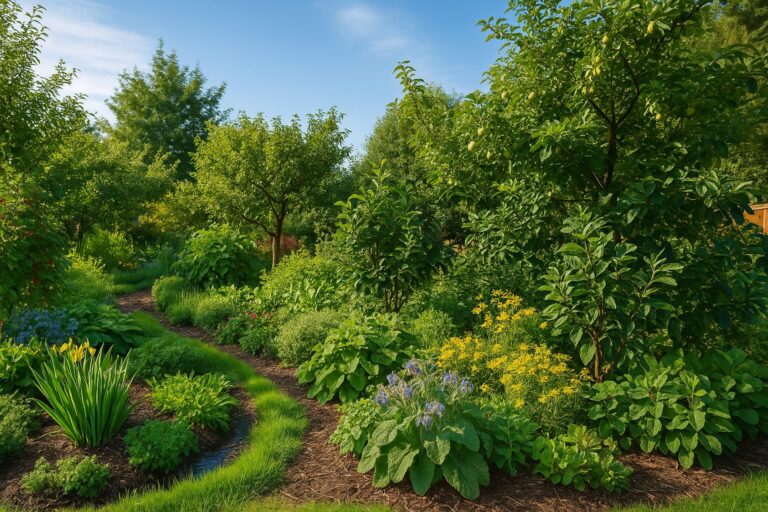
Healthy soil and efficient water management form the backbone of a thriving edible forest garden. We focus on building rich, living soil that supports diverse plant communities and retains moisture through Seattle’s wet winters and dry summers. By working with natural processes encouraging microbial activity, enhancing organic matter, and guiding rainwater into the landscape, we create systems that buffer against drought, reduce erosion, and feed plants from the ground up.
We employ sheet mulching (or “lasagna” mulching) to jump-start soil building without digging. Layers of cardboard or newspaper smother competing grass and weeds, while successive layers of compost, straw, and wood chips decompose into fertile humus. This method fosters earthworm activity, increases water infiltration, and gradually transforms compacted soils into loose, crumbly loam. We top off beds each year with locally sourced compost and approved tree-pruning residues, ensuring a continuous mulch blanket that suppresses weeds, moderates soil temperature, and feeds the root zone with steady nutrients.
To capture Seattle’s winter rainfall, we dig gentle swales along contour lines, slowing runoff and directing water into planting areas where tree guilds can soak it in. Excess overflow feeds rain gardens populated with moisture-loving natives like skunk cabbage and soft rush, which filter sediments and protect hardscapes from saturation. In summer, we switch to drip irrigation fed by stored rainwater barrels, delivering moisture precisely to root zones and minimizing evaporation. This combined approach balances wet-season storage with dry-season delivery, reducing water use and keeping soil biology active year-round.
We recognize soil fungi as keystone species in a forest garden’s health. Mycorrhizal fungi form symbiotic networks that extend far beyond a plant’s root hairs, enhancing water uptake and nutrient exchange, especially phosphorus and trace minerals. We introduce both ectomycorrhizal inoculants for canopy and sub-canopy trees and arbuscular mycorrhizal fungi for shrubs, herbs, and groundcovers. By blending commercial inoculum into planting holes or mixing native soil from established woodlands into our compost, we accelerate colonization. This early fungal establishment improves seedling survival, increases drought resistance, and buffers plants against soil-borne pathogens.
Beyond microscopic partnerships, we integrate visible fungal elements—mushrooms—into the garden design. Logs inoculated with shiitake or oyster spawn are positioned in shady guild edges, yielding seasonal crops while slowly breaking down lignin into rich humus. We also apply fungal-enhanced biochar in planting pits to create enduring “hospices” where mycelium thrives, fostering long-term soil structure and aeration. Regular monitoring of moisture levels around logs and root zones ensures consistent fruiting and mycelial spread. Over time, these fungal communities knit together tree, shrub, and herb layers into a resilient web—cycling nutrients, improving soil porosity, and supporting the overall vigor of your edible forest garden.
Begin your journey to a lush, productive edible forest with a personalized consultation. We’ll visit your Seattle property to assess soil health, microclimates, and site contours before crafting a bespoke permaculture design. Our team will outline plant guilds, water-capture features, and soil-building strategies tailored to your goals, whether you envision fruit tree canopies, medicinal herb understories, or mushroom log installations. From initial layout to hands-on installation and seasonal stewardship, we guide you through each phase with clear timelines and sustainable best practices.
Ready to transform your landscape into a thriving food forest? Email us at connect@rutheodesigns.com or call (360) 844-2989 to schedule your consultation or learn more about our full-service edible forest garden offerings.
We use cookies to improve your experience on our site. By using our site, you consent to cookies.
Manage your cookie preferences below:
Essential cookies enable basic functions and are necessary for the proper function of the website.
Google Tag Manager simplifies the management of marketing tags on your website without code changes.
Statistics cookies collect information anonymously. This information helps us understand how visitors use our website.
Google Analytics is a powerful tool that tracks and analyzes website traffic for informed marketing decisions.
Service URL: policies.google.com (opens in a new window)
Google reCAPTCHA helps protect websites from spam and abuse by verifying user interactions through challenges.
Marketing cookies are used to follow visitors to websites. The intention is to show ads that are relevant and engaging to the individual user.
Facebook Pixel is a web analytics service that tracks and reports website traffic.
Service URL: www.facebook.com (opens in a new window)
You can find more information in our Cookie Policy and Privacy Policy.