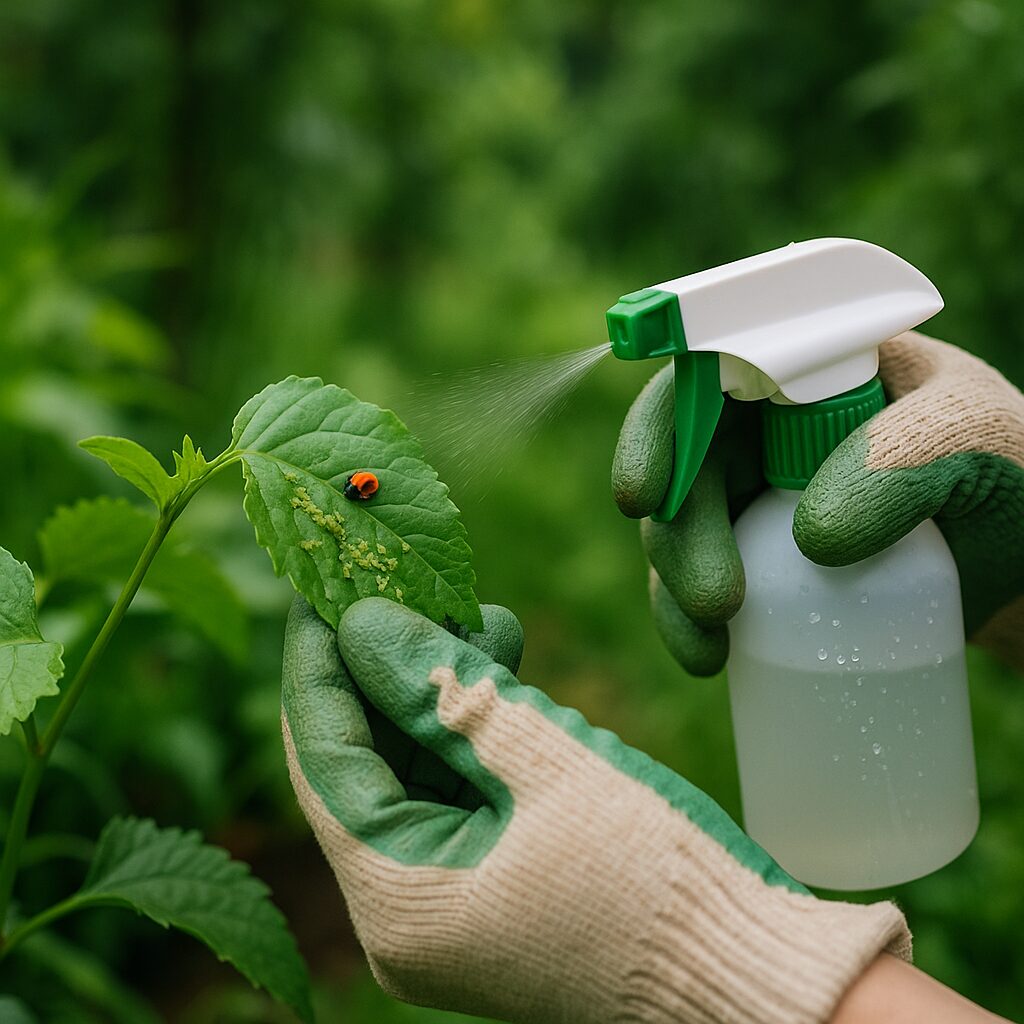
We recognize that Seattle’s unique climate, its abundant rainfall, mild temperatures, and shaded urban canopy create ideal conditions for garden pests and foliar diseases. Our approach begins with integrated pest management, where we monitor pest thresholds and assess plant health through soil microbiome analysis, ensuring disease suppression from the ground up. By grouping inspection, identification, and proactive prevention strategies, we can catch early signs of aphid outbreaks or slug damage before they spread. We also leverage cultural controls, such as proper plant spacing, drip irrigation to reduce leaf wetness, and choosing disease-resistant cultivars suited to the Puget Sound region to create a foundation of resilience in every garden we design. Once we’ve established a healthy framework, our team implements sustainable, nature-based solutions that blend seamlessly into your landscape. We introduce beneficial insects like lady beetles and lacewings, alongside habitat corridors of insectary plantings to attract natural predators.
Accurate diagnosis is rooted in systematic, multi-modal scouting. During peak activity in spring and autumn, we perform twice-weekly visual sweeps, examining the undersides of leaves with pocket microscopes for scale insects, thrips, and aphid colonies. Simultaneously, soil surface traps pitfall and cardboard roll cultures capture slugs, earwigs, and ground beetles, while electronic moisture probes reveal waterlogged zones prone to root-rot pathogens. Each observation is geo-tagged and time-stamped, creating a dynamic pest–pathogen map that guides subsequent treatments.
When field symptoms are ambiguous or outbreaks exceed threshold levels (for example, more than 15% defoliation on hostas), we deploy laboratory analyses. Leaf discs are incubated on selective media to culture pathogens like Botrytis and anthracnose, while qPCR assays detect Phytophthora ramorum and Verticillium dahliae DNA. These diagnostics, paired with our regional pest-report network, allow us to forecast emergent threats, such as rust fungi or bacterial blight and refine our IPM plan before widespread damage occurs.
Our priority is to maintain beneficial insect populations and soil biota while effectively managing pests. We apply horticultural mineral oils and insecticidal soaps at the “soft spray” rate of 1–2% volume-to-volume, targeting soft-bodied pests like whiteflies and mealybugs without disrupting pollinators. Neem oil emulsions, timed at dusk to reduce UV breakdown, interrupt insect hormone pathways and limit oviposition in scale insects. For caterpillar control, we introduce Bacillus thuringiensis kurstaki at label-recommended rates, ensuring specificity to Lepidoptera larvae while leaving non‐target fauna unharmed.
Fungal challenges are addressed with a rotating suite of biofungicides. Trichoderma harzianum applications colonize the rhizosphere, outcompeting pathogens and inducing systemic acquired resistance within host plants. Bacillus subtilis strains are applied as a foliar spray at 2 × 10^8 CFU/mL, creating a living barrier against powdery mildew and downy mildew spores. We augment these with aerated compost teas—brewed on-site for 24 hours in 40-L batches—that deliver humic acids, soluble micronutrients, and beneficial microbes directly to root zones and leaf surfaces.
Preventing pest and disease pressure begins at the design stage. We select disease-resistant cultivars, such as ‘PowWow Wild Berry’ coneflower and ‘Matrona’ sedge and space them according to mature canopy metrics, typically 30–50 cm apart for herbaceous perennials and 1–1.5 m for shrubs. Drip irrigation systems deliver precise soil moisture at 1–1.5 inches per week, reducing overhead wetness that triggers fungal germination. We install soil moisture sensors at 10 cm depth to automate watering cycles and prevent both drought stress and waterlogging.
Routine sanitation and mechanical controls further suppress pathogen reservoirs. In autumn, we remove leaf litter and prune diseased shoots, depositing debris into solarizing bins that reach 60 °C internally to kill spores. We disinfect tools with a 70% isopropyl solution between cuts. Mulch renewals with 5–7 cm of shredded bark limit weed competition and moderate soil temperature swings. In vegetable beds, we implement a four-year crop rotation plan, solanaceous, cucurbit, brassica, and legume families to disrupt pest life cycles and maintain soil fertility.
We leverage predator–prey relationships through strategic releases and habitat creation. Lady beetles (Coccinellidae) are released at densities of 1,000 adults per 1,000 m² when aphid counts exceed 20 per shoot. Predatory mites (Phytoseiulus persimilis) are introduced in greenhouses to control spider mite hotspots. Our insectary strips, composed of native yarrow, dill, buckwheat, and Achillea millefolium, provide continuous nectar and pollen, establishing perennial refuges for beneficials.
Vertebrate allies are integrated as well. Bat boxes mounted 4–6 meters high in quiet corners encourage night-flying insect control, reducing moth and mosquito populations by up to 50%. Bird perches and mixed shrub borders attract songbirds that forage on caterpillars and beetles. In soil-dwelling pest zones, we apply Steinernema carpocapsae nematodes at a rate of 250,000 infective juveniles per square meter, targeting grubs and root maggots without impacting earthworms or beneficial fungi.
Robust soil biology underpins plant resilience. We incorporate compost aged at least six months tested to contain 1–2% humic substances at a rate of 5 L per square meter, stimulating mycorrhizal associations with Glomus intraradices. Green manure cover crops, such as mustard (Brassica juncea) and sunn hemp (Crotalaria juncea), are flailed and tilled in spring to release natural allyl isothiocyanates that suppress nematodes and soil-borne fungi.
Our quarterly soil tests measure pH (aiming for 6.2–6.8), cation exchange capacity, and micronutrients (Fe, Mn, Zn). Based on results, we apply dolomitic lime at 2 kg per 10 m² for calcium and magnesium balance, or elemental sulfur at 100 g per m² to lower pH for ericaceous plantings. In pathogen-prone beds, we implement solarization under transparent polyethylene for six weeks in July–August, elevating soil temperatures above 45 °C to reduce sclerotia counts of Verticillium and Sclerotinia by over 90%.
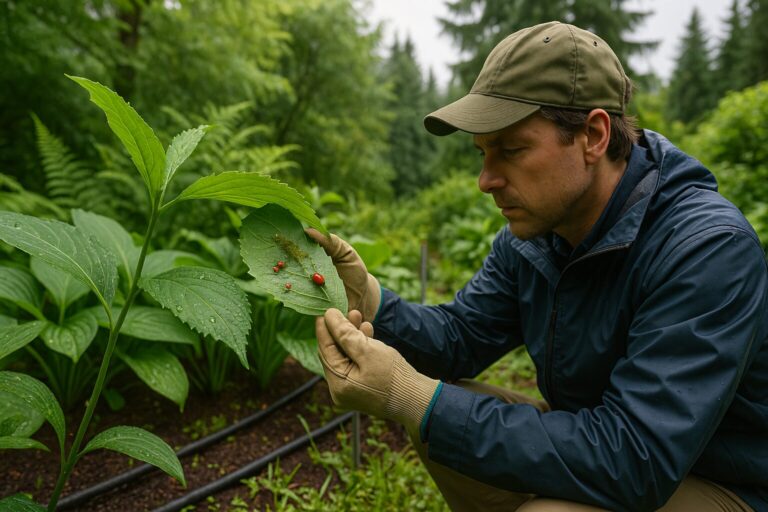
Seattle’s average annual rainfall of 950 mm, concentrated from October to March, demands advanced water management. We design rain gardens and bioswales with Pacific Northwest sedges (Carex obnupta) and rushes (Juncus effusus) to capture and filter stormwater, reducing standing pools that foster Pythium and Phytophthora. Subsurface gravel chambers redirect excess water to dry wells, maintaining consistently moist-but-not-saturated soils.
Shade mapping guides plant selection in woodland-edge gardens. Under dense Douglas fir and western hemlock canopies, we substitute sun-loving cultivars with tolerant natives like Polystichum munitum ferns and Helleborus niger, which maintain stomatal function under low light. For coastal sites exposed to salt spray, we apply foliar silicates at 1% w/v to reinforce leaf cuticles, mitigating salt damage and secondary fungal infections while preserving transpiration rates.
Our vision is a living tapestry of interwoven species that self-regulate over time. We implement polyculture planting schemes, intermixing perennials, shrubs, and bulbs, to disrupt pest host fidelity. Trap crops, such as nasturtium and calendula, serve as early-warning indicators for aphids and whiteflies, allowing us to apply spot treatments before infestations spread.
We equip clients with digital dashboards that track pest thresholds, irrigation volumes, and soil moisture data in real time. Monthly review meetings let us adjust control measures seasonally, ensuring interventions remain precise and resource-efficient. Over successive seasons, gardens designed and maintained by Rutheo Designs evolve into robust ecosystems that support biodiversity, foster plant health, and delight gardeners for years to come.
We offer specialized pest and disease control consultations designed for Seattle’s gardens, blending thorough site assessments with sustainable treatment plans. Whether you need soil health diagnostics, organic fungicide applications, cultural practice guidance, or ongoing monitoring to keep aphids, slugs, and powdery mildew at bay, our team customizes each solution to your landscape’s unique needs. Email us at connect@rutheodesigns.com or call (360) 844-2989 to schedule your consultation and begin safeguarding your garden with Rutheo Designs’ expert IPM strategies.
Explore Organic Pest Management.
We use cookies to improve your experience on our site. By using our site, you consent to cookies.
Manage your cookie preferences below:
Essential cookies enable basic functions and are necessary for the proper function of the website.
Google Tag Manager simplifies the management of marketing tags on your website without code changes.
Statistics cookies collect information anonymously. This information helps us understand how visitors use our website.
Google Analytics is a powerful tool that tracks and analyzes website traffic for informed marketing decisions.
Service URL: policies.google.com (opens in a new window)
Google reCAPTCHA helps protect websites from spam and abuse by verifying user interactions through challenges.
Marketing cookies are used to follow visitors to websites. The intention is to show ads that are relevant and engaging to the individual user.
Facebook Pixel is a web analytics service that tracks and reports website traffic.
Service URL: www.facebook.com (opens in a new window)
You can find more information in our Cookie Policy and Privacy Policy.