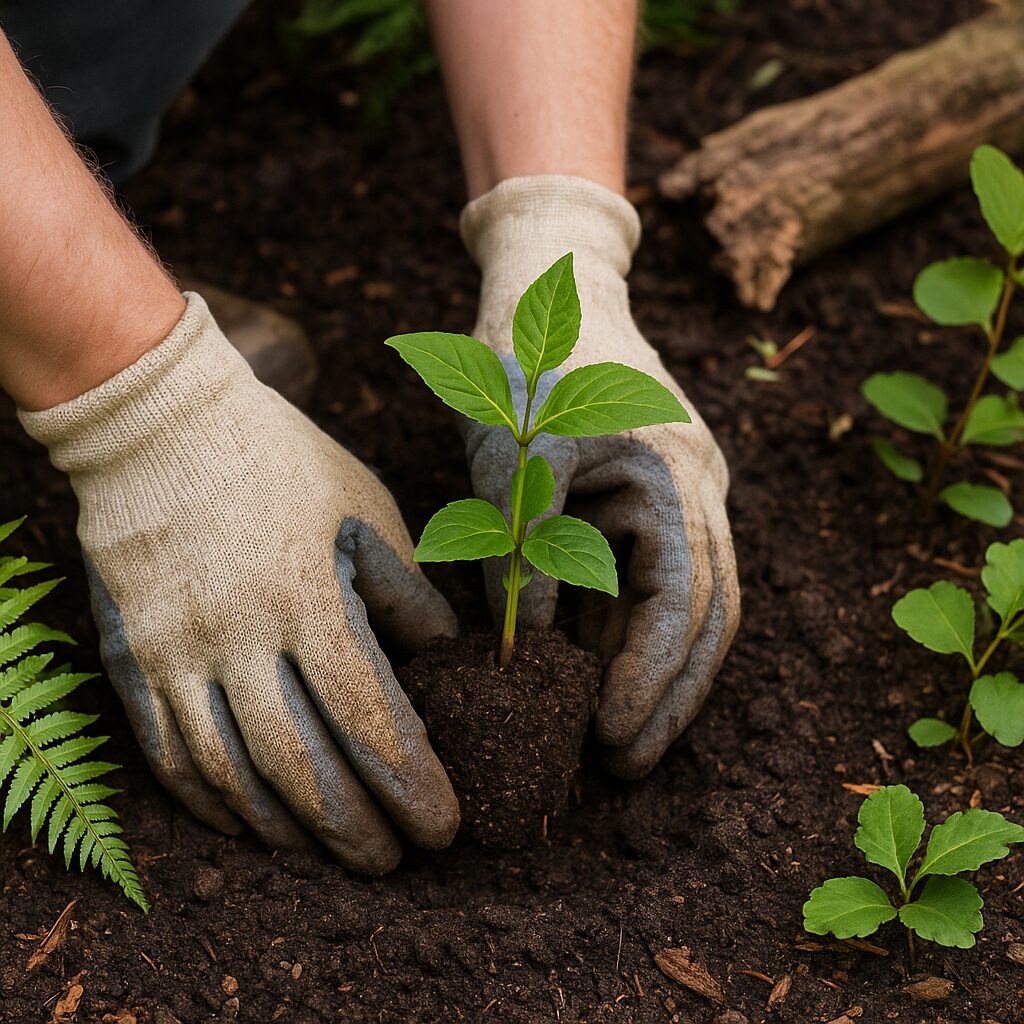
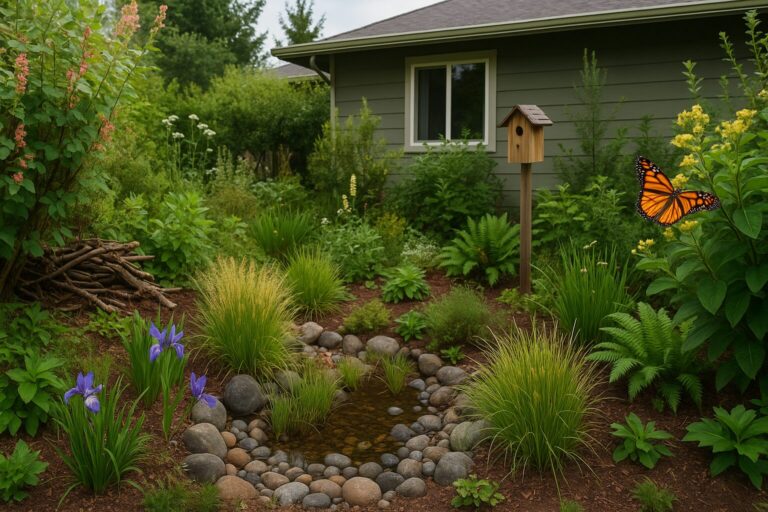
We collaborate with you to craft sustainable landscapes that thrive in Seattle’s unique climate and nurture local wildlife. Our process begins with a comprehensive site analysis assessing sun exposure, soil moisture zones (wet and moderate), and existing vegetation to develop a layered planting palette of regionally native species. By grouping canopy, understory, and groundcover plants into ecological “plant guilds,” we establish resilient communities featuring Douglas fir, red-flowering currant, Oregon grape, coast salal, and sword fern. We integrate rain gardens, ephemeral swales, and biochar soil amendments to capture stormwater, enhance soil health, and support hydric and mesic ecosystems. Drawing on traditional Indigenous ecological knowledge and seasonal phenology, our designs ensure flowering and fruiting cycles align with pollinator emergence, creating a living tapestry that invites hummingbirds, butterflies, and beneficial insects to your garden.
Once your design is finalized, we source regionally propagated stock and install with care, incorporating permeable walkways, reclaimed cedar logs for brush-pile refugia, and custom nest-box installations for small mammals and amphibians. Our adaptive management plans include pruning schedules that respect bird-nesting windows, routine soil tests using bioindicator species, and citizen-science monitoring to track wildlife visits. To enrich your connection with the landscape, we provide educational signposts with QR codes linking to plant identification guides and bird-call recordings. By choosing our services, you’re not only creating a spectacular, low-maintenance garden but also contributing to Seattle’s urban biodiversity corridors—bringing nature’s vitality right to your doorstep.
We begin every project with an in-depth site assessment that maps microclimates, soil types, slope, and existing vegetation. Our team takes soil cores to determine texture and pH, then tests infiltration rates in areas prone to pooling. We also analyze sunlight patterns throughout the day, tracking locations where morning sun shifts to afternoon shade. Recording these factors allows us to delineate planting zones like dry ridges, mesic flats, and moist lowlands that guide plant placement for long-term health and stability.
In parallel, we survey wildlife usage by setting up motion-activated cameras and conducting acoustic monitoring for birds and amphibians. This baseline data reveals where local species forage, nest, or migrate, informing our ecological design. By overlaying these wildlife activity maps with soil and moisture data, we create a layered plan that maximizes habitat value. Our goal is to establish self-sustaining communities where plants and animals co-evolve in balance.
Our plant palette is drawn from Pacific Northwest natives selected for ecological function and resilience. In canopy layers, we choose species like vine maple (Acer circinatum) and Pacific madrone (Arbutus menziesii) for their structural diversity and year-round food sources. Understory plantings include red-flowering currant (Ribes sanguineum) and ocean spray (Holodiscus discolor), which supply early-season nectar and berries for pollinators and songbirds. Groundcover layers rely on lush mats of sword fern (Polystichum munitum) and salal (Gaultheria shallon) to suppress weeds and retain moisture.
We group these species into plant guilds assemblages that share mutual benefits such as nitrogen cycling, mycorrhizal networks, and pest resistance. For example, serviceberry (Amelanchier alnifolia) is paired with nitrogen-fixing red alder (Alnus rubra) and shade-tolerant Oregon grape (Mahonia aquifolium) to create a mini-ecosystem. Each guild occupies a specific moisture niche, from dry slopes to riparian swales, ensuring that every plant is placed where it can thrive with minimal irrigation after establishment.
Incorporating rain gardens and bioswales is pivotal to reducing stormwater runoff and creating new microhabitats. We design each rain garden to capture roof and hardscape flow, sizing basins to handle up to a one-inch rainfall event. Engineered soil media enriched with sand, compost, and biochar ensures rapid infiltration while filtering out urban pollutants. Overflow channels direct excess water into nearby storm drains only when the garden reaches capacity.
Plant choices in these water-holding features include moisture-loving iris (Iris missouriensis) and red-osier dogwood (Cornus sericea), whose dense root systems stabilize soil and provide critical cover for amphibians and insects. Along steeper slopes, we install check dams made from locally sourced logs to slow water velocity and encourage gradual seepage. These features not only serve ecological functions but also add visual texture with seasonal blooms and vibrant seedheads.
Our installation crews follow best-practice horticultural methods. We plant trees and shrubs to the correct depth ensuring the root flare sits just above the soil surface, and backfill with a custom blend of native topsoil, aged compost, and mycorrhizal inoculant. Mulching with shredded Douglas fir bark conserves moisture and reduces weed pressure. On sloped areas, we secure biodegradable erosion-control blankets that lock soil in place until plants establish.
Hardscape elements, such as permeable pavers, reclaimed cedar logs, and locally milled stone—are chosen for minimal environmental impact. Brush-pile refugia created from leftover branches provide shelter for small mammals and reptiles, while custom bird and bat boxes are mounted in safe locations according to species-specific guidelines. Every material we source is vetted for sustainability, from FSC-certified wood to recycled metal fasteners, reducing embodied energy in the landscape.
Once installed, our adaptive maintenance plans ensure that gardens continue to flourish. Seasonal pruning is scheduled around bird-nesting windows to avoid disturbing active nests. Invasive species removal is prioritized in spring when young shoots are easiest to identify and extract by hand, preventing reseeding. We also conduct annual soil tests, measuring organic matter content and microbial activity, and adjust our amendment regime to promote ongoing soil fertility.
We train homeowners in low-impact care techniques, such as spot weeding, mulching refreshes, and targeted water use during summer droughts to foster stewardship. Periodic wildlife surveys, often conducted in collaboration with citizen-science platforms, provide insights into species return rates and biodiversity shifts. These data guide the fine-tuning of plant composition and maintenance schedules, ensuring that the garden evolves in harmony with its inhabitants.
Habitat gardens serve as vital links in Seattle’s urban green network, boosting connectivity between parks, greenbelts, and private properties. By transforming underutilized yards into native-rich oases, we help improve water quality, sequester carbon, and stabilize erosion-prone slopes. Research shows that neighborhoods with dispersed habitat patches experience measurable increases in native pollinator and bird populations within two growing seasons.
Beyond ecological gains, these projects foster community engagement. We partner with local schools and neighborhood groups to host planting days and guided garden walks. Participants learn about native plant identification, soil health principles, and wildlife-friendly practices, empowering them to replicate habitat features in their own landscapes. This ripple effect strengthens ecosystem resilience citywide.
Our wildlife habitat gardens are more than aesthetic retreats; they are dynamic ecosystems that celebrate Seattle’s natural rhythms. Each element, from soil composition to structural habitat features, is intentionally designed to support life cycles, seasonal behaviors, and ecological interactions. As you observe returning hummingbirds, frolicking amphibians, and pollinator activity, your garden becomes a living testament to the power of thoughtful design.
By immersing yourself in this process, you gain a deeper connection to the Pacific Northwest’s biodiversity. We guide you through every step—from planning to hands-on care—so that your landscape not only flourishes under your stewardship but also contributes meaningfully to regional conservation efforts.
Ready to turn your yard into a vibrant wildlife sanctuary? At Rutheo Designs, we provide one-on-one coaching to help you plan, plant, and steward a habitat garden that’s perfectly suited to Seattle’s rainfall patterns, soil types, and native ecosystems. From an initial site consultation, where we evaluate light exposure, soil structure, and existing floranto ongoing guidance on installing rain gardens, selecting pollinator-friendly understory plants, and monitoring wildlife visits, our expert team is with you every step of the way. Whether you’re curious about building brush-pile refugia, establishing seasonal bloom sequences, or implementing organic soil amendments for stronger root networks, we’ll equip you with practical techniques and tailored schedules to ensure your garden flourishes. Email us at connect@rutheodesigns.com or call (360) 844-2989 to schedule your consultation and begin crafting a sustainable landscape that supports both beauty and biodiversity.
Explore Wildlife Habitat Gardening.
We use cookies to improve your experience on our site. By using our site, you consent to cookies.
Manage your cookie preferences below:
Essential cookies enable basic functions and are necessary for the proper function of the website.
Google Tag Manager simplifies the management of marketing tags on your website without code changes.
Statistics cookies collect information anonymously. This information helps us understand how visitors use our website.
Google Analytics is a powerful tool that tracks and analyzes website traffic for informed marketing decisions.
Service URL: policies.google.com (opens in a new window)
Google reCAPTCHA helps protect websites from spam and abuse by verifying user interactions through challenges.
Marketing cookies are used to follow visitors to websites. The intention is to show ads that are relevant and engaging to the individual user.
Facebook Pixel is a web analytics service that tracks and reports website traffic.
Service URL: www.facebook.com (opens in a new window)
You can find more information in our Cookie Policy and Privacy Policy.