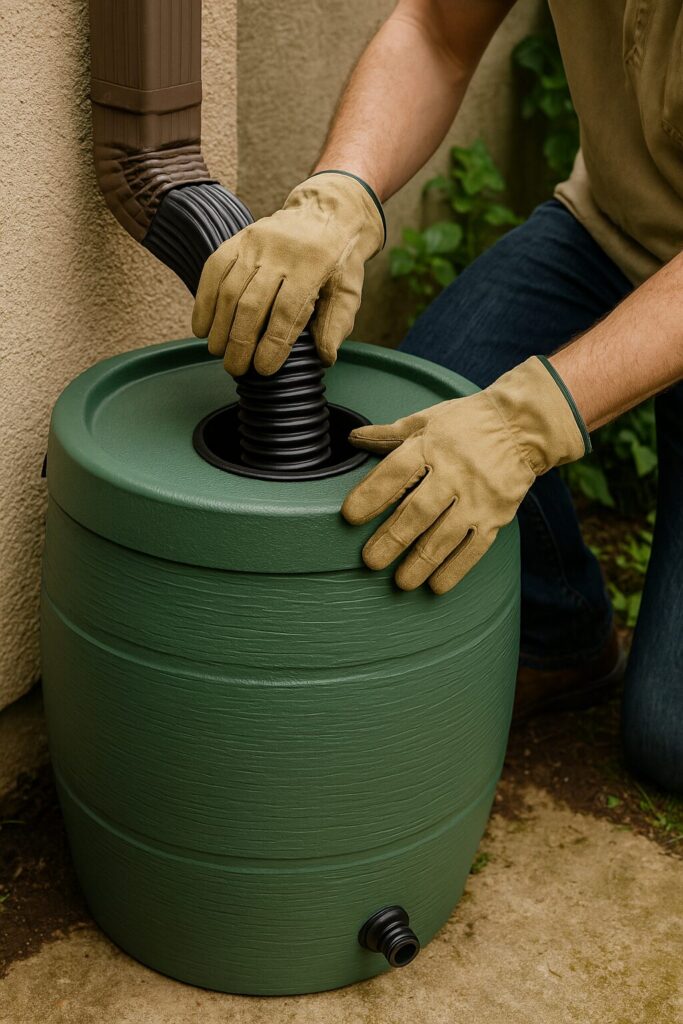
We believe that even the smallest changes can create the most meaningful impact in a landscape. Rain barrels are one of those simple, yet transformative solutions that blend functionality with sustainability. By capturing and storing rainwater, we help our clients reduce dependency on municipal water sources while ensuring their gardens stay nourished during dry spells. More than just a practical tool, these systems protect local watersheds by reducing stormwater runoff and preventing erosion, making them a smart step for anyone looking to cultivate a resilient and eco-friendly outdoor space.
When we integrate rain barrels into a landscape plan, we think beyond installation. We carefully consider placement, aesthetics, and how the system connects with the rhythm of your garden. Whether it’s redirecting overflow into a pollinator bed or pairing storage with drip irrigation, our approach ensures that every drop of water works in harmony with your plants and soil. This isn’t just about conservation, it’s about designing outdoor environments that thrive naturally, where beauty and sustainability grow hand in hand.
The environmental advantages of rain barrels multiply when they are used collectively across communities. While a single barrel may only capture a small fraction of rainfall, an entire neighborhood adopting them can significantly reduce the volume of stormwater surges during rain events. This distributed storage helps prevent localized flooding, protects public infrastructure, and reduces the strain on stormwater treatment systems. It is a prime example of how small-scale individual actions combine to create a large-scale environmental impact.
Equally important is the role rain barrels play in reducing nonpoint source pollution. Unlike pollution from a factory pipe, nonpoint source pollution originates from numerous small sources, such as lawns, roads, and rooftops, that collectively pose a significant threat to water quality. Rainfall rushing across these surfaces picks up pesticides, oils, heavy metals, and sediments before flowing into rivers and lakes. By catching rainfall before it reaches the ground, rain barrels reduce the volume of polluted runoff, helping to protect aquatic habitats and maintain cleaner waterways. For pollinators, fish, and other wildlife, this creates healthier ecosystems that are better able to thrive.
At Rutheo Designs, we see rain barrels not just as containers but as integrated features within the garden. Proper placement is critical: barrels should be positioned where they can intercept the greatest amount of runoff, often beneath downspouts that serve larger sections of the roof. By carefully planning their location, we ensure they are not only functional but also convenient to use, reducing the effort required to water key areas of the garden. Many homeowners choose to connect barrels to drip irrigation systems, which allow stored water to be delivered directly to plant roots. This minimizes evaporation losses and ensures that every gallon collected is put to maximum use.
Design considerations also extend to aesthetics. Modern rain barrels come in many forms, from rustic wooden casks that complement cottage-style gardens to sleek, sculptural containers that suit contemporary outdoor spaces. For those who prefer subtlety, barrels can be screened with trellises, vines, or decorative panels. We also often design overflow outlets that direct excess water into rain gardens or bioswales, creating layered systems where no drop is wasted. In this way, rain barrels evolve from purely functional objects into design elements that enhance both the appearance and the performance of the garden.
Like any garden feature, rain barrels require ongoing care to remain effective. Gutters and downspouts should be cleaned regularly to prevent leaves, twigs, and seeds from entering the barrel. Screens or mesh filters installed at the top help block debris and deter insects, particularly mosquitoes, from breeding in stored water. It’s also important to check that spigots, hoses, and connectors are working properly, as even minor leaks can lead to wasted water. A stable foundation is essential as well since a full rain barrel can weigh hundreds of pounds and cause structural stress if not properly supported.
Seasonal maintenance is just as critical. In climates with freezing winters, rain barrels should be drained and disconnected to prevent cracks caused by ice expansion. During the growing season, water should be used regularly rather than left to stagnate, which helps preserve water quality. Some homeowners go further by using barrels in the off-season to brew compost tea or store tools, giving them year-round utility. With proper care, a high-quality barrel can last for decades, making it a long-term investment in sustainable gardening.
Rain barrels take on even greater value when incorporated into a broader sustainable landscaping strategy. Practices such as mulching, planting native vegetation, and using permeable paving materials all complement the role of rainwater harvesting. By layering these approaches, we create a landscape that captures, filters, and reuses water in ways that mimic natural ecosystems. This type of “closed-loop” design reduces waste, supports biodiversity, and ensures that gardens remain resilient even during extreme weather conditions.
The synergy between rain barrels and sustainable landscaping is especially apparent in drought-prone regions. By storing rainfall when it’s abundant and releasing it gradually during dry periods, barrels help buffer landscapes against climate variability. Combined with soil-building practices and thoughtful plant selection, they become a critical part of creating self-sustaining outdoor environments. Rather than relying on constant inputs from external water sources, the garden begins to regulate itself—an approach that is both practical and deeply ecological.
Rainwater collected in barrels is untreated, which makes it perfect for irrigation but not suitable for drinking. Its lack of chlorine and other additives commonly found in tap water makes it gentler on soil microorganisms and plants. Sensitive ornamentals and vegetables, in particular, often show better growth and vigor when irrigated with natural rainwater. For gardeners, this creates a unique advantage: healthier plants with less chemical stress.
That said, water quality depends on thoughtful management. Roofs may contribute small amounts of debris, pollen, or animal droppings, which can affect stored water if barrels are not cleaned regularly. Installing filters at entry points and emptying barrels periodically helps maintain cleaner water. Additionally, overflow outlets should be directed into infiltration areas such as rain gardens, ensuring that excess water recharges the soil rather than contributing to runoff problems.
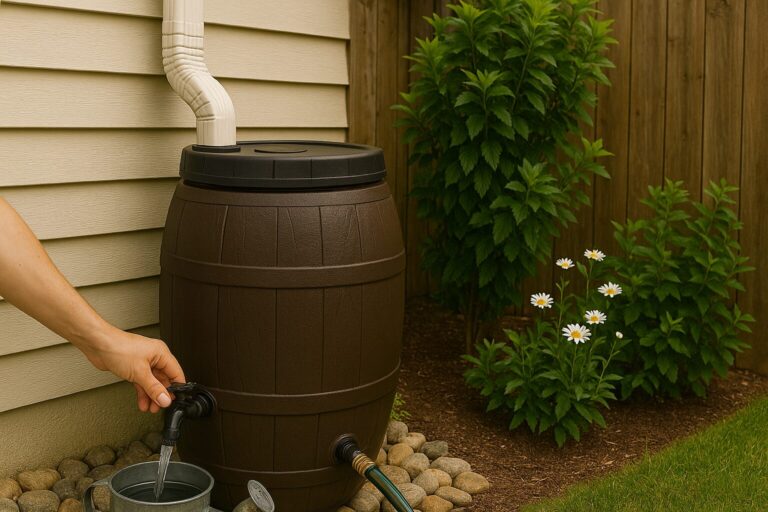
The effectiveness of rain barrels depends greatly on regional climate conditions. In areas with frequent rainfall, they can fill quickly and provide a steady supply for irrigation throughout the growing season. Even in drier climates, however, their value remains significant. While the absolute volume collected may be smaller, every gallon saved during drought conditions can help protect valuable plantings and reduce reliance on scarce municipal or well water.
In urban settings, rain barrels are especially beneficial because they intercept stormwater at its source. By capturing water directly from rooftops, they reduce the burden on stormwater systems that are often overtaxed during heavy rainfall. In suburban and rural areas, barrels support self-sufficiency, giving homeowners more control over their water use. Regardless of location, when scaled across many households, rain barrels provide both local and regional resilience to changing weather patterns.
The financial value of rain barrels becomes apparent over time. By reducing reliance on municipal water, they cut monthly bills for households that irrigate lawns, vegetable gardens, or extensive landscapes. Even modest savings can add up significantly across years, eventually offsetting the initial purchase cost of the barrel itself. For larger properties or those with multiple barrels, the economic return can be even more substantial.
Some regions further support adoption with rebate programs, tax incentives, or cost-sharing opportunities that make rain barrels even more affordable. In addition, because rain barrels extend the life and health of plants, they indirectly save homeowners money by reducing replacement and maintenance costs. Their combination of financial savings, ecological benefits, and landscape resilience makes them one of the most cost-effective sustainability practices available.
As climate change continues to bring unpredictable rainfall patterns and more frequent droughts, practices like rainwater harvesting are becoming essential, not optional. Rain barrels offer a scalable, low-tech solution that can be implemented in virtually any garden. Their role in reducing stormwater impacts and supporting water-wise landscapes will only grow more important in the coming decades.
Looking to the future, integration with smart irrigation systems and renewable energy pumps will further expand the usefulness of rain barrels. By linking stored rainwater with automated distribution systems, gardeners will be able to fine-tune irrigation for maximum efficiency. This evolution represents the next step in water-wise gardening: not just conserving water but actively managing it to build landscapes that are both beautiful and resilient in the face of change.
We provide professional rain barrel installation services designed to make your landscape more sustainable and water-wise. Our team helps you choose the right barrel size, placement, and overflow solutions that match your property’s unique conditions. From linking barrels to drip irrigation systems to integrating them with rain gardens or pollinator beds, we ensure that every drop of collected rainwater is put to good use. By tailoring installations to your soil, roof catchment area, and garden layout, we create systems that conserve water, reduce runoff, and support healthy plant growth year-round.
If you’re ready to add rain barrels to your home or garden, reach out today and let us design a solution that works seamlessly with your landscape. Email us at connect@rutheodesigns.com or call (360) 844-2989. Whether you have questions about barrel placement, overflow management, or integrating rainwater harvesting with your broader garden design, we’re here to guide you through every step of the process.
We use cookies to improve your experience on our site. By using our site, you consent to cookies.
Manage your cookie preferences below:
Essential cookies enable basic functions and are necessary for the proper function of the website.
Google Tag Manager simplifies the management of marketing tags on your website without code changes.
Statistics cookies collect information anonymously. This information helps us understand how visitors use our website.
Google Analytics is a powerful tool that tracks and analyzes website traffic for informed marketing decisions.
Service URL: policies.google.com (opens in a new window)
Google reCAPTCHA helps protect websites from spam and abuse by verifying user interactions through challenges.
Marketing cookies are used to follow visitors to websites. The intention is to show ads that are relevant and engaging to the individual user.
Facebook Pixel is a web analytics service that tracks and reports website traffic.
Service URL: www.facebook.com (opens in a new window)
You can find more information in our Cookie Policy and Privacy Policy.