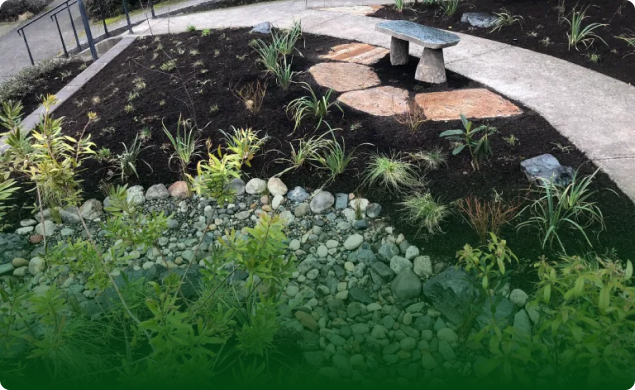
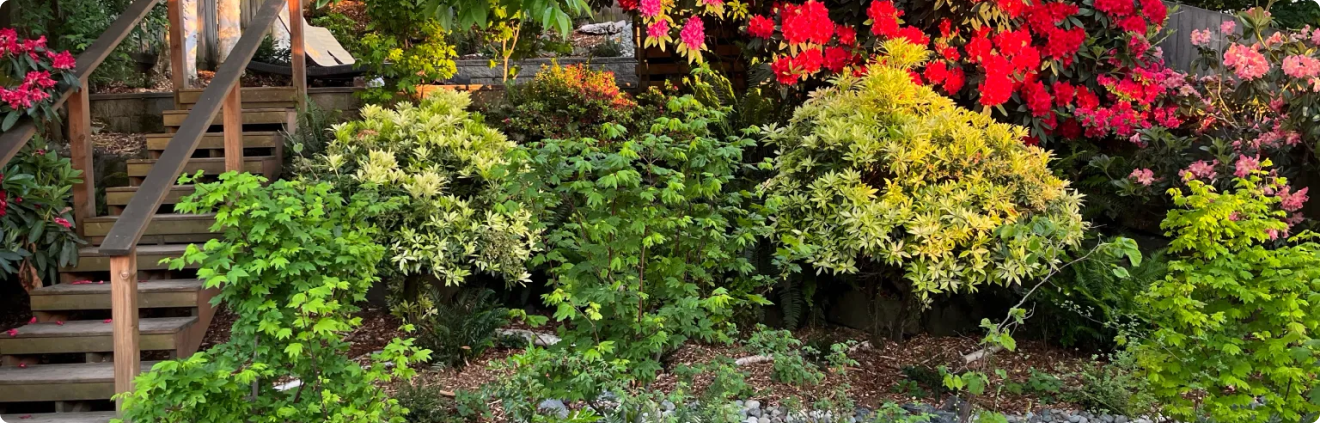
A rain garden does not need to claim your entire backyard or convert an urban lot into an inaccessible swamp. When designed with deliberate geometry and intentional edges, a rain garden functions as an attractive, layered planting bed that absorbs runoff during heavy storms and empties quickly afterward. It operates as a working component of green stormwater infrastructure while leaving flat, dry ground intact for outdoor living, children, and pets.
The tension most Seattle homeowners feel is straightforward: property sizes are modest, rainfall is relentless from October through April, and nobody wants to surrender functional patio space or open lawn to an unmanaged pit of mud. Balancing water absorption with genuine yard utility comes down to where you source the runoff, how the basin is situated, and how circulation paths are laid out around it.
Site Feasibility: Why the Wettest Spot Is Often the Wrong Location
The most common misconception about rain garden placement is that you should dig wherever water already stands. A persistent puddle or soggy lawn zone calls for investigation of soil, groundwater, and surface flow. It does not by itself establish that a rain garden can function there.
A functioning basin requires underlying soil with reliable permeability, located well away from structural footings, steep slopes, and active utility corridors. When planning a residential rain garden retrofit, an experienced designer looks uphill from the problem areas to evaluate how downspouts and hardscapes can be intercepted before water pools in high-traffic zones.
Key viability factors to evaluate before drawing a basin shape include:
- Subsurface drainage rates: The soil beneath the proposed bed must allow water to percolate downward rather than sit stagnant for days on end.
- Grade and slope stability: Seattle’s topography requires careful consideration; sending concentrated water into steep or unstable slopes introduces serious structural risks.
- Mature tree preservation: Excavating near existing Douglas firs, cedars, or mature street trees can sever root systems and compromise canopy health.
- Foundation proximity: Water must be caught and stored at a safe distance from basement walls and adjoining properties.
Water Flow Dynamics: Inflow, Ponding, and Safe Overflow
A rain garden is an active hydraulic system disguised as a perennial border. For it to coexist with a functioning outdoor living space, the movement of water across your property must be predictable during both minor drizzling days and severe cloudbursts.
The system relies on three distinct operational stages that must be resolved in the design:
Controlled Inflow
Water directed from roof downspouts or patio collection points needs to enter the basin without washing out mulch or uncovering plant roots. The designer should assess how water can enter without erosion and which connection details suit the property. This transition also needs to work with adjacent paths and seating areas.
Shallow Temporary Storage
The planted depression captures water only temporarily during peak storm events. It is engineered to hold a modest depth of water and filter it into the ground over a period of hours, not weeks. The design should establish appropriate drawdown and planting conditions; persistent standing water calls for assessment.
A Defined Overflow Path
Every rain garden will eventually meet a storm that exceeds its holding capacity. The design needs a safe, non-erosive overflow arrangement appropriate to the site and any applicable requirements, with buildings, neighboring properties, and occupied spaces protected.
Integrating Plantings and Circulation into Daily Yard Life
Designing a rain garden that shares boundaries with entertaining zones, lawn areas, and play structures requires a tiered planting plan. A rain garden is not a wetland; in the Pacific Northwest, it must endure winter saturation followed by prolonged, rainless summer droughts.
Vegetation is organized into three distinct zones based on moisture tolerance:
- The Inundation Zone (Basin Bottom): Plants in the lowest footprint handle periodic soaking and submerged conditions, followed by dry summer spells. Resilient native rushes, sedges, and adaptable shrubs anchor the soil sponge without demanding synthetic fertilizers or constant pampering.
- The Transition Slope (Sides): The sloped walls experience fluctuating water levels. Deep-rooting native grasses, ferns, and medium shrubs stabilize the banks, providing visual texture while keeping the slope from slumping into the base.
- The Upper Rim (Edges): The highest contour blends the rain garden into the surrounding landscape. This area may be drier than the basin bottom, but plant choices still need to match its actual seasonal moisture and light while framing adjoining terraces, lawn, or decks.
Care access must be built directly into the footprint. Integrating appropriate access points can help you handle routine rain garden maintenance—clearing seasonal leaf debris, managing organic mulch layers, and cutting back stems—while reducing foot traffic on basin soil.
Planning the Project: Assessment and Program Requirements
Transforming runoff from an unmanaged problem into an intentional garden feature starts with practical boundaries. Public incentives may be available for eligible properties; confirm current program eligibility separately from physical site feasibility.
Before picking up a shovel or selecting shrubs, take the time to run through basic project planning checks:
- Program Verification: Perform RainWise eligibility checks early to confirm whether your parcel falls within target combined-sewer overflow areas where financial rebates apply.
- Program vs. Independent Builds: For contractor-managed RainWise installations, confirm current program guidance. Outside eligible areas, an independent design still needs to address site feasibility and any applicable requirements.
- Catchment Mapping: Determine how much roof square footage currently drains to the targeted side of the house, and verify where existing downspout lines exit.
- Spatial Priority Brief: Document how you actually use your yard. Decide how much flat lawn, entertaining footprint, vegetable space, or storage you need to protect before allocating square footage to drainage swales and retention bowls.
If you are ready to evaluate whether your property can support a rain garden while preserving the outdoor living space you use every day, contact Teddy Rutberg at Rutheo Designs. We offer property assessment, rain garden planning, and installation, with the scope confirmed for your site.