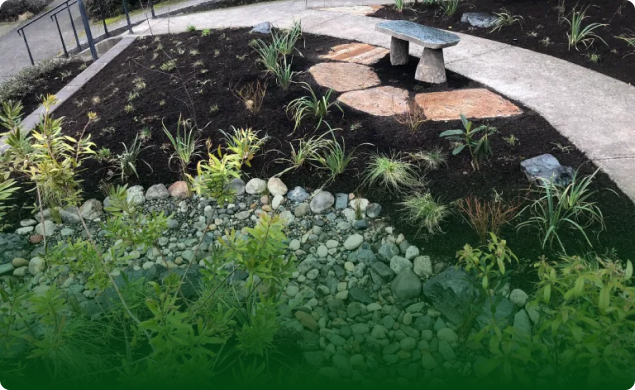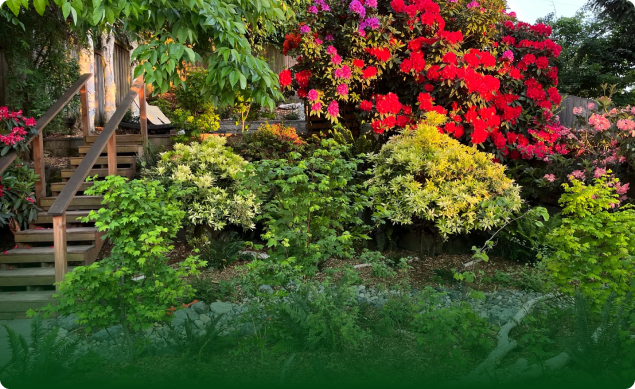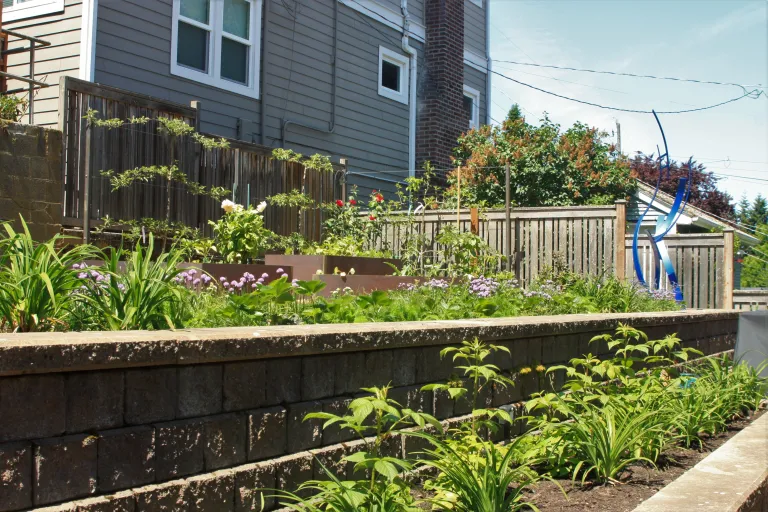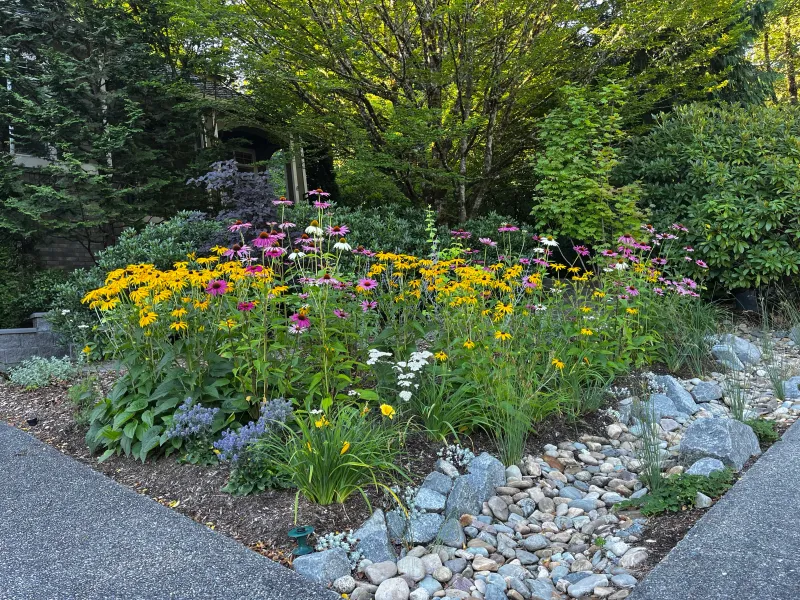
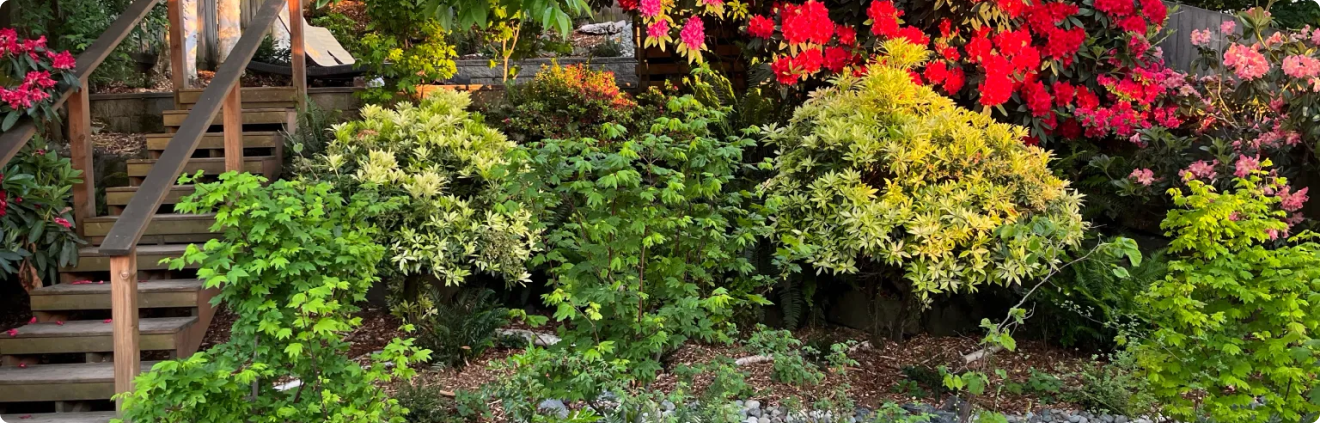
Landscape design in Kenmore works best when it starts with real site behavior, not just style preference. Properties here often combine uneven grade, changing light patterns, and mixed-use needs across compact yards. A design that looks great in concept but ignores those conditions usually becomes expensive to maintain.
This guide outlines seven proven layout approaches that help Kenmore homeowners build landscapes that are usable, durable, and visually cohesive. Use it with the broader Seattle landscaping guide and the service-scope guide landscaping services in Kenmore when you are comparing providers or phasing work.
If you want to choose the right Kenmore layout before construction starts, request a consultation with Rutheo Designs and we can map circulation, grading, and planting decisions for your specific lot.
Why Kenmore Landscape Design Needs a Site-First Approach
Kenmore lots can vary quickly in slope, exposure, and drainage behavior even within the same neighborhood. That means design decisions should follow site conditions, not template layouts.
A site-first process improves outcomes by clarifying:
- How water moves through the property
- Where circulation bottlenecks happen
- Which areas need privacy reinforcement
- Which zones can support low-maintenance planting
When those questions are answered early, design choices become simpler and more reliable.
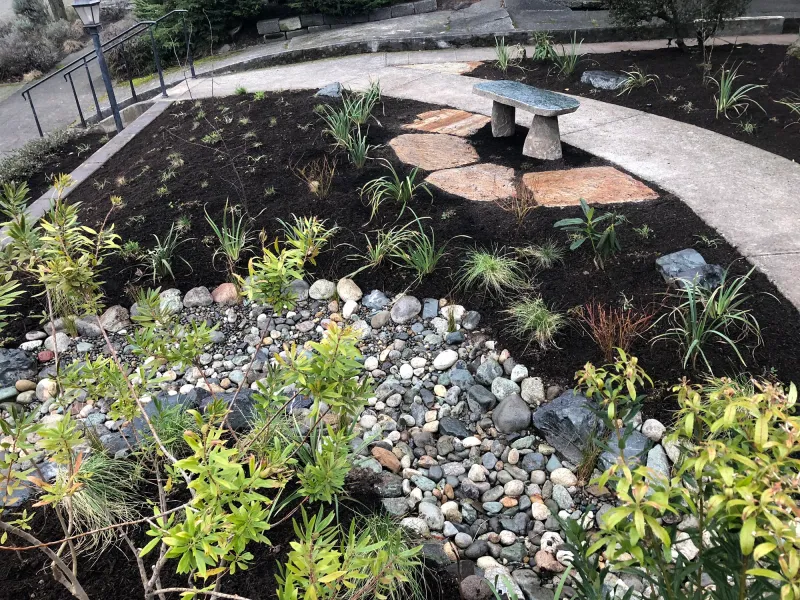
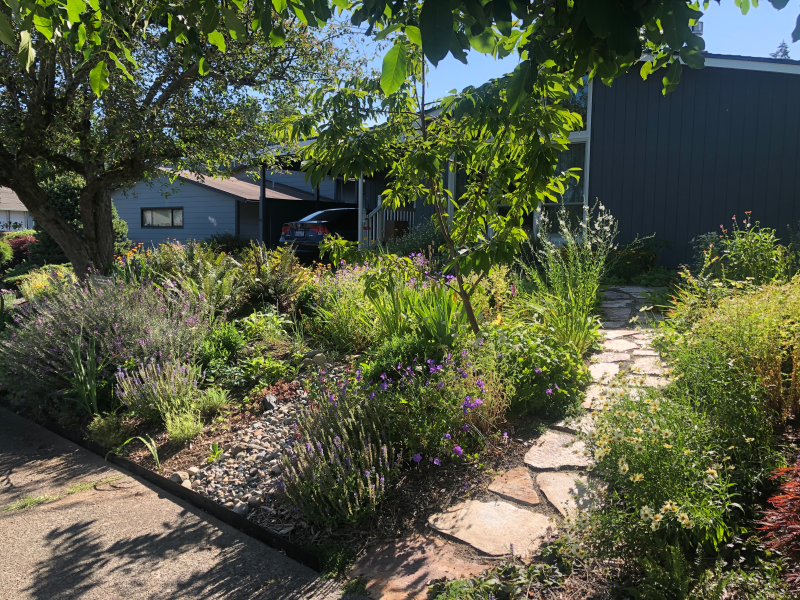
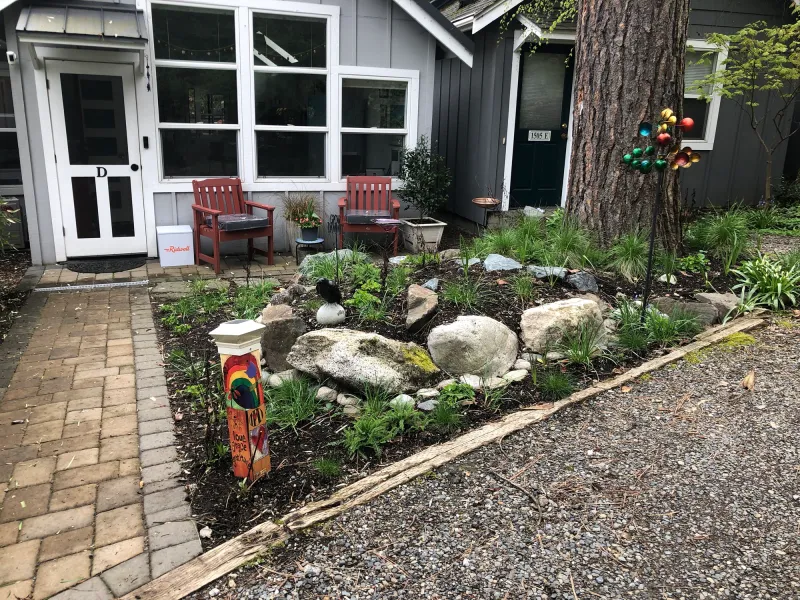
Layout 1: Entry and Curb-Appeal Framework
This layout focuses on clear arrival sequence and front-yard structure.
Core elements:
- Defined walk path from drive to entry
- Layered planting for year-round form
- Selective accent lighting for orientation
- Simplified edges that are easy to maintain
This is often the right starting layout for homeowners planning phased improvements, because it delivers visible impact with practical function.
Layout 2: Family-Friendly Backyard Circulation
This layout prioritizes daily movement, flexible use, and safe transitions.
Typical features:
- Primary path loop linking doors, patio, and utility access
- Durable surfaces in high-traffic zones
- Open central use area with perimeter planting
- Lighting at grade changes and key turn points
Good circulation reduces wear on planted areas and makes the yard easier to maintain across seasons.
Layout 3: Privacy-Forward Side and Rear Edges
In neighborhoods with close sight lines, privacy design is often a top priority. This layout uses layered screening rather than one heavy hedge line.
Recommended structure:
- Evergreen vertical layer for year-round screening
- Mid-height textural layer for depth
- Ground-level softening layer to reduce hard edge feel
This approach provides privacy while keeping the yard visually open and easier to manage.
Layout 4: Slope-Adapted Terraced Design
Slope is common in Kenmore and can be used as an advantage when designed intentionally.
Terraced layout principles:
- Break grade into stable, usable zones
- Integrate retaining and drainage together
- Align path transitions with terrace geometry
- Place planting by moisture and sun behavior per level
When slope and water handling are coordinated early, terraces perform better and look more integrated with the home.
Layout 5: Outdoor Living + Low-Maintenance Planting Blend
This layout balances entertaining use with realistic upkeep. It is a strong fit for homeowners who want an active patio area without high weekly maintenance demands.
Key moves:
- Keep hardscape footprint proportional to actual use
- Place durable planting at activity edges
- Limit high-pruning species near seating zones
- Use irrigation zoning that matches plant demand
If you are still in idea-gathering mode, this companion list can help refine your feature shortlist: landscaping ideas for Seattle homes.
Layout 6: Native-Forward Ecological Mix
For homeowners prioritizing resilience, habitat value, and reduced inputs, native-forward design can be highly effective when done with structure.
Use a mix of:
- Evergreen backbone planting
- Native and adapted flowering accents
- Ground-layer coverage for weed suppression
- Seasonal management plan from day one
The goal is not to create a wild-looking yard unless that is desired. The goal is to combine ecological function with clean design intent.
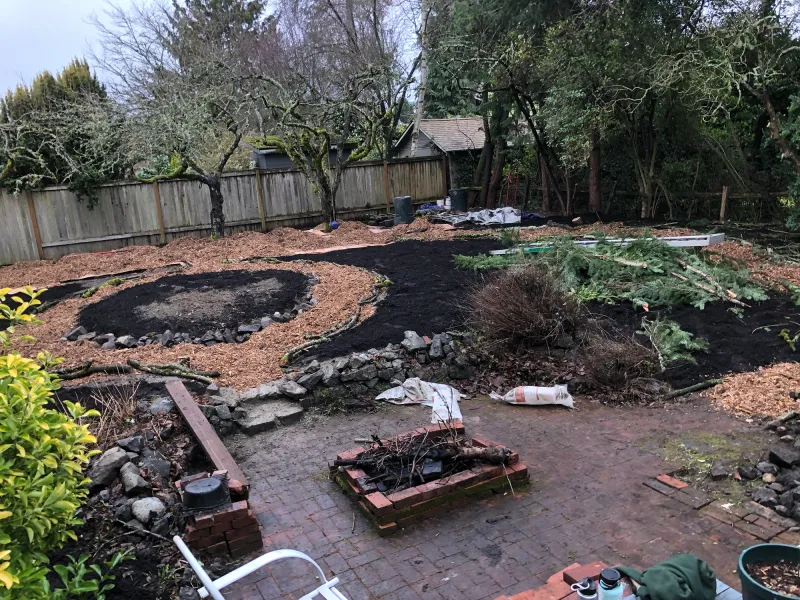
Layout 7: Phased Masterplan for Multi-Year Buildout
Many Kenmore projects are implemented over multiple years. A phased masterplan allows progress without sacrificing long-term cohesion.
A strong phased structure:
- Infrastructure and risk reduction (drainage, circulation)
- Core hardscape and structural planting
- Lighting, detail planting, and finish upgrades
This avoids the common issue where early phases must be undone to support later work.
For full-sequence planning decisions, use landscape design Seattle WA as the process reference.
Matching Layout Type to Your Kenmore Lot
Not every layout fits every lot. Use this quick matching framework:
- Narrow lot with long side access: prioritize circulation-first layouts and layered privacy edges.
- Sloped backyard lot: prioritize terraced planning with integrated drainage and retaining strategy.
- Flat lot with low privacy: prioritize screening framework plus focused outdoor-living zone.
- Multi-use family yard: prioritize flexible circulation loops and durable edge planting.
This helps you avoid forcing a design style that fights site conditions. When layout type matches the lot, installation decisions become simpler and long-term maintenance gets easier.
Common Design-Budget Mistakes in Kenmore Projects
Many budget overruns come from sequencing issues, not material prices alone.
Frequent mistakes include:
- Finalizing patio size before confirming circulation needs
- Delaying drainage decisions until after finish design
- Choosing plant quantities by immediate fullness rather than mature spacing
- Treating lighting as a separate late-phase add-on
A better approach is to align layout, infrastructure, and phased priorities before selecting finish details. That sequence usually protects both quality and cost control.
Design Checklist Before Construction
Before installation begins, confirm these items are final:
- Layout with clear path widths and transitions
- Drainage and irrigation strategy by zone
- Material selections and installation sequence
- Lighting locations and wiring/trench coordination
- Plant list with mature spacing and maintenance expectations
- Phase boundaries and handoff criteria
This checklist reduces change orders and helps keep timeline and budget predictable.
Frequently Asked Questions
Which layout should I choose first if my budget is limited?
Start with the layout that removes your biggest constraint, usually circulation or water management, then build outward in phases.
Can I combine multiple layouts from this guide?
Yes. Most successful projects blend elements from two or more layouts as long as they follow one coherent site plan.
How early should drainage be addressed in design?
Immediately. Drainage decisions influence grading, hardscape placement, and planting performance throughout the project.
Is phased design worth it if I want full buildout eventually?
Absolutely. A phased masterplan protects long-term design quality and prevents expensive rework as budget or scope evolves.
How do I know if my layout supports resale value?
Focus on clear circulation, balanced hardscape-to-plant ratio, strong curb-appeal entry, and low-friction maintenance patterns. These factors generally support broad buyer appeal.
Conclusion
Landscape design Kenmore WA homeowners trust long-term is built on site conditions, functional layout, and realistic execution sequence. When those foundations are strong, style decisions become easier and outcomes hold up better across seasons.
Use these seven layouts to identify the right starting direction, then build your project in a phased plan that protects both quality and budget.
If you want Rutheo Designs to plan and deliver this on your property, request a consultation with Rutheo Designs so we can map scope, sequencing, and next steps.