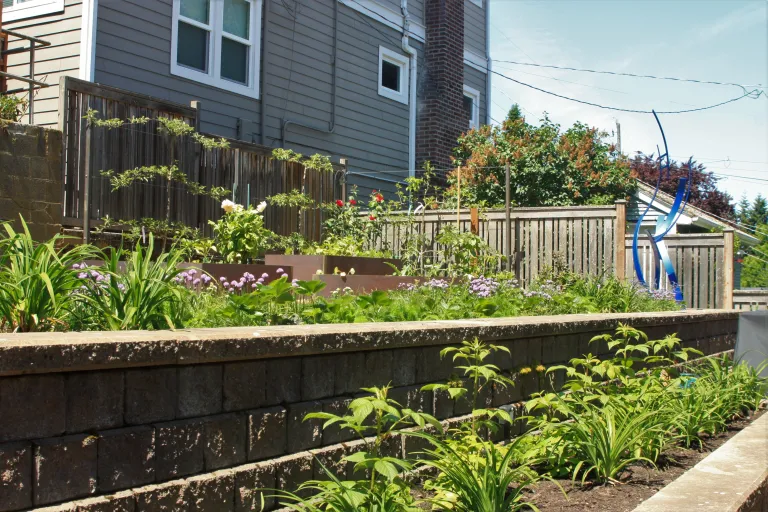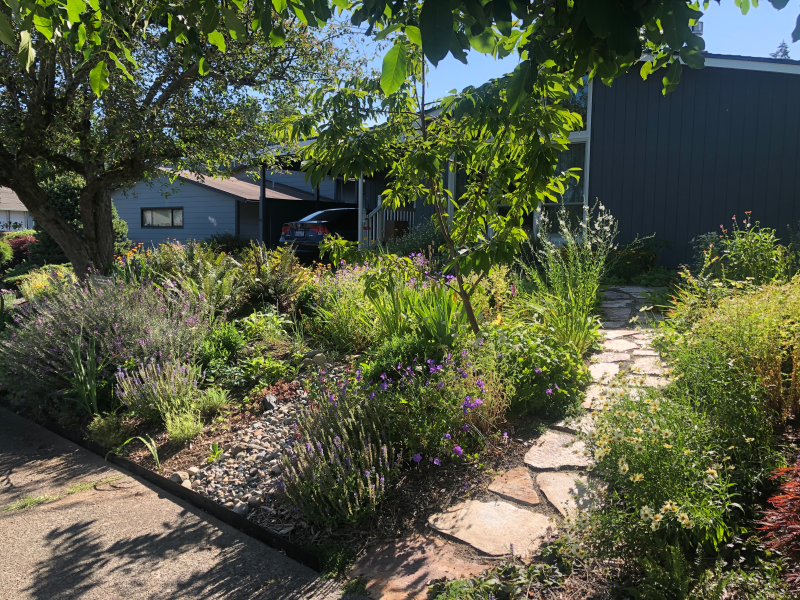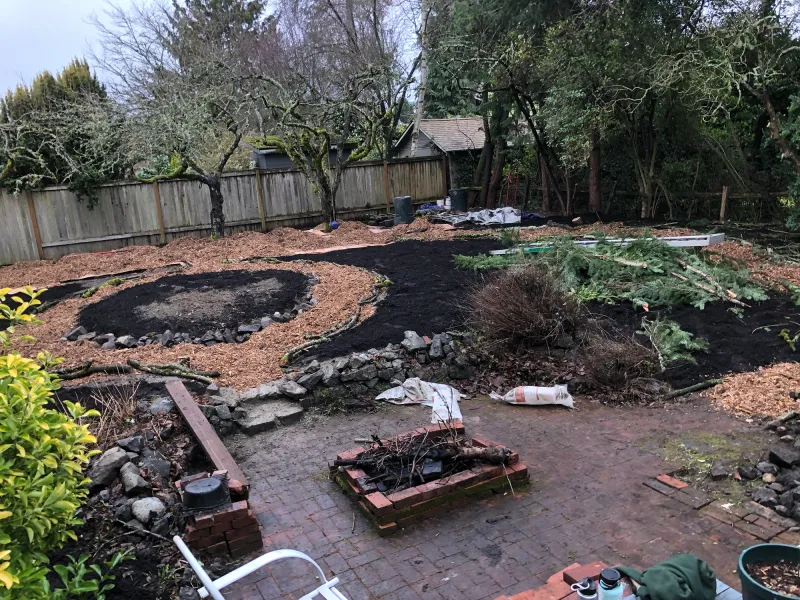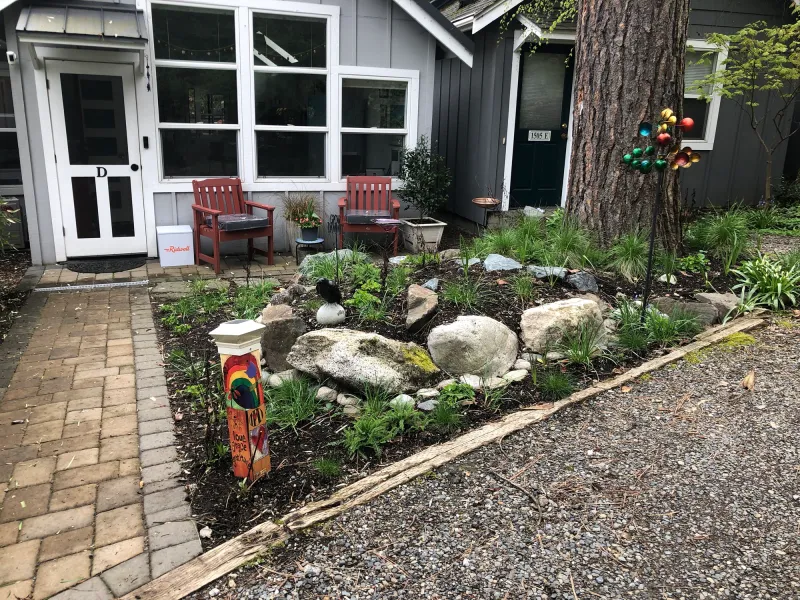
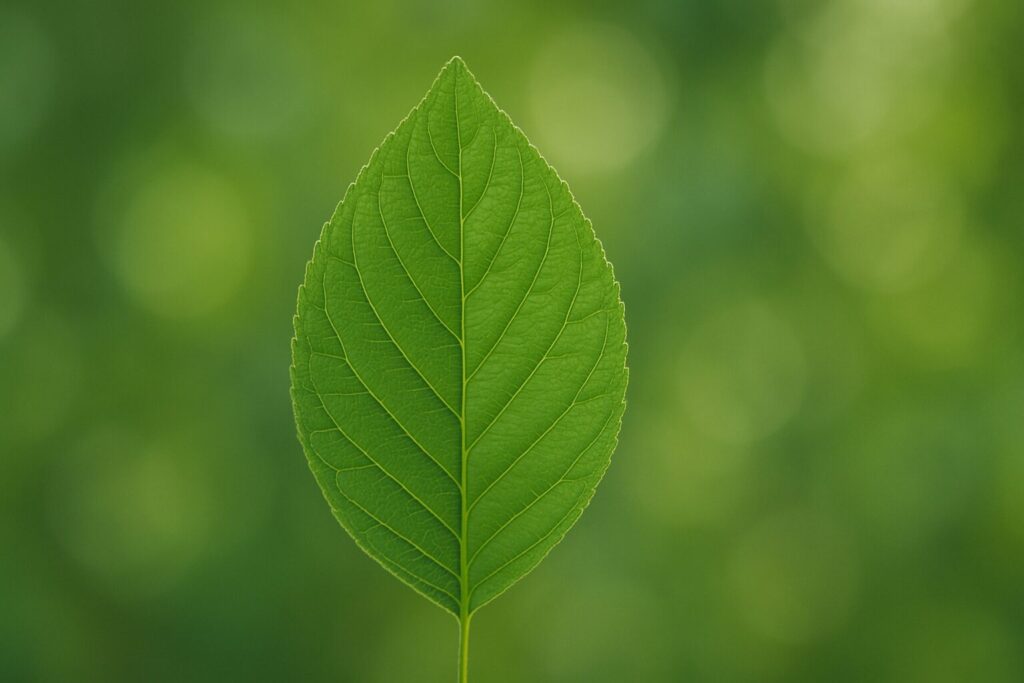
We specialize in providing landscapes that thrive in Seattle’s unique microclimates, blending ornamental beauty with ecological resilience. Our process begins with an on-site consultation to map sun exposure, slope, and existing soil structure. From there, we curate a palette of native and climate-adapted species, think sword ferns, Red Osier dogwood, and Pacific Rhododendron, that support pollinators and require minimal irrigation once established.
We also enrich the soil with organic amendments and inoculate it with mycorrhizal fungi to jump-start nutrient exchange, giving your garden a living foundation that fosters long-term health and reduces the need for chemical fertilizers. When it’s time for installation, our team handles everything from contouring and bio-retention swales to precise drip-irrigation layouts that cut water use by up to 40%.
We begin each project with a detailed site assessment to understand how light, moisture, and soil conditions vary across your property. By mapping areas of full sun, partial shade, and deep shade, as well as identifying slopes and natural drainage pathways, we create a clear framework for planting zones that will thrive without excessive intervention. Our goal is to align plant choices with site conditions so that each species can reach its full potential with minimal supplemental care.
Following the assessment, we develop a cohesive planting plan that weaves together form, function, and sustainability. We select species not only for their aesthetic qualities—such as texture, color, and seasonal interest but also for their ecological roles, including pollinator support and habitat creation. This approach ensures your landscape will be resilient over time, reducing water use and chemical inputs. Once the design is finalized, our trained installation team brings the plan to life with precision grading, soil preparation, and planting techniques honed for Seattle’s unique environment.
Seattle’s climate features mild, wet winters and relatively dry summers, which shape the palette of plants that can prosper here. Average winter lows rarely fall below 20°F, placing most areas within USDA Zone 9a. This allows us to introduce a wider range of species than in colder zones, while still prioritizing moisture-loving plants that can handle the city’s rainy season. By selecting plants adapted to these temperature and precipitation patterns, we minimize stress and reduce reliance on frost protection measures or heavy irrigation.
Microclimates within the city, such as south-facing walls that absorb heat or shaded corridors under tall conifers, can create warm pockets or cooler retreats. During our initial consultation, we document these variations to fine-tune plant placement. For instance, heat-tolerant perennials may be clustered against sunlit walls, while moisture-loving ferns and mosses fill damp, shaded spots. Understanding these nuances allows us to craft planting designs that perform consistently, year after year, without constant adjustments.
We emphasize native and climate-adapted species because they require less maintenance and provide vital habitat for local wildlife. Trees like western red cedar (Thuja plicata) form an evergreen canopy that shelters understory shrubs such as red osier dogwood (Cornus sericea). These native shrubs produce clusters of nectar-rich flowers in spring and berries in fall, supporting pollinators and birds alike. By integrating these foundational plants, we build a backbone for the garden’s structure and seasonal rhythm.
Complementing woody species, we include pollinator-friendly perennials, such as Oregon sunshine (Eriophyllum lanatum) and Salal (Gaultheria shallon) that bloom in succession. This staggered flowering schedule ensures that nectar and pollen are available from early spring through late fall. We group plants with similar moisture and light requirements to form “plant communities,” which thrive together with less competition for resources. This clustering also helps suppress weeds naturally by filling space more quickly and shading the soil.
Seattle soils tend to be loamy, offering a balance of drainage and moisture retention, but they can be low in organic matter and slightly acidic. Before we plant, we conduct soil tests to assess pH, nutrient levels, and texture. Based on those results, we blend in compost and aged bark to boost organic content, raise cation-exchange capacity, and support beneficial microbes. In compacted areas, we incorporate biochar or sand to improve aeration and drainage, creating a friable root zone where plants can establish quickly.
To enhance long-term soil health, we often introduce mycorrhizal fungi, which form symbiotic relationships with plant roots and improve nutrient uptake. This biological layer reduces the need for synthetic fertilizers by unlocking phosphorus and other minerals already present in the soil. We also recommend annual topdressing with a thin layer of compost or leaf mulch to sustain microbial activity and gradually build soil structure over time, ensuring that plants remain vigorous without chemical interventions.
While Seattle receives ample winter rain, summer drought can stress newly installed plants. To address this, we install drip-irrigation systems that deliver water directly to root zones, reducing evaporation and runoff. Each system features pressure-regulated emitters placed based on each plant’s needs, so trees, shrubs, and perennials each get the right amount of moisture. We pair the hardware with smart controllers that adjust schedules based on real-time soil-moisture readings and local weather forecasts.
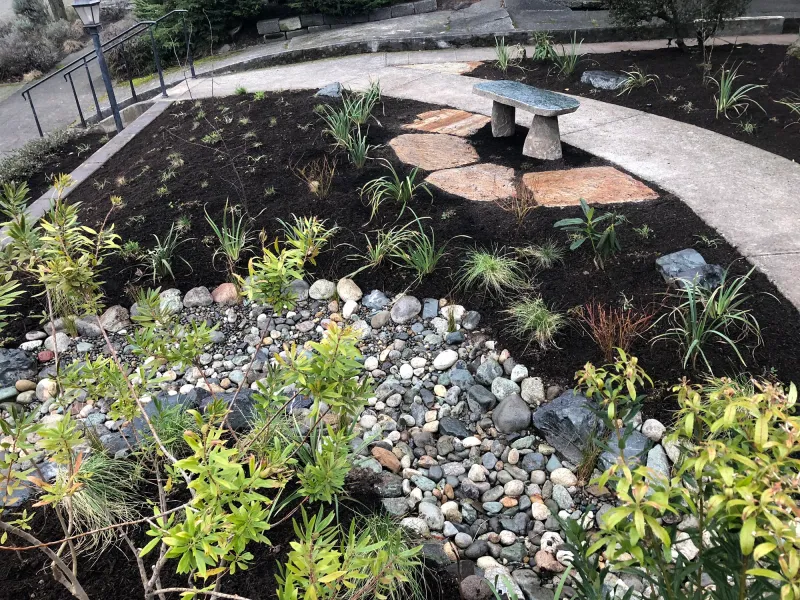
In addition, we integrate rain-sensor shutoff valves that prevent irrigation after significant rainfall, conserving water and minimizing utility costs. For larger landscape overhauls, we often create rain gardens or bioswales shallow depressions planted with deep-rooted sedges and rushes, to capture and infiltrate stormwater on site. These features not only reduce the burden on municipal drains but also recharge groundwater and filter pollutants naturally.
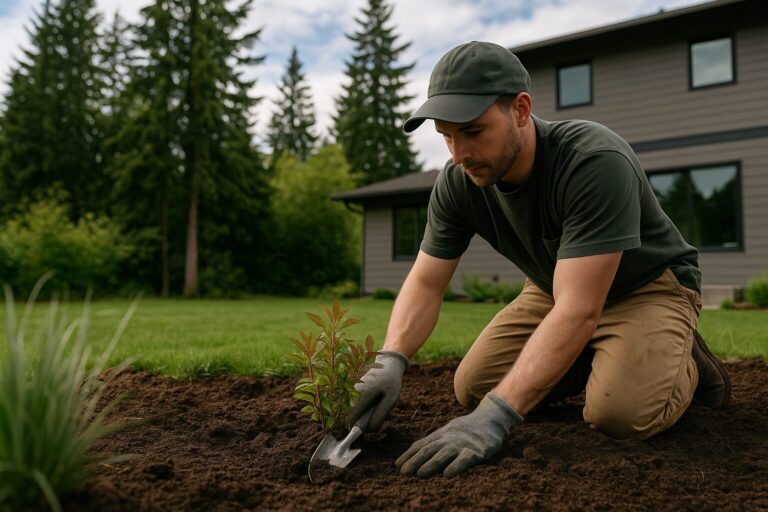
Proper grading and erosion control lay the foundation for long-term stability. We shape gentle swales and terraces to manage surface runoff, guiding excess water into rain gardens or dry creek beds. During planting, our team uses root-ball collars and planting templates to ensure each root crown sits at the optimal depth and spacing is precise. This consistency reduces transplant shock and promotes uniform growth across the landscape.
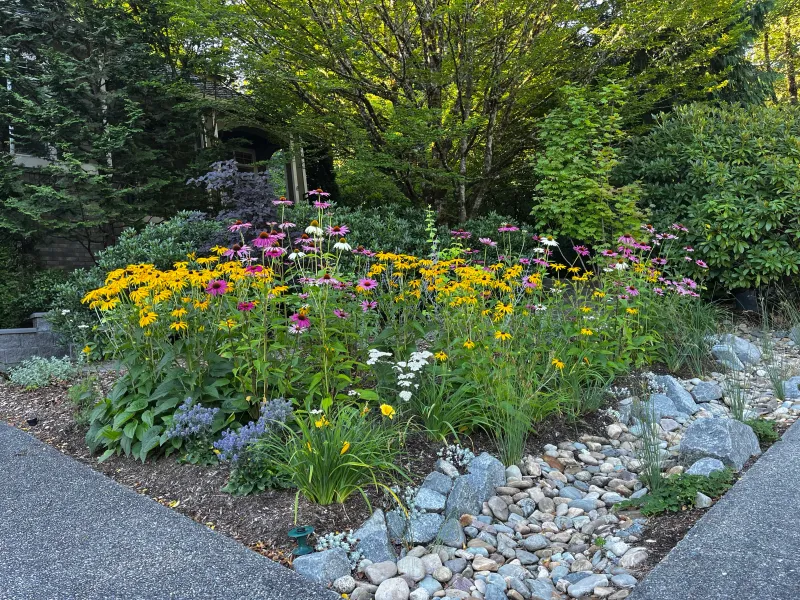
Mulching is another critical step in our installations. We apply a layer of arborist wood chips or shredded bark that suppresses weeds, moderates soil temperature, and retains moisture. As organic mulches break down slowly, they contribute nutrients back into the soil. For high-traffic areas or slopes where organic mulch may wash away, we supplement with a layer of decorative gravel or crushed rock, which still allows water infiltration while adding visual texture.
Our designs ensure that plantings unfold in layers of seasonal color and texture. In early spring, native bulbs such as camas lily (Camassia quamash) emerge with vibrant blue blooms, followed by late-spring flowers on shrubs like Indian plum (Oemleria cerasiformis). Summer brings an array of perennials, Echinacea and Rudbeckia that serve as pollinator magnets and add bold color.
As autumn approaches, we shift focus to ornamental grasses like Festuca and Calamagrostis, whose plumes sway in the breeze and catch the lowering light. Deciduous shrubs and small trees contribute fiery foliage, while evergreen groundcovers such as Pachysandra retain year-round green. Even in winter, the subtle structure of bare branches, dried seed heads, and evergreen accents maintains visual interest and guides the eye through the garden.
Routine care is essential to preserve the health and beauty of any landscape. We offer soil-moisture monitoring to guide supplemental watering and avoid both drought stress and overwatering. Organic fertilization using compost teas or slow-release natural products ensures nutrient levels remain balanced without synthetic inputs. Mycorrhizal re-inoculation every few years can refresh root symbionts and maintain efficient nutrient exchange.
Pruning is performed with an eye toward plant health and flowering cycles. We remove dead or diseased wood first to improve air circulation and reduce fungal risks in Seattle’s humid environment. For rejuvenation, we cut back overgrown perennials at ground level to encourage fresh spring shoots. Invasive species are managed manually or with targeted mulching to starve roots of light, avoiding broad-spectrum herbicides and protecting beneficial flora.
By integrating native plant communities, soil-first preparation, and waterwise irrigation, we create landscapes that function as living ecosystems. Each element, from rain gardens that absorb stormwater to pollinator corridors that link urban green spaces, serves multiple roles in promoting biodiversity and resilience. Our designs aim not just to beautify private gardens but to contribute positively to Seattle’s broader environmental health.
Long-term, these landscapes require less input and deliver more benefits: lower water bills, reduced maintenance time, and enhanced wildlife habitat. As plantings mature, they establish deeper root systems that stabilize soil, sequester carbon, and support urban cooling. In this way, our installation services become more than a one-time overhaul; they lay the groundwork for regenerative green spaces that flourish for decades.
We guide you through every step of creating a vibrant, sustainable garden—from initial concept sketches to the final mulch layer. Our process begins with a collaborative design session, where we listen to your vision, assess site conditions, and sketch planting layouts that marry form and function. Once the plan is approved, our installation team prepares the soil with tailored amendments, sets irrigation and stormwater features, and plants each specimen with exacting attention to depth and spacing.
Ready to have aesthetic garden? Email us at connect@rutheodesigns.com or call (360) 844-2989. Whether you’re curious about selecting the best berry shrubs, designing a shallow pool or drip wall, or choosing predator-resistant feeders and houses, we’re here to guide you through every step of creating your ideal bird‐friendly oasis.
Links