Our natural pesticide and repellent services are designed to safeguard your plants without disrupting the delicate balance of the ecosystem. By using botanically derived solutions and organic deterrents, we help control unwanted pests while ensuring pollinators, beneficial insects, and soil health remain protected. From neem oil sprays to companion planting strategies, our approach is rooted in ecological harmony, allowing your garden to flourish in a way that feels alive, safe, and enduring. We also recognize that every outdoor space is unique, which is why we tailor treatments to the specific needs of your landscape. Our team considers plant selection, soil composition, and seasonal cycles when choosing the right methods, creating a holistic defense system that’s both effective and environmentally responsible. With us, you gain more than pest control; you gain a partner in cultivating landscapes that are resilient, sustainable, and vibrant year-round.
Natural pesticides and repellents rely on mechanisms found in nature rather than synthetic chemicals, and each tool offers its own unique way of protecting plants while preserving garden health. At Rutheo Designs, we look closely at the science behind these tools so we can apply them effectively and sustainably in real landscapes.
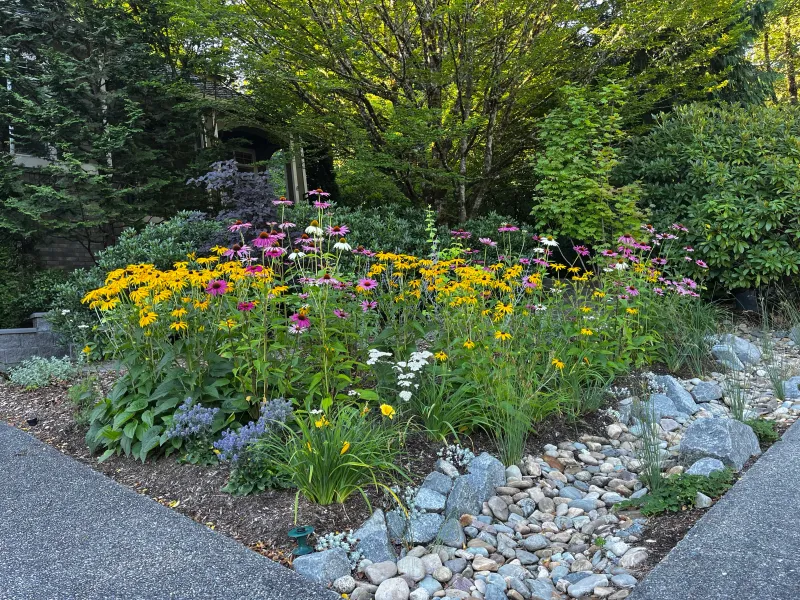
Instead of fighting pests with force alone, we often encourage their natural predators. Beneficial insect attractants can be flowering plants like dill, fennel, cosmos, or alyssum that provide nectar and pollen for ladybugs, lacewings, and hoverflies. These predators feed on destructive pests such as aphids and whiteflies. We also use habitat design—like providing ground cover or hedgerows to give beneficial insects places to rest, nest, and overwinter. The result is a self-regulating ecosystem where pests are kept in check by natural food-web interactions.
Derived from the seeds of the neem tree, neem oil has a dual role as both an insect growth regulator and a fungicide. Its active compound, azadirachtin, disrupts pest feeding and reproduction, making it harder for infestations to take hold. While gentle on many plants, neem also reduces fungal issues like powdery mildew when applied preventatively. Because it breaks down quickly in sunlight, it doesn’t linger in the garden ecosystem, making it a safer long-term choice for landscapes where families and pollinators are present.
These highly refined oils act by suffocating insects, blocking their ability to breathe through spiracles. They are especially effective against scale insects, mites, and overwintering eggs. We apply dormant oils in the winter to prevent outbreaks before the growing season, and lighter summer oils when pests are actively feeding. Correct timing and coverage are critical—horticultural oils need to coat the pest directly to work, and they must be applied under suitable weather conditions to avoid damaging plant foliage.
Made from potassium salts of fatty acids, insecticidal soaps break down the protective coatings on soft-bodied insects like spider mites, aphids, and thrips. They act quickly and are especially useful for spot treatments when pests are beginning to multiply. Because soaps work only on direct contact, they are less disruptive to beneficial insects that aren’t present during spraying. They also wash away easily, meaning they leave little behind in the soil or on plants.
Diatomaceous earth is a fine powder made of fossilized algae (diatoms) rich in silica. To pests like ants, earwigs, and beetles, the powder is razor-sharp at a microscopic level, cutting into their exoskeletons and causing dehydration. DE is most effective in dry conditions and can be sprinkled around plant bases or entry points as a barrier. While it is safe for humans and pets when using food-grade formulations, we apply it thoughtfully because it can affect ground-dwelling beneficial insects if spread too broadly.
Even natural pesticides and repellents work best when applied with care and planning. At Rutheo Designs, we focus on timing, application methods, and ecological awareness so that these treatments protect plants without disrupting the balance of the garden. Each method has strengths, but also boundaries, and knowing both helps us create resilient landscapes.’
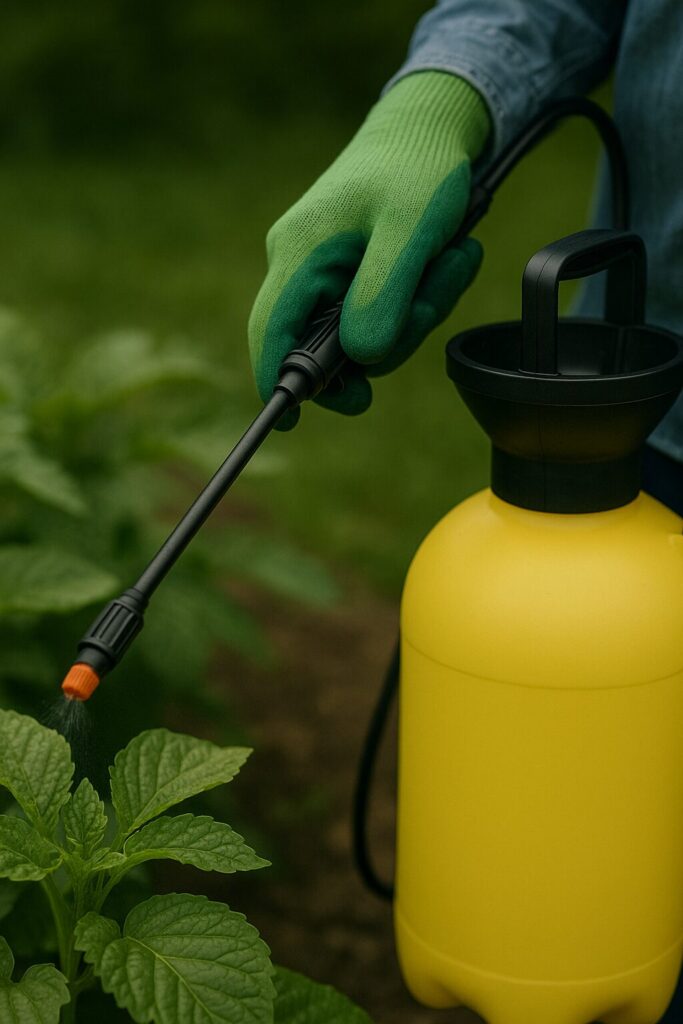
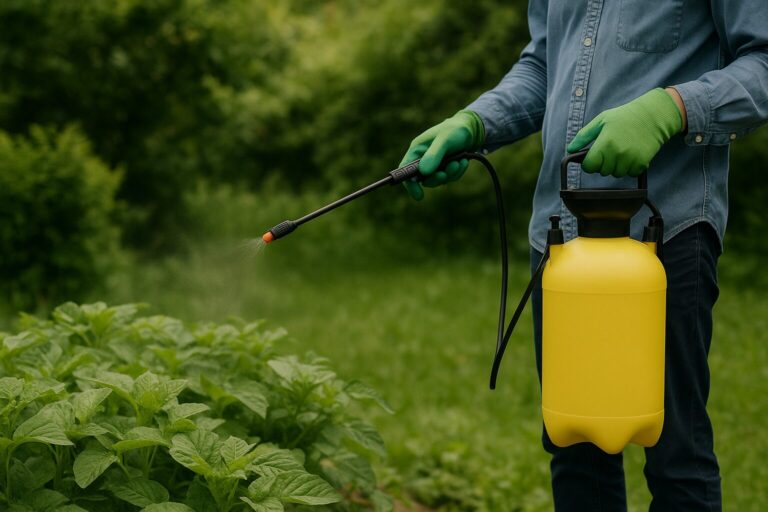
Contact-based solutions like neem oil, horticultural oils, soaps, and diatomaceous earth all require direct coverage to be effective. That means sprays must reach both sides of leaves, plant stems, and sheltered crevices where pests hide. Oils and soaps should be applied during cooler parts of the day, early morning or evening, to prevent leaf burn and reduce risks to pollinators. Diatomaceous earth works only when dry, so it should be reapplied after rain or irrigation. Timing is equally important: dormant oils are best used in winter to suffocate overwintering pests, while neem oil and soaps work better in the active growing season when young pest populations are vulnerable.
Even natural products can stress plants if not used correctly. Oils, for example, can cause phytotoxicity if applied during high heat or to moisture-stressed plants. Insecticidal soaps may damage tender leaves or flowers on sensitive species if concentrations are too strong. We always test new treatments on a small section before applying across an entire planting. For diatomaceous earth, only food-grade formulations should be used in garden spaces, since pool-grade DE contains crystalline silica that is unsafe for people and pets.
One of the main benefits of natural controls is their compatibility with beneficial organisms, but care is still needed. Broad application of diatomaceous earth can harm ground-dwelling insects that contribute to soil health, so we use it selectively as a barrier rather than a blanket treatment. Similarly, while neem oil and soaps degrade quickly, they should not be sprayed when bees and butterflies are active to prevent accidental exposure. By aligning treatments with pollinator habits, we protect the insects that support long-term garden vitality.
Because natural solutions often break down faster than synthetic pesticides, reapplication is usually necessary. Oils and soaps may need to be repeated weekly during pest outbreaks, while diatomaceous earth requires refreshing after rain. Rather than treating constantly, we integrate these methods into a broader system of monitoring and prevention. Beneficial insect attractants and habitat design reduce the need for frequent interventions, while threshold-based decision-making ensures we act only when pest levels could cause real damage. This not only saves time and resources but also helps maintain a living, balanced ecosystem.
While natural pesticides and repellents provide safer alternatives to synthetic chemicals, each tool carries its own set of strengths and drawbacks. At Rutheo Designs, we guide clients toward solutions that balance immediate effectiveness with long-term sustainability. Understanding these trade-offs helps ensure that treatments align with plant health, soil vitality, and broader ecological goals.
Insecticidal soaps and horticultural oils work quickly on contact, offering visible results within hours or days. However, they leave little residual protection, requiring repeated applications during ongoing infestations. Neem oil, on the other hand, works more slowly by interrupting pest growth cycles, but its effects extend over time when reapplied consistently. Diatomaceous earth lasts longer in dry weather but loses power after rain or irrigation, which means results are weather-dependent.
Most natural controls are less harmful to non-target species compared to synthetic pesticides, but they are not completely selective. Diatomaceous earth, for example, can harm ground-dwelling beneficial insects if applied broadly. Neem oil and soaps are safer when applied at times when pollinators are inactive, but direct contact can still affect delicate beneficial species. Balancing pest control with protection of allies like ladybugs, lacewings, and pollinators requires careful timing and targeted use.
Certain plants react differently to natural treatments. Oils may damage thin-leaved plants during hot weather, while soaps can burn tender foliage if applied at too high a concentration. Neem oil is generally gentle, but some species with waxy or fuzzy leaves may show spotting after treatment. Testing on small sections before wider use is a best practice that prevents large-scale plant stress.
Many natural options are cost-effective over time because they reduce reliance on synthetic chemicals and encourage a self-sustaining ecosystem. However, their need for frequent reapplication can mean higher short-term labor costs. For example, spraying horticultural oils weekly during a pest outbreak may require more effort than a single synthetic treatment. Yet for long-term soil health, pollinator safety, and overall garden resilience, the trade-off is worth the investment.
Natural pesticides and repellents are most effective when viewed not as stand-alone fixes but as part of a broader garden management strategy. When combined with good cultural practices, such as proper watering, healthy soil building, and careful plant selection, these tools provide a flexible and eco-friendly way to handle pests. The goal is not to eliminate every insect, but to maintain a balance where pests remain at manageable levels while beneficial organisms thrive.
We provide specialized natural pest management services designed to protect your garden while maintaining ecological balance. Our approach emphasizes safe, sustainable methods such as beneficial insect habitat planning, targeted use of diatomaceous earth, organic sprays like neem oil and horticultural oils, and soil-based prevention strategies. During an initial consultation, we assess pest pressures, plant health, and seasonal cycles to design a custom plan that safeguards your landscape without disrupting pollinators or soil organisms. Whether you need ongoing protection or a one-time intervention, our team can help create a thriving, resilient garden ecosystem. Email us at connect@rutheodesigns.com or call (360) 844-2989 to learn how we can apply natural solutions that keep your garden healthy, productive, and environmentally sound.
Protect your garden and home the natural way with our pesticide- and chemical-free solutions. At Rutheo Designs, we specialize in safe repellents that target pests while preserving pollinators, soil health, and local ecosystems. Our approach emphasizes prevention and balance such as helping you deter insects, rodents, and garden invaders without harming beneficial wildlife.
During your consultation, we’ll evaluate your garden’s conditions, identify potential pest issues, and recommend sustainable, eco-friendly treatments that fit Seattle’s climate. From companion planting strategies to natural sprays and habitat design, we provide guidance that keeps your space vibrant and chemical-free.
Start building a healthier outdoor environment today with Rutheo Designs’ natural pest management expertise. Email us at connect@rutheodesigns.com or call (360) 844-2989. Whether you’re tackling aphids, deer, or other persistent pests, we’re here to help with sustainable solutions tailored to your garden.
Links