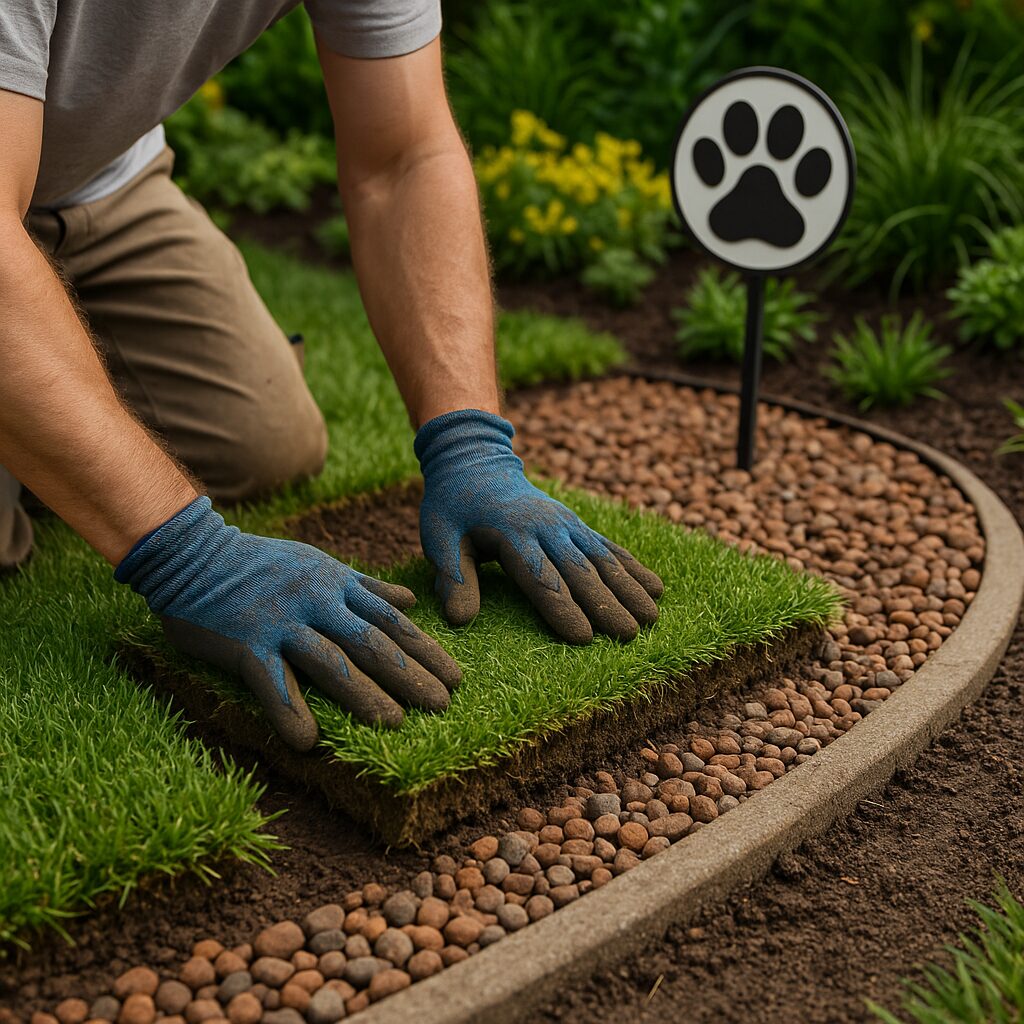
Our designated pet areas are more than just practical zones; they’re thoughtfully integrated parts of the landscape that reflect our commitment to ecological balance, aesthetics, and the everyday realities of pet ownership. We design these areas with an understanding of animal behavior and the natural movement of pets within a space, incorporating elements like dig-resistant planting borders, non-toxic groundcovers such as clover and creeping thyme, and natural shade solutions using hardy native shrubs and ornamental grasses. Every pet-friendly landscape we create begins with observing how the site functions under real use, ensuring our designs preserve soil integrity, support microbiodiversity, and minimize runoff through strategic permeability planning.
Designated pet areas are not simply fenced enclosures; they’re integrated zones that consider pet behavior, soil health, and overall garden aesthetics. At Rutheo Designs, we approach these areas with the same ecological and visual care as we would any planting bed or hardscape element. The presence of dogs or other pets introduces distinct movement patterns and activities that, when left unmanaged, can lead to soil compaction, lawn wear, plant damage, and runoff issues. That’s why we begin each design with a site assessment to identify natural pet traffic paths, areas vulnerable to digging or overuse, and regions that could benefit from controlled access.
We then use landscape architecture principles to create pet-specific microenvironments that serve clear functions, whether it’s a shaded rest zone, an active play area, or a relief station. These are designed using grading techniques that support drainage, edge definition using stone or flexible composite materials, and natural boundaries made with dense, non-toxic shrubs. By ensuring that these areas are accessible but subtly separated from high-maintenance zones, we help homeowners preserve the structural and biological integrity of their gardens while also improving the overall experience for pets.
In every pet-friendly landscape, surface material plays a crucial role in safety, functionality, and environmental performance. Surfaces must be soft enough for paws, tough enough for repetitive use, and compatible with the site’s hydrology. At Rutheo Designs, we prioritize permeable surfaces like decomposed granite, pea gravel, mulch-free pathways, and natural bark fines that reduce erosion and allow water infiltration. These materials not only help prevent muddy conditions but also support soil aeration and reduce puddling, two common problems in poorly drained pet areas.
While artificial turf is sometimes considered due to its low maintenance, we assess its use carefully. Many synthetic products retain heat and hinder proper waste drainage. If we do recommend it, we specify only products with high permeability, infill that remains cool under sun exposure, and proper sub-base construction to prevent waterlogging and odor buildup. For clients preferring organic alternatives, we use living groundcovers like woolly thyme, low clover, or creeping sedum, each selected for its resilience, pet safety, and regenerative growth pattern. These options keep the environment breathable and maintain plant-pet compatibility without relying on chemical lawn treatments.
One of the most overlooked elements of pet-friendly landscaping is plant toxicity. Many commonly used ornamental species, such as oleander, foxglove, and azalea, pose significant health risks to pets. Our plant selection process begins with pet-safe criteria, ensuring that species used within or near pet-accessible zones are non-toxic, resilient, and compatible with the local climate. Species like coreopsis, bee balm, yarrow, and native ornamental grasses offer seasonal color, durability, and tolerance for brushing or minor trampling.
To manage digging tendencies and paw traffic, we employ dense planting techniques in vulnerable areas. Clumping perennials, robust groundcovers, and root-anchored shrubs act as living barriers that discourage unwanted entry into sensitive planting beds. We also reinforce planting edges with stone mulch or spaced-out boulders that redirect pets along intentional movement paths. In addition to safety, we design with texture, scent, and seasonal variation to create engaging sensory environments, for example, planting rosemary, mint, or lavender, which provide enrichment for pets while deterring fleas and ticks naturally.
Rather than isolating pet areas, we create shared-use spaces where families and animals can coexist seamlessly. Our designs blend functionality and flow so that a garden remains both a sanctuary and a play area. For example, we may incorporate a gravel agility trail that loops through the landscape but remains visually cohesive with adjacent plant beds and seating patios. This allows pets to exercise without damaging delicate surfaces, while offering pet owners convenient sightlines and proximity to recreational areas.
Shaded pergolas, vine-covered trellises, or native tree canopies provide natural cooling for both humans and animals. We might also install raised planter beds or modular benches along the edge of a pet area to create social zones that are pet-adjacent but not directly affected by paw traffic. In water-wise landscapes, we sometimes use boulder groupings and low splash pads as pet water features that serve both as play stations and hydration spots, designed to minimize waste and avoid standing water.
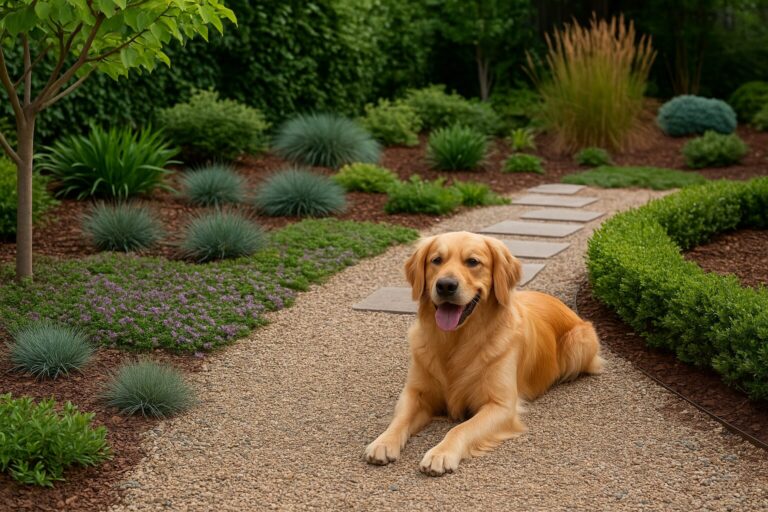
Effective waste management is essential in pet zones, particularly if pets use the same area consistently. Concentrated nitrogen from pet waste can degrade soil health, scorch turf, and interfere with microbial activity. We counteract this by installing in-ground digesters, discreet composting bins for biodegradable waste bags, and strategically placed access paths for routine cleaning. Drainage underneath these zones is improved using gravel sub-bases and perforated pipes to prevent runoff contamination.
The surrounding soil is also amended using a blend of compost, sand, and biochar to improve structure and maintain microbial resilience. In regions of the yard where turf might otherwise struggle, we recommend replacing grass with durable groundcover or using paving patterns that allow for root growth underneath while still withstanding pet impact. This soil-conscious strategy ensures that the entire system, plants, animals, and earth, can remain healthy even with daily use.
Designing for pets requires that outdoor spaces be functional in all seasons. We consider how heat, cold, and precipitation affect not just pets but the materials and plants within the design. For example, in summer, excessive sun exposure on hard surfaces can create thermal stress on paws. We counter this with reflective surface materials, cooling microclimates using shade-producing vegetation, and elevated deck platforms that remain cooler than the ground.
In wet seasons, drainage becomes paramount. All pet zones are graded to direct water away from main activity areas and into planted bioswales or retention pockets that support pollinator plants and reduce erosion. In cooler climates, we use frost-tolerant groundcovers and recommend seasonal mulch additions to maintain soil warmth and paw traction. Plants are chosen based on their ability to adapt to varied moisture levels, and irrigation is installed with zoned controls so pet areas can be treated independently as needed.
Good landscape design enhances more than just visual beauty, it solves real-world problems before they arise. In shared spaces where pets and people coexist, design becomes a form of quiet mediation between function and form. Without intentional planning, pets will gravitate toward paths of least resistance, often damaging turf, compacting soil, and disrupting plant health. By designing spaces that acknowledge their presence from the outset—spaces that are climate-adaptive, low-toxicity, and behavior-aware—we create landscapes that endure naturally.
Designated pet areas offer opportunities to support biodiversity, preserve the garden’s structure, and create calm, enriching environments for everyone who shares the space. Whether it’s through planting strategies, drainage engineering, or the thoughtful placement of features that appeal to both pets and their owners, these zones allow the landscape to flourish as a complete, sustainable system.
We specialize in designing pet-friendly landscapes that respect the natural rhythms of your space while offering secure, functional areas for your animals to enjoy. Whether you’re looking to reduce turf damage, prevent plant toxicity risks, or integrate interactive zones for your pets into your garden’s layout, our expert team can help you create an outdoor environment that works for both people and pets. We focus on solutions like non-toxic groundcovers, durable surface materials, drainage strategies for high-use areas, and planting techniques that balance beauty with pet behavior. Through our personalized consultations, we evaluate your property’s unique terrain, climate, and usage patterns to design sustainable pet zones that blend seamlessly into your overall landscape. Email us at connect@rutheodesigns.com or call (360) 844-2989. Whether you have questions about surface selection, dig-resistant plantings, or eco-conscious waste management, we’re here to help you build a landscape that supports every member of your household, including the four-legged ones.
We use cookies to improve your experience on our site. By using our site, you consent to cookies.
Manage your cookie preferences below:
Essential cookies enable basic functions and are necessary for the proper function of the website.
Google Tag Manager simplifies the management of marketing tags on your website without code changes.
Statistics cookies collect information anonymously. This information helps us understand how visitors use our website.
Google Analytics is a powerful tool that tracks and analyzes website traffic for informed marketing decisions.
Service URL: policies.google.com (opens in a new window)
Google reCAPTCHA helps protect websites from spam and abuse by verifying user interactions through challenges.
Marketing cookies are used to follow visitors to websites. The intention is to show ads that are relevant and engaging to the individual user.
Facebook Pixel is a web analytics service that tracks and reports website traffic.
Service URL: www.facebook.com (opens in a new window)
You can find more information in our Cookie Policy and Privacy Policy.