In Seattle’s famously rainy climate, poor drainage can turn a dream garden into a soggy mess. We understand that heavy clay soils and hidden basalt layers often lead to water pooling around plant roots, causing root rot and stressed flora. That’s why we design custom rain gardens and bioswales that not only manage runoff but also double as attractive focal points. By grading beds to promote percolation, installing infiltration trenches beneath permeable pavers, and carefully selecting native groundcovers like sword fern and salal for their water-tolerant root structures, we help every drop of rain seep gently into the earth. Our sustainable landscapes harness Seattle’s natural rainfall, reducing the burden on storm drains while nourishing your plants. On the flip side, drier spells demand an irrigation system that’s as efficient as it is invisible. We install drip irrigation with zoned hydrozones groupings of plants with similar water needs so that delicate rhododendrons aren’t overwatered while thirsty ornamental grasses stay lush.
Seattle’s average annual rainfall often exceeds 37 inches, requires careful water management to protect both plantings and structures. Our process begins with a detailed survey of site topography, soil texture and natural seepage zones. We analyze slope grades, soil permeability and existing vegetation patterns to map out water flow. Where runoff gathers, we recommend targeted capture through rain gardens or perforated pipe systems that collect and redirect excess water into subsurface infiltration galleries. By integrating native moisture-tolerant species such as Oregon grape (Mahonia aquifera) and vine maple (Acer circinatum), we create buffers that slow stormwater, filter sediment and recharge groundwater without detracting from garden aesthetics.
Beyond initial design, we develop a comprehensive water budget that balances ‘blue water’ inputs (precipitation and irrigation) with ‘green water’ outputs (evapotranspiration and runoff). This allows us to specify the right combination of passive and active systems, everything from permeable paving and bioswale liners to modular rainwater‐harvesting cisterns. We also factor in Seattle’s stormwater code, including potential SDCI permits for systems exceeding 500 square feet of impervious area so that every feature not only functions well but complies with local regulations. The result is a resilient landscape that thrives year-round, minimizes erosion and contributes positively to neighborhood stormwater management.
Effective diagnosis starts with careful observation during and after rainfall events. We scout the property for surface pooling in low spots, discolored or waterlogged mulch beds, and stunted growth along high-water lines. Hand-held moisture probes reveal zones where the soil remains saturated beyond 24–48 hours, while infrared thermal imaging can detect cool, damp pockets hidden beneath turf or ornamental groundcovers. These observations help us distinguish between surface runoff issues caused by poor grading or blocked catch basins, and subsurface saturation arising from clay lenses or perched water tables.
Once problem areas are flagged, we conduct infiltration and compaction tests to quantify soil performance. Percolation tests—digging a test pit, filling it with water, and measuring drop rates—give us an exact infiltration rate in inches per hour. Penetrometer readings assess compaction, and soil cores identify organic matter content. Armed with this data, we can pinpoint the precise depth and extent of any impermeable layers, ensuring that proposed solutions address the root cause rather than simply masking symptoms.
A robust drainage assessment combines field data with digital modeling to predict system performance under various storm scenarios. We establish existing contours using laser levels or GPS‐enabled total stations, then import this information into hydrologic software to simulate runoff volumes for 2-, 10- and 100-year storm events. This modeling highlights potential overflow paths and identifies critical areas requiring relief, such as slopes above planted beds or near building foundations.
In parallel, we extract soil samples at strategic points to analyze texture, structure and organic content. These lab results inform our selection of backfill materials—typically angular drain rock with 0.75–1.5 inches in diameter to maximize permeability. We then overlay rainfall intensity data from the National Weather Service with site runoff coefficients to calculate pipe diameters and trench slopes. Where necessary, we coordinate with civil engineers to secure stormwater management permits, ensuring that our drainage plan meets or exceeds City of Seattle standards.
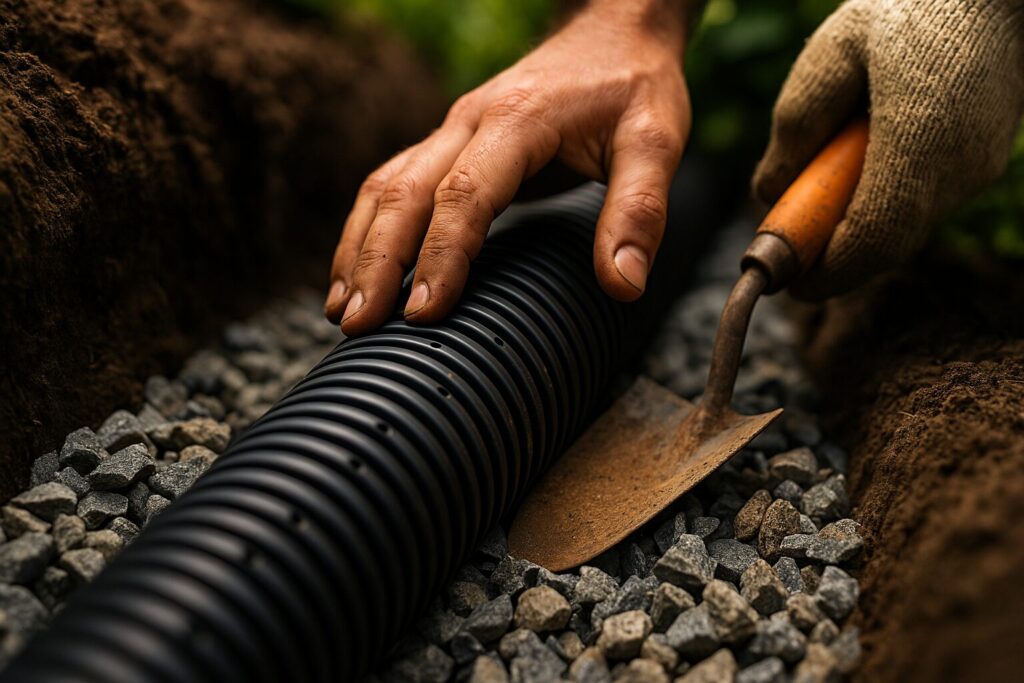
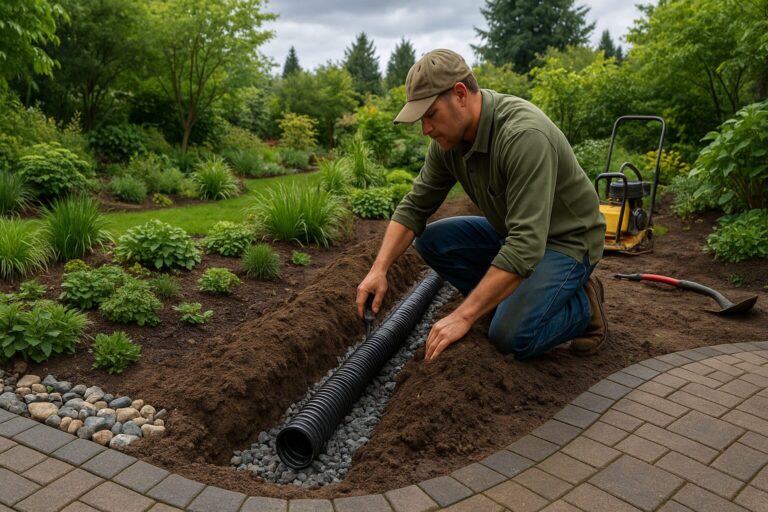
French drains are one of our preferred subsurface methods for intercepting groundwater before it reaches critical areas. We begin by determining trench location and length based on the slope and volume of water intercepted. Trenches are excavated to at least 18 inches below grade, lined with a nonwoven geotextile fabric to prevent soil ingress, then backfilled with coarse gravel surrounding a 4- or 6-inch perforated PVC pipe. The pipe is set on a slight 2–4% grade toward a safe discharge point, such as a rock‐lined dry creek bed or a vegetated bioswale.
To extend service life, we install accessible cleanouts at intervals no greater than 50 feet, allowing for routine jetting to remove silt. We also size sediment traps upstream of the perforated pipe to capture debris before it enters the drain field. At the surface, decorative river stone or native gravels provide a finished look that masks the system without impeding infiltration. For slopes prone to shallow slides, we sometimes specify ribbon drains—narrow, shallow trenches with slotted pipe just below root depth to protect slopes while maintaining planting integrity.
Irrigation failures often manifest as irregular soil moisture or unexpected dry patches. Our first step is a manual zone test: activating each zone independently and observing nozzle and emitter performance. Low-pressure readings may indicate clogged filters or broken mainline pipes, while high-pressure spikes often point to malfunctioning pressure regulators or valve issues. We then use tracer dyes and electronic leak detection equipment acoustic or pressure‐wave testers to locate hidden leaks without unnecessary excavation.
Once leaks or clogs are identified, we isolate and repair the affected components. This may involve replacing worn solenoid valves, swapping out cracked lateral lines using compression fittings, or installing new check valves to prevent backflow. Sediment buildup inside emitters is cleared by hydraulic flushing; stubborn blocks are removed and replaced with pressure-compensating drippers for consistent flow. After repairs, we recalibrate each zone’s flow rate and update our digital zone map, ensuring that future troubleshooting is faster and more precise.
When an existing irrigation network is more than a decade old, technology advancements can yield dramatic water savings. We start upgrades by installing weather-responsive controllers that link to local forecast services and rain sensors, automatically suspending irrigation on wet days. Soil-moisture probes, placed at root-zone depth, feed real-time data to the controller, allowing dynamic schedule adjustments based on actual soil conditions rather than preset timers.
Hardware upgrades include switching to pressure-compensating drippers and micro-sprays that deliver water at uniform rates, regardless of elevation changes across the landscape. In higher-value plantings, we install subsurface drip tubing beneath mulch layers—a method that virtually eliminates evaporation losses. We also modularize valve manifolds with quick-disconnect fittings for streamlined maintenance and integrate foreign system interfaces so homeowners can manage irrigation through smart-home dashboards or voice assistants.
Long‐term irrigation health depends on regular system tune-ups and performance tracking. We recommend biannual inspections spring startups and fall winterizations that cover filter cleaning, backflow assembly testing, strainer flushing and valve calibration. During startup, we perform flow-rate measurements on each zone to confirm emitter uniformity; in winterization, we fully flush above‐ground lines and isolate frost-prone components to prevent freeze damage.
To keep clients informed, we provide a digital performance log accessible via a secure portal. This log includes rainfall totals, run times, flow metrics and soil-moisture trends, empowering proactive adjustments to emitter spacing or schedule durations as plantings mature. Over time, we may recommend soil amendments—such as adding compost or biochar—to improve infiltration and retention, or suggest swapping in more drought-adaptive species where microclimates shift. This ongoing data-driven approach ensures landscapes remain sustainable, resilient and vibrant through every Seattle season.
At Rutheo Designs, we’re here to tackle Seattle’s drainage and irrigation challenges with tailored solutions that keep your landscape healthy and resilient. From on-site diagnostics and French drain design to precision irrigation repairs and smart system upgrades, our experts use soil-moisture mapping and slope analysis to craft plans that prevent waterlogging and eliminate dry spots. During an initial consultation, we’ll evaluate your property’s grading, soil composition and existing piping to recommend the most effective combination of subsurface drains, bioswales and drip-irrigation zones. To schedule your site assessment or learn more about our drainage system evaluations and irrigation system overhauls, email us at connect@rutheodesigns.com or call (360) 844-2989. Whether you need a full French drain installation, a simple leak repair, or a smart-sensor irrigation upgrade, we’re ready to bring sustainable water management to your garden.
We use cookies to improve your experience on our site. By using our site, you consent to cookies.
Manage your cookie preferences below:
Essential cookies enable basic functions and are necessary for the proper function of the website.
Google Tag Manager simplifies the management of marketing tags on your website without code changes.
Statistics cookies collect information anonymously. This information helps us understand how visitors use our website.
Google Analytics is a powerful tool that tracks and analyzes website traffic for informed marketing decisions.
Service URL: policies.google.com (opens in a new window)
Google reCAPTCHA helps protect websites from spam and abuse by verifying user interactions through challenges.
Marketing cookies are used to follow visitors to websites. The intention is to show ads that are relevant and engaging to the individual user.
Facebook Pixel is a web analytics service that tracks and reports website traffic.
Service URL: www.facebook.com (opens in a new window)
You can find more information in our Cookie Policy and Privacy Policy.