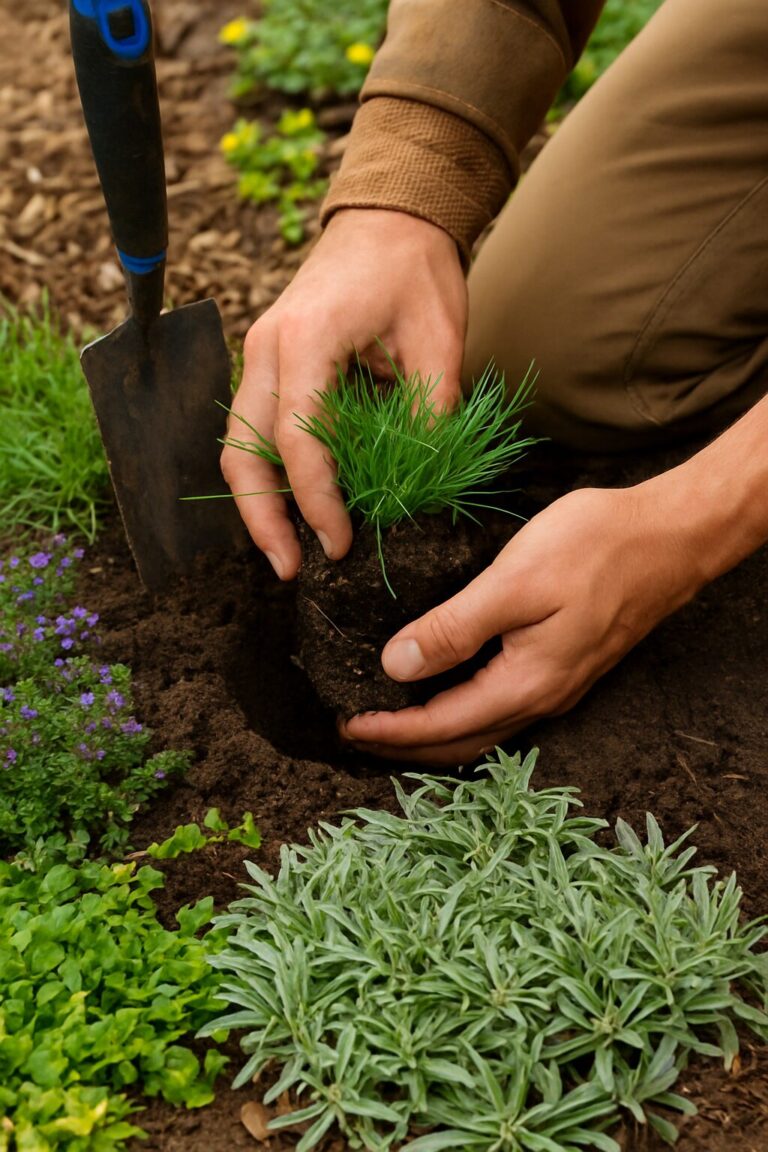
We specialize in helping Seattle homeowners break away from the conventional lawn by crafting outdoor spaces that are beautiful, low-maintenance, and ecologically sound. Our groundcover and low-water lawn solutions go beyond aesthetics; they’re functional ecosystems designed for the Pacific Northwest climate. Whether it’s replacing turfgrass with deep-rooted meadow blends, creeping thyme, or mossy native covers that thrive in shaded areas, we tailor every design to minimize irrigation needs and reduce chemical inputs. We integrate species that support local pollinators and use soil-building strategies that promote long-term plant health. It’s not just about using less water; it’s about building living systems that give more than they take. We’ve seen time and again how a thoughtful blend of drought-tolerant grasses, ornamental sedges, and spreading perennials can transform a high-maintenance lawn into a thriving, self-sustaining environment.
In Seattle’s temperate marine climate, traditional turfgrass lawns often require more input than the environment naturally provides, especially when summer droughts stretch longer than they once did. Conventional lawns need frequent watering, mowing, and fertilization, all of which strain natural resources. As climate patterns shift and water conservation becomes more urgent, many homeowners are choosing sustainable lawn alternatives that work with, rather than against, our regional ecology. At Rutheo Designs, we support these transitions by designing low-water, low-maintenance landscapes that prioritize long-term resilience, beauty, and biodiversity.
Sustainable lawn care in the Pacific Northwest starts by aligning plant selections with the native rainfall cycle, shade levels, and soil composition. In Seattle, this often means moving away from shallow-rooted turfgrass and toward plantings that can withstand dry summers without supplemental irrigation. Deep-rooted meadow grasses, creeping groundcovers, and native mosses provide lush, green coverage while requiring significantly less water and care. These alternatives also support ecological functions such as soil stabilization, carbon sequestration, and pollinator habitat creation.
Our designs center on plant communities that are adapted to thrive in the same ecosystem. This includes native sedges like Carex obnupta for moist shade, or drought-tolerant species like Festuca idahoensis and Danthonia californica, which provide a soft, grassy appearance without constant watering. These selections anchor our approach to regenerative landscaping, where each layer of the landscape supports the next.
Groundcovers are not just a substitute for grass; they’re a strategic solution for reducing maintenance and enhancing biodiversity. Low-growing, spreading plants like Thymus serpyllum (creeping thyme), Fragaria chiloensis (beach strawberry), and Achillea millefolium (yarrow) are excellent choices for sunny areas, forming thick mats that outcompete weeds and provide year-round texture. For shade or partial sun, we frequently integrate native mosses and ferns, or resilient covers like Vancouveria hexandra (inside-out flower), which thrives in understory conditions.
In addition to their visual appeal, these groundcovers contribute to soil health by improving structure and retaining moisture. Unlike turf, they don’t require weekly mowing or synthetic inputs, and many are resistant to common lawn pests. Over time, they build up the surrounding micro-ecology, attracting beneficial insects and improving overall soil fertility.
One popular direction among our clients is the installation of native or mixed-species meadows. These blends often include bunchgrasses, perennial wildflowers, and nitrogen-fixing legumes that work together to support a living soil. Unlike ornamental turf, which offers little ecological value, meadows provide habitat for birds, bees, and butterflies while adding seasonal interest to the yard. They can be mowed once or twice a year, or left semi-wild for a more naturalistic look.
For a neater aesthetic, we sometimes recommend low-growing grass alternatives like Carex pansa (California meadow sedge) or Dymondia margaretae (silver carpet) where the climate permits. These species provide the soft texture of a lawn but with dramatically reduced input needs. Mulched borders, stepping stone paths, or pollinator strips can be used to visually organize these areas while reinforcing their environmental benefits.
Each site presents a unique mix of sun exposure, slope, drainage, and soil structure. Our approach to sustainable lawn alternatives starts with understanding those conditions deeply. We evaluate whether a space receives full sun or dappled light, how water moves across the property, and what type of root systems will work best in the soil profile. These technical details help us avoid common issues such as erosion, compaction, or poor plant establishment.
Our focus is on building plant communities, not just planting isolated species. A healthy groundcover system has layers, plants that spread horizontally, grow vertically, fix nitrogen, or attract specific pollinators. With that ecological layering in place, your landscape becomes increasingly self-sufficient over time.
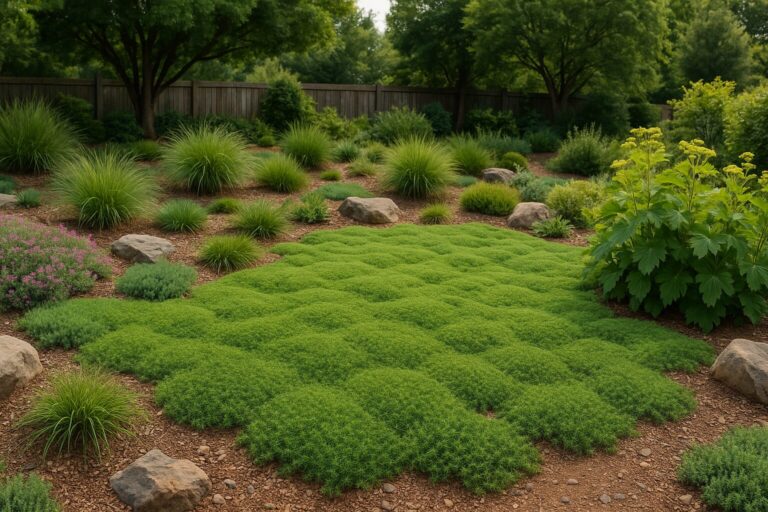
While the shift toward low-water lawns and groundcovers is often driven by water conservation concerns, its long-term benefits extend well beyond that. Reducing synthetic fertilizers and mowing lowers your carbon footprint. Choosing native plants creates habitat in a region where urbanization has fragmented natural ecosystems. And perhaps most significantly, these landscapes tend to mature gracefully, evolving instead of degrading.
Low-water alternatives are not a compromise; they’re an upgrade. They offer a path to outdoor spaces that feel both intentional and alive, balancing human use with ecological integrity. As awareness grows around climate adaptation and sustainable design, these landscapes are becoming the new standard not just in Seattle, but across the Pacific Northwest.
Choosing a sustainable lawn or groundcover approach isn’t just a design choice—it’s a statement about stewardship. These living systems, when thoughtfully installed and maintained, reflect a deeper commitment to place, time, and ecology. Whether a yard is large or small, flat or sloped, sunny or shaded, there’s always a plant palette that can meet its needs while supporting broader environmental goals.
The Pacific Northwest offers a wealth of plant diversity that, when used correctly, outperforms conventional turf in both beauty and function. For homeowners looking to reduce maintenance and build resilience into their landscapes, Seattle’s climate is a perfect fit for a new way of thinking about lawns.
Our groundcover and low-water lawn services are designed to help you transition away from traditional turf and toward a more climate-conscious, ecologically beneficial landscape. Whether you’re interested in converting a high-maintenance lawn into a native meadow, installing drought-tolerant sedges and creeping groundcovers, or exploring moss gardens for shaded areas, we offer site-specific planning to ensure long-term success. We start by evaluating your soil composition, water flow, and sun exposure, then tailor plant selections that minimize irrigation needs and enhance habitat value. Ready to take the next step? Email us at connect@rutheodesigns.com or call (360) 844-2989. From selecting compatible species to planning for seasonal changes and long-term sustainability, we’re here to help you reimagine what a lawn can be.
We use cookies to improve your experience on our site. By using our site, you consent to cookies.
Manage your cookie preferences below:
Essential cookies enable basic functions and are necessary for the proper function of the website.
Google Tag Manager simplifies the management of marketing tags on your website without code changes.
Statistics cookies collect information anonymously. This information helps us understand how visitors use our website.
Google Analytics is a powerful tool that tracks and analyzes website traffic for informed marketing decisions.
Service URL: policies.google.com (opens in a new window)
Google reCAPTCHA helps protect websites from spam and abuse by verifying user interactions through challenges.
Marketing cookies are used to follow visitors to websites. The intention is to show ads that are relevant and engaging to the individual user.
Facebook Pixel is a web analytics service that tracks and reports website traffic.
Service URL: www.facebook.com (opens in a new window)
You can find more information in our Cookie Policy and Privacy Policy.