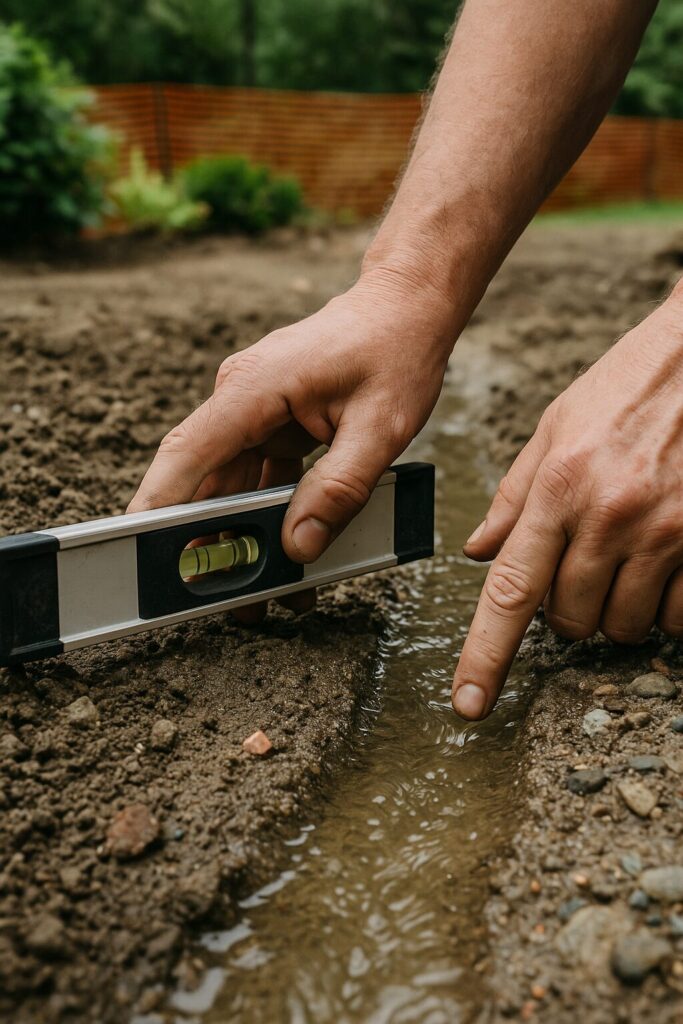
We understand that a thriving garden begins with the right relationship between water and soil. Our drainage and water flow assessments are designed to ensure that every landscape we design can handle rainfall, irrigation, and natural groundwater movement in a way that protects both plants and property. We study how water interacts with the terrain, identifying areas where it might pool, erode soil, or stress root systems. By analyzing slopes, soil structure, and permeability, we design sustainable solutions that keep your garden resilient while enhancing plant health.
We go beyond simply “fixing drainage problems”; our approach integrates long-term sustainability with the artistry of landscape design. By implementing methods such as rain gardens, permeable pathways, and strategic grading, we create outdoor spaces that conserve resources and support biodiversity while remaining visually spectacular. This means your dream garden not only looks beautiful in the moment but also adapts to seasonal rainfall patterns, prevents overwatering stress, and contributes to a balanced ecosystem.
Every successful landscape design begins with a clear understanding of water movement. At Rutheo Designs, we look closely at how precipitation interacts with the soil, hard surfaces, and surrounding vegetation. Hydrology is more than a matter of drainage; it encompasses infiltration, evapotranspiration, and storage within the soil profile. Even slight changes in slope can redirect flows, causing ponding or erosion if left unmanaged. By observing these subtle dynamics, we ensure a landscape’s foundation supports both aesthetic goals and ecological balance.
In practice, this means assessing rainfall intensity patterns, monitoring existing drainage points, and understanding the natural recharge of groundwater reserves. We know that excessive runoff can carry away nutrients, while poor infiltration starves deep roots of moisture. Through targeted adjustments, such as contour grading or soil amendment, we balance water availability across the site. This gives plants the conditions they need to thrive while reducing risks of foundation damage or soil loss.
Soil is at the heart of drainage. We examine soil horizons carefully because a sandy loam behaves very differently from a clay substrate under heavy rainfall. Sandy soils may drain too quickly, reducing water retention, while clay soils may impede flow and create persistent waterlogging. Both extremes can be managed by understanding the soil’s infiltration rate and tailoring planting and design strategies accordingly.
We often incorporate organic matter or structural amendments to increase soil porosity, improve aeration, and create more favorable root environments. In areas where compaction has reduced permeability, we use subsoiling or introduce deep-rooted plant species that gradually restore infiltration. This soil-conscious approach ensures that drainage solutions remain effective long-term rather than failing under seasonal stress.
A modern approach to drainage prioritizes sustainability over short-term fixes. At Rutheo Designs, we design systems that slow, spread, and soak water rather than channel it rapidly away. Rain gardens, bioswales, and vegetated filter strips are practical solutions that enhance both form and function. These features can transform stormwater from a liability into a resource, filtering pollutants while creating lush, diverse planting beds.
Permeable paving is another effective tool, allowing water to infiltrate beneath walkways or driveways instead of running off into storm drains. When combined with rainwater harvesting and controlled release structures, these techniques create a comprehensive network that balances water storage, quality improvement, and ecological benefit. Sustainable drainage techniques are not only functional but also align with climate-adaptive landscape design.
Plants are natural partners in managing water movement. We choose species adapted to varying moisture levels, from deep-rooted natives that stabilize soils on slopes to wetland plants that thrive in rain gardens. These plants act as living infrastructure: their roots filter water, their foliage slows rainfall impact, and their seasonal growth cycles regulate soil conditions. Strategic planting also reduces erosion by shielding bare ground from direct runoff.
Beyond their functional role, well-chosen plants create multi-layered habitats. Pollinator-friendly species enrich biodiversity, while evergreen groundcovers provide year-round soil protection. By integrating planting with drainage infrastructure, we achieve landscapes that remain both visually appealing and resilient under shifting weather patterns.
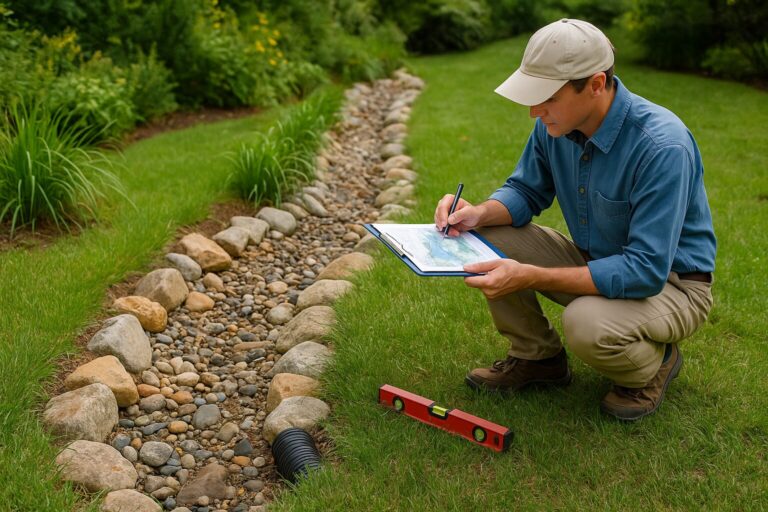
Drainage solutions must be designed for longevity. A system that works perfectly at installation may fail within years if sediment buildup, plant overgrowth, or structural wear is ignored. For this reason, we plan for maintenance from the beginning. Clear access routes, easy-to-service inlets, and self-sustaining plant choices reduce the need for intensive upkeep.
Routine inspection is vital: checking for clogged grates, sediment accumulation, or unexpected erosion ensures the system performs during high-intensity storms. We also factor in adaptability, so that modifications, such as expanding a rain garden or upgrading permeable surfaces, can be made as landscapes evolve. This proactive approach protects both the garden’s beauty and the homeowner’s investment.
Climate change introduces greater unpredictability in rainfall patterns, from prolonged droughts to extreme downpours. We incorporate resilience into every project by planning for wider ranges of conditions. This means designing infiltration systems that perform in both wet and dry cycles, choosing drought-tolerant species alongside moisture-loving plants, and ensuring overflow channels protect vulnerable areas during extreme events.
By embracing these forward-thinking strategies, landscapes become more than ornamental, they serve as buffers against environmental stress. The integration of thoughtful drainage and water-flow management allows gardens to thrive even in challenging climates, offering both immediate enjoyment and long-term ecological stability.
Drainage features don’t have to be hidden or purely utilitarian. At Rutheo Designs, we believe that function and beauty should coexist. A bioswale can double as a seasonal flower border, a rain garden can be designed as a pollinator haven, and a retaining wall with integrated drainage can become a focal point in a terraced garden. These approaches invite the eye while quietly managing water.
By blending aesthetic considerations with engineering, we prevent drainage systems from appearing like add-ons. Instead, they become celebrated features of the garden itself. Visitors see a lush planting bed, not a stormwater management tool, yet behind the scenes, water is being guided, filtered, and stored with precision. This fusion ensures that sustainability remains woven into the landscape’s identity without compromising beauty.
Managing water effectively is one of the most important steps in creating a sustainable, long-lasting garden. Our drainage and water flow assessment services are designed to prevent costly issues like erosion, flooding, and plant stress while helping you make the most of every drop of rainfall. We analyze site conditions such as slope, soil type, and existing runoff patterns to recommend practical, eco-friendly solutions that blend seamlessly into your landscape. From rain gardens and permeable pathways to grading adjustments and water-harvesting systems, we provide strategies that protect your investment and enhance the beauty of your outdoor space.
If you’re planning a new garden or need to resolve existing drainage challenges, we’re here to help guide the process with expertise and care. Email us at connect@rutheodesigns.com or call (360) 844-2989 to schedule your consultation. Whether you’re curious about sustainable water management, want to prevent seasonal flooding, or need advice on integrating drainage solutions into your garden design, our team will support you with tailored recommendations every step of the way.
We use cookies to improve your experience on our site. By using our site, you consent to cookies.
Manage your cookie preferences below:
Essential cookies enable basic functions and are necessary for the proper function of the website.
Google Tag Manager simplifies the management of marketing tags on your website without code changes.
Statistics cookies collect information anonymously. This information helps us understand how visitors use our website.
Google Analytics is a powerful tool that tracks and analyzes website traffic for informed marketing decisions.
Service URL: policies.google.com (opens in a new window)
Google reCAPTCHA helps protect websites from spam and abuse by verifying user interactions through challenges.
Marketing cookies are used to follow visitors to websites. The intention is to show ads that are relevant and engaging to the individual user.
Facebook Pixel is a web analytics service that tracks and reports website traffic.
Service URL: www.facebook.com (opens in a new window)
You can find more information in our Cookie Policy and Privacy Policy.