Getting blackberry, English ivy, or bindweed out of a Seattle yard can feel like the hard part. Sometimes it is: thorny blackberry canes reach into fences, ivy mats hide old stumps, and bindweed snaps off just when you think you have the root. But the yard is not finished when the truck leaves.
The first season after removal decides whether the space turns back into the same problem or becomes a healthier planting area. Bare soil, broken roots, disturbed mulch, and sudden sunlight all invite fast regrowth. A shaded north-side bed where ivy used to hold the soil may be exposed and dusty by July. A backyard blackberry patch behind the garage may show compacted clay, old rubble, and runoff from the neighbor’s roofline.
Good aftercare is simple: cover the soil, watch the edges, pull small sprouts, and replant densely enough that the ground does not stay open. If the removal is part of a larger project, our invasive plant removal work usually pairs with soil repair, mulch, and replacement planting rather than ending at demolition.
The Yard Changes Fast After Removal
Invasive plants often hide the real site. Blackberry canes may be the only thing holding a loose slope together. Ivy may have formed a thick mat over dry soil and tree roots. Bindweed may have threaded through perennials so tightly that the whole bed needs sorting before anything can regrow cleanly.
Once those plants come out, the yard gets brighter, wetter, drier, or more exposed than it was the week before. Soil that sat under ivy for years can shed water in some places and turn slick in others. A blackberry patch may leave behind holes where crowns were dug and a pile of cane fragments that should not be mixed back into the bed.
Aftercare starts immediately. The goal is to keep disturbed ground from turning into an open invitation.
Clear the Debris Without Spreading the Problem
Removal debris needs more care than ordinary pruning. Blackberry canes can root where they touch the ground. Ivy stems can keep growing from nodes if they are left in damp piles. Bindweed fragments are especially frustrating because pieces of root can start again when they stay in the soil.
After a removal day, separate the site into three rough categories:
- invasive stems, crowns, roots, and seed-heavy material that should leave the planting area
- existing plants, logs, stones, and soil worth keeping
- loose organic debris that is safe to compost or reuse only if it is not mixed with invasive parts
Do not grind fresh invasive material into the bed as mulch. It may look tidy for a week, but it can turn one removal job into dozens of small regrowth points. Bagging, hauling, or municipal disposal may be the better choice for aggressive material, especially with bindweed roots and ivy runners.
Walk the edges slowly. Fence lines, alley edges, the base of laurel hedges, and the shadow under decks are where roots and vines stay hidden. If the visible patch is gone but the edge remains alive, the bed will refill from the side.
Protect Bare Soil Before Weather Takes Over
Seattle gives you two different problems after invasive removal: winter rain and summer drought. Bare soil can crust, erode, or invite weeds in both conditions. On a slope, loose soil can move during the first hard rain. In a sunny bed cleared in June, the top inch can dry quickly while clay beneath it stays damp.
Mulch is the fastest stabilizer. For most newly cleared ornamental beds, plan on roughly 2 to 3 inches of arborist chips or other coarse organic mulch after the worst invasive roots are out. Keep mulch pulled back from trunks, crowns, and perennial bases.
Mulch should be deep enough to shade the soil and slow weed germination, but not so deep that it buries the whole planting zone. In areas where bindweed was heavy, avoid tilling deeply. Tilling chops roots and can spread the problem.
For more ordinary weed pressure after the invasive work is under control, our guide to weed prevention and mulching for Seattle gardens explains timing and material choices in more detail.
Expect Follow-Up Sprouts
The cleanest invasive plant removal still needs follow-up. That is not failure. It is how these plants behave.
Blackberry crowns often resprout from pieces missed under roots, rock edges, or fence posts. Ivy leaves may appear from buried stem segments. Bindweed can send up thin shoots weeks after the bed looked clear, especially where roots were deep or tangled through existing plants.
Follow-up works best when it is early and boring. Walk the cleared area every week or two during the first growing season. Pull or dig sprouts while they are small, when the soil is slightly moist and roots release cleanly.
Mark problem spots with small flags if needed. Many homeowners forget where the worst crown was once mulch goes down. A flag near the old blackberry base or ivy edge makes the next inspection faster.
Repair Soil Instead of Planting Into Exhausted Ground
Invasive plants can leave soil in rough shape, but the exact problem varies. A blackberry patch may have decent organic matter under the canes but compacted access paths around it. An ivy-covered side yard may have shallow, root-filled soil under cedar or maple canopy. A bindweed bed may have been repeatedly dug, amended, and disturbed until the soil layers are mixed and uneven.
Before buying replacement plants, check the basics:
- Does water soak in or sit on top?
- Can you push a hand trowel into the bed without hitting dense clay or rubble?
- Are mature tree roots close enough that deep digging would damage them?
- Did removal expose a drainage path, downspout issue, or low spot?
- Is the soil loose because it is healthy, or loose because it was recently torn apart?
Some beds need compost blended into the upper soil. Some need only surface mulch and careful planting pockets. Some need grading, drainage repair, or erosion control before planting makes sense. Our soil health and amendment services are useful when removal reveals compacted fill, poor infiltration, or soil buried under ivy for years.
If the cleared area sits on a slope, aftercare should also account for runoff. The slope planting and erosion control guide is a good companion when blackberry removal opens a bank or hillside.
Replant Before the Weeds Choose for You
Open ground does not stay open. If you do not replant, the next seedbank will.
Replacement planting should match the newly revealed site, not the old invasive cover. A sunny blackberry clearing may support shrubs, grasses, and flowering perennials that would have failed under canes. An ivy-cleared bed under mature trees may need shade-tolerant groundcovers, ferns, and small shrubs that can handle root competition.
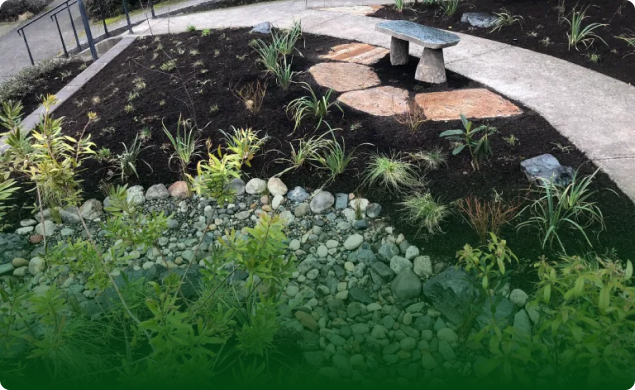
Think in layers. One or two shrubs do not cover enough ground by themselves. Add low plants that knit the soil surface, seasonal flowers for pollinators, and mulch that protects the gaps while plants establish. Native and climate-adapted plants can help the bed settle into a lower-input rhythm, especially when they are chosen for the actual light, moisture, and soil conditions on site.
For planting ideas, start with native plant landscaping in Seattle and pollinator garden design in Seattle. If the area will become an edible or mixed habitat bed, the same principle still applies: cover the soil with living roots as soon as the site is ready.
Be Careful Around Trees and Existing Plantings
Ivy removal around mature trees deserves extra patience. Pulling too aggressively can tear bark, disturb feeder roots, and expose soil that had been shaded for years. Cut climbing ivy at the base, remove what can be removed without damaging bark, and let upper growth die back before pulling. Ground ivy should come out in sections, with hand work near roots and trunks.
Bindweed in established beds also calls for restraint. Digging the whole bed may save time on day one but damage perennials and scatter root pieces. Repeated hand removal, careful plant lifting, and temporary open spacing may work better than one aggressive reset.
Blackberry often grows where people stopped using the space: behind sheds, along alleys, at the back of parking strips, or down a slope no one wanted to maintain. Once the canes are gone, decide how the area will be reached for follow-up. A narrow stepping path, small access gap, or mulched maintenance strip can make the difference between a restored bed and a forgotten corner.
When to Bring in Help
Homeowners can handle small patches if they can remove roots cleanly, cover the soil, and keep up with follow-up. Professional help makes more sense when invasive plants cover a slope, grow into trees, sit near utilities, or need replanting and soil repair right after removal.
The bigger question is what the cleared space should become. A better yard comes from pairing removal with a next use: habitat planting, access path, rain garden edge, food forest, privacy screen, or lower-maintenance bed.
If you want help deciding what belongs after the invasive plants come out, garden coaching can give you a practical plan before the next flush of growth arrives.
FAQ
How soon should I mulch after invasive plant removal?
As soon as the main roots, crowns, and debris are out. Leaving bare soil open for weeks gives weeds and invasive fragments a head start, especially in spring and early summer.
How deep should mulch be after blackberry or ivy removal?
Most ornamental beds do well with about 2 to 3 inches of coarse organic mulch. Keep it away from trunks and plant crowns, and avoid burying small replacement plants.
Will blackberry, ivy, or bindweed come back after removal?
Often, yes. Follow-up sprouts are normal during the first season. Small weekly or biweekly removals are much easier than waiting until canes, vines, or bindweed strands rebuild the patch.
Should I plant right away after invasive removal?
Plant once the worst roots are out, soil issues are understood, and the bed can be watered. In many Seattle yards, replanting soon is better than leaving open soil, but planting into compacted, unstable, or root-filled ground without prep leads to weak establishment.
Can I compost invasive plant debris?
Be cautious. Fresh blackberry, ivy, and bindweed material can create problems if roots or stems survive. Removing aggressive material from the site is often safer than home composting.
If invasive plant removal has opened a raw patch of yard, schedule a consultation with Rutheo Designs. We can help stabilize the soil, plan follow-up, and turn the cleared area into a planting that earns the space back.