A Pacific Northwest autumn does not end with a sudden, freezing full stop. It arrives through weeks of descending drizzle, cooling soil, and diminishing daylight that slowly strip the garden of its summer weight. Faced with yellowing foliage and soggy perennial borders, many Seattle homeowners default to a wholesale cutback, shearing beds down to the mud before Thanksgiving.
That urge to sanitize the yard is understandable, but sweeping a property entirely flat creates its own problems. Bare soil exposed to months of maritime rainfall compacts easily and leaches nutrients. Visually, a completely cleared yard under gray Puget Sound skies looks sterile, flat, and abandoned.
A well-composed winter garden strikes a deliberate middle ground. By editing selectively rather than clearing blindly, you can retain architectural stems, rich leaf mulch, and branching forms that bring depth to the low-light months. The result is an intentional, layered space that carries genuine visual interest while preserving the quiet biological structures wintering organisms depend upon.
Evaluating the Late-Autumn Transition
One useful moment to assess a winter garden is after the first steady rains have pulled down the deciduous canopy. Walk the property on an overcast afternoon. Without summer blooms to distract the eye, the fundamental layout of the land stands in plain view.
Look closely at how individual plantings are transitioning:
- Standing upright: Stiff-stemmed perennials, ornamental grasses, and woody shrubs hold their lines against wind and rain, providing immediate vertical contrast.
- Melting down: Soft, succulent perennials, hosta leaves, and water-logged annual foliage collapse into flat, translucent mats on the soil surface.
- Catching light: Exfoliating bark, lingering seed capsules, and evergreen foliage collect moisture and reflect the weak ambient daylight.
- Creating obstacles: Wayward branches crossing primary pathways, deadwood sagging under saturated weight, or foliage hanging low over entry steps disrupt movement through the site.
This assessment separates structural assets from genuine clutter. The goal is to keep what offers visual stability and ecological value, while removing whatever causes structural collapse, turf damage, or safety hazards along daily routes.
The Winter Scaffold: Evergreen Volume and Deciduous Silhouette
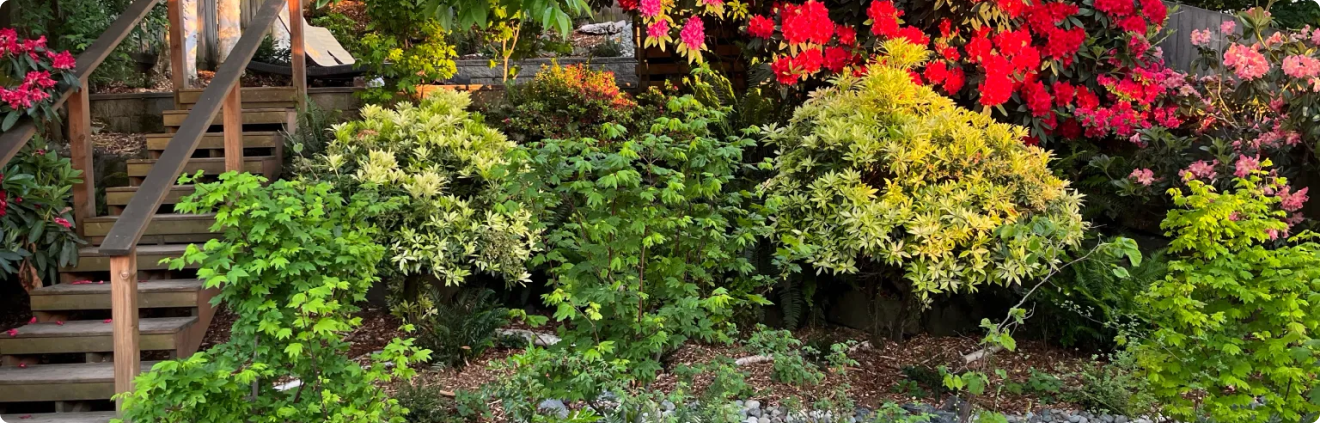
When the herbaceous layer thins out, woody plants do the heavy lifting. Broadleaf evergreens, conifers, and dense deciduous shrubs form the visual anchor of a cold-season landscape. Without them, retained perennial stems simply look like debris scattered across an empty field.
Evergreen masses provide visual weight and a sense of permanence. Grouped broadleaf shrubs and conifer screens absorb sound, buffer prevailing winter winds, and give the eye a reliable green baseline when looking out from interior living spaces. They anchor the corners of the property, stabilizing sightlines that would otherwise drift into neighboring fences or utility areas.
Deciduous silhouettes work in direct dialogue with those solid evergreen backdrops. The fine tracery of dogwoods, maples, and deciduous viburnums catches low-angle sunlight that slips beneath cloud decks in late afternoon. Peeling, polished, or textured bark adds warmth and surface detail that goes unnoticed behind summer leaves.
Perennial Stems and Seed Heads: Structure Versus Slump
Not every perennial deserves a spot in the winter display. The decision to retain or cut back stems comes down to physical rigidity and spatial placement.
Rigid, woody-stemmed perennials—such as coneflowers, ornamental grasses, tall sedums, and cardoons—can retain their three-dimensional presence through winter. Their darkened seed cones and pale grass culms capture rain droplets and frost, transforming moisture into an ornamental asset. These standing forms can offer perches, cover, and persistent seed resources. Integrating selected durable dried elements is one approach within wildlife habitat gardening, allowing seasonal beds to supply micro-shelters without devolving into an uncurated tangle.
Conversely, soft, water-heavy perennials can break down after frost and driving rain. Material that mats over sensitive crowns may warrant attention, particularly where there are known sanitation concerns or poor air movement.
Consider clearing collapsed vegetation where it has become a problem, while retaining self-supporting stems that still contribute to the composition. When grouped together in beds, these standing silhouettes provide vertical scale that connects the low ground layer to the overhead canopy of small trees.
Managing the Ground Layer and Leaf Litter in Place
Autumn leaves can be a useful resource for the soil profile in winter, yet broad slogans can confuse how to handle them on residential properties. The common advice to leave the leaves can be useful inside planted beds, but it requires adjustments across different surfaces of the yard.
In shrub borders, under woodland canopies, and around the drip lines of large trees, a blanket of fallen leaves can mimic a natural forest floor. This organic layer can cushion the earth against pounding rain, suppress some early-germinating weed seeds, and moderate soil-temperature swings. It can also offer an undisturbed resting zone for overwintering ground dwellers.
However, indiscriminate leaf retention causes active problems in the wrong locations:
- Paved walkways and entry steps: Wet leaves quickly transform into a slick, hazardous film on stone, pavers, and decking.
- Turf zones: Dense layers of heavy, wet leaves over grass can limit light and air and may contribute to poor turf performance by early spring.
- Crowns of small, sun-loving perennials: Piles of sodden maple leaves can cover low evergreen groundcovers and delicate alpine species that benefit from air circulation.
Move leaves from paving, steps, and open turf into suitable planting beds rather than treating every surface alike. Tucked around woody roots and held in place by standing perennial stems, the leaf layer can look intentional and stay within the planted composition, out of the line of human foot traffic.
Legibility: Crisp Edges and Clean Corridors
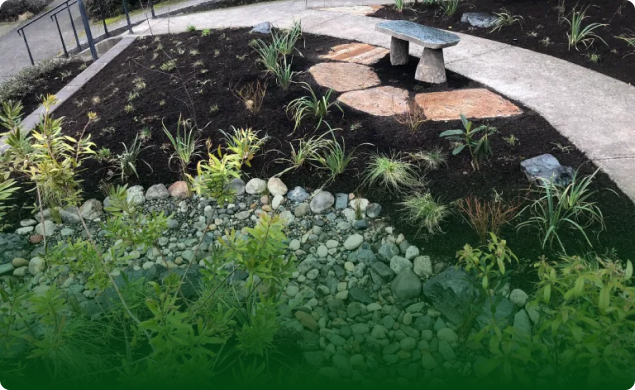
The visual difference between an intentionally curated winter garden and an abandoned yard comes down to edges. Human eyes look for borders, frames, and cues of care. When the perimeter of a space is clean, the wilder, organic textures inside that space are interpreted as thoughtful landscape design rather than neglect.
Carve clean, defined lines between planting beds and lawn or gravel areas using a flat spade or edging tool. That narrow, distinct boundary immediately organizes the view. It signals that the standing dried stems and deep leaf blankets inside the bed are there on purpose.
Keep primary walkways, patio perimeters, and front entries completely free of loose debris. Sweep aggregate surfaces, edge flagstone paths, and keep stepping stones exposed. When the surfaces meant for human movement are wide, dry, and distinctly unobstructed, the garden feels welcoming and open to use, even in the depths of December.
Editing Out Clutter, Invasives, and Hazards
Preserving winter architecture is not an excuse to walk away from autumn maintenance entirely. An effective late-season cleanup focuses on strategic edits that protect property access, plant health, and long-term layout goals.
Take the time to eliminate:
- Aggressive and self-seeding weeds: Do not treat a suspected invasive or a plant with mature seed heads as part of the winter display; identify it and use an appropriate site-specific removal plan.
- Damaged or hazardous wood: Snapped branches hanging in the canopy, limbs cracked by early windstorms, or dead wood leaning across fences call for qualified evaluation rather than a general winter-garden decision.
- Encroaching vines: Vines or wandering groundcovers that have migrated across pathways, wrapped around air intake vents, or begun climbing into the siding may need attention to preserve access and building clearance.
- Smothering mats: Where wet, decomposing foliage is crowding sensitive crowns, separate known sanitation or plant-condition concerns from the broader question of winter retention.
By removing these specific problems, you safeguard the infrastructure of the garden while leaving its positive structural and ecological features undisturbed.
The Winter Observation Log
A winter garden serves as the ultimate diagnostic tool for the entire landscape. Without summer blooms concealing gaps and structural flaws, you see the yard in its most exposed, honest state.
During the darkest stretch of the season, spend a few minutes taking notes from the windows you look out of most often:
- Sightlines: Where does your eye travel when looking out from the home? Are there harsh fence panels, neighbor windows, or blank walls that need the softening screen of a new conifer or broadleaf evergreen?
- Wind and water behavior: Which corners of the beds become saturated with standing surface water after three days of rain? Which standing stems toppled under the first windstorm, and which stood straight?
- Light angles: Where does the weak midday sun hit the garden floor? These bright pockets are ideal candidates for early-blooming winter shrubs, colored-stem shrubs, or early spring bulbs.
- Footpath usability: Do your garden paths drain well enough to use during a wet week, or are you avoiding certain zones because they have turned into a bog?
Keep these notes handy. When spring planning begins, this cold-season record can inform where to consider evergreen mass, structural perennials, path borders, or a different seasonal maintenance approach.
Balancing year-round architectural form, ecological value, and everyday usability requires a design and stewardship approach tailored specifically to the Pacific Northwest’s maritime climate. If you are looking to refine your outdoor space into an intentional, four-season landscape that balances clean visual lines with living structure, connect with Rutheo Designs to discuss our site-specific landscape design and long-term stewardship planning.