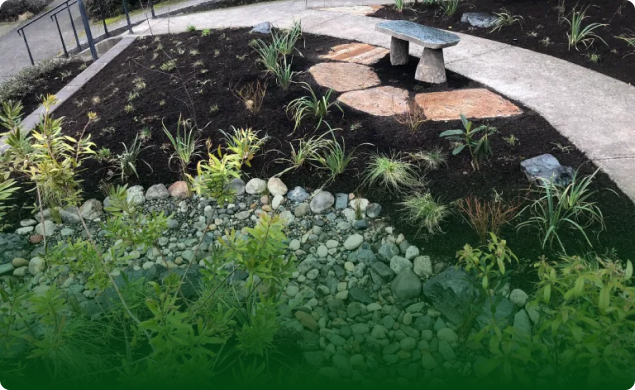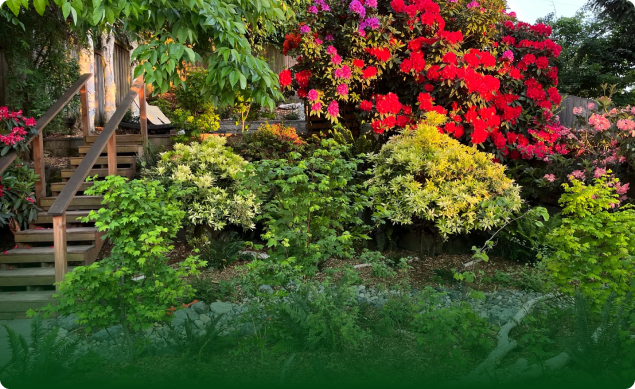
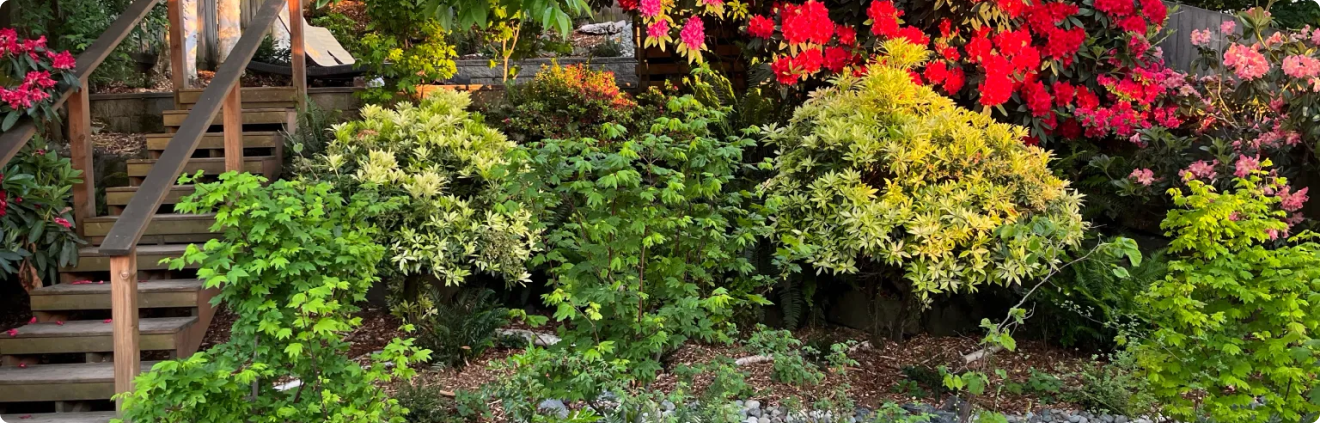
A landscape project can be divided into phases only after the property is understood as one connected site. Adding a path may change access to a future planting area. Water moving through one part of the yard may affect choices somewhere else. Existing trees, soil, utilities, and daily use can also change which work belongs together.
Phasing gives those relationships an order. It does not supply a universal formula or guarantee a financial result. A useful sequence comes from property goals, observed conditions, and the dependencies between different parts of the plan.
Map Existing Conditions Before Dividing the Project into Phases
Begin with the whole property, including areas that may remain untouched. Record entrances, gates, paths, slopes, low points, downspouts, irrigation, outdoor faucets, utilities, structures, existing trees, planting beds, and places used for storage or work access. Include how people and pets move through the yard.
Observe the property in more than one condition when possible. A dry-day walk can show circulation and active use. Wet-weather observations may reveal pooling, runoff routes, muddy access, or areas that stay saturated. Seasonal light and plant growth can alter what appears open during a single visit.
The map should distinguish observations from assumptions. Mark where water was seen, where roots are visible, and which routes people already use. Label unknown utility locations, uncertain drainage causes, and unidentified plants as questions for review.
Next, write the goals for each area. One zone may need safer circulation. Another may need habitat planting, food production, outdoor gathering space, or a clearer transition between the house and garden. Some areas may already serve their purpose and need protection rather than redesign.
A whole-site sustainable landscape plan can connect these goals before the project is divided. This article focuses on the sequence that follows. It does not replace the broader design decisions about site fit, materials, planting, and long-term care.
Once the map and goals are visible together, group related decisions. Access, water, utilities, structures, soil, and planting may interact across several areas. The project phases should reflect those relationships rather than treating each feature as an isolated purchase.
Put Access, Water, and Structural Dependencies Early
Some decisions affect what later work can reach or rely on. The exact order varies by property, but access, water movement, utilities, and structural questions often need review before planting or finishing work begins.
Start with access. Identify where people, equipment, and materials could enter each work area. Note narrow gates, stairs, soft soil, tree roots, overhead obstacles, and spaces that future work may need to cross. A route that works for routine garden care may be unsuitable for another phase.
Water questions also need an early place in the sequence. Document where roof runoff enters the yard, where surface water travels, and which areas stay wet or dry. Irrigation goals, drainage concerns, and water-source access may affect later planting and hardscape decisions. Uncertain causes call for site assessment rather than an assumed solution.
Treat utilities and structural conditions as review points. Mark known lines and equipment, then identify what remains unknown. A retaining condition, unstable surface, damaged structure, or utility conflict may require qualified evaluation before the landscape sequence can be confirmed.
These reviews do not create one required first phase. On one property, maintaining safe access may guide the sequence. Elsewhere, a water-flow concern or structural question may control what can proceed. The site determines which dependency belongs first and which work can remain separate.
Keep planting connected to these early decisions. New beds should have a clear relationship to access, water, light, soil, mature plant size, and future care. If later work would need to cross the area, revise the sequence or protect the planting zone before installation.
Separate Immediate Repairs from Long-Term Design Work
An urgent condition and a long-term landscape goal may appear in the same part of the yard. They still need separate definitions. Begin by describing the observed condition, the reason it needs attention, and the expertise required to evaluate it.
Immediate work may concern safe passage, active erosion, damaged irrigation, standing water near a use area, exposed roots, or a failing landscape feature. Those observations do not establish a cause or a prescribed repair. A qualified review may change the proposed response or show that another dependency comes first.
Long-term design work starts from intended use and character. It may address circulation, habitat, privacy, edible planting, gathering space, seasonal interest, or care expectations. These goals should remain visible even when an immediate concern changes the first phase.
Keep a decision record for both categories. For an immediate concern, note what was observed, who reviewed it, and what boundaries apply. The long-term record should state the goal, the related site conditions, and which earlier decisions it depends on.
This separation also protects the ecological direction of the project. A temporary response should avoid damaging soil, roots, established plants, or habitat that the later design intends to retain.
Some immediate work can become part of the final design. Other work may serve only as a temporary measure until the site is ready for a later phase. Name that distinction in the plan so a short-term response does not quietly become the permanent layout.
Choose a Stable Stopping Point for Each Phase
A phase needs a clear purpose and a condition in which the property can remain between work periods. Define what will be complete, which areas will stay in use, and what future work still depends on the finished phase.
Stable does not mean final. It means the site can function in the agreed way while later decisions remain open. Paths should remain understandable, active work areas should be contained, and unfinished edges should have a deliberate interim condition. Future access and care also need to remain possible.
Write a short completion test for each phase. It might confirm that the intended area is usable, protected zones remain intact, water observations have been documented, or a future access route remains available. The test should describe visible conditions rather than make broad predictions about the next phase.
Record unresolved items beside the completion test. An unidentified plant, uncertain utility location, changing drainage pattern, or unconfirmed material choice may stay open. The next phase should begin only after its own dependencies have enough evidence for a site-specific decision.
Avoid letting decorative completion hide operational gaps. The planting area may still be unstable if later access crosses it or if its water source remains uncertain. A simple interim surface or protected open zone may fit better until connected decisions are resolved.
Protect Soil and Existing Plants Between Phases
Mark the soil and plants that the plan intends to keep. Protection boundaries may include tree root areas, established planting, habitat features, and soil that should remain free from storage or repeated traffic. Their size and treatment require site-specific review.
Plan how people will enter, store materials, and maintain completed areas during the pause. Keep future work from using protected planting as a shortcut. If the original route becomes unavailable, review the sequence before creating a new route through sensitive soil or roots.
Interim care should match the actual site. Observe exposed soil, compaction, plant stress, water movement, and invasive growth without turning one symptom into a diagnosis. After the condition and affected area are understood, choose prevention, ecological care, or a least-toxic response. The phased plan excludes homemade toxic treatments, toxic fertilizers, and toxic chemical pesticide or herbicide use.
Photographs and a simple plan can preserve the boundary between completed, protected, and future work. Update the record after each phase. That evidence helps the next decision start from the current site condition rather than an earlier assumption.
Revisit Scope When Site Evidence Changes
A phased plan should include moments for review. Recheck the site after a phase changes access, water movement, light, soil exposure, or the way people use the space. Compare what is visible with the assumptions recorded at the start.
New evidence may support the next phase as planned. It may also narrow the scope, change the order, or return a question to professional assessment. A revision is reasonable when the property shows a condition the earlier plan could not confirm.
Keep scope changes explicit. Record what changed, which later decisions it affects, and what additional review is needed. Separate a new preference from a site condition. Both can matter, but they lead to different design conversations.
At each scope review, confirm that later work still protects retained soil, plants, habitat, and water relationships. Carry the same diagnosis-led care boundary into the next phase.
Project phasing remains a planning framework, not a cost, construction, engineering, permit, code, or scheduling prescription. Those questions depend on the current scope, property, jurisdiction, and qualified review. The plan should identify when that expertise is needed without guessing at the answer.
If you want help mapping dependencies and defining site-specific phases, explore Rutheo Designs’ residential design services. We can assess the property, connect the work to a whole-site plan, and identify which decisions need resolution before each phase begins.