A garden can receive regular attention and still need a different kind of care. The distinction often comes down to the purpose of each visit. Routine maintenance completes defined tasks on a schedule. Ecological stewardship also watches how plants, soil, water, and use of the space change over time.
Both approaches can belong in a Seattle garden. The useful question is which approach fits the goals and present condition of that garden. A clear answer starts with observation, rather than a list of tasks copied from another property.
Routine Maintenance and Stewardship Solve Different Problems
Routine maintenance supports a defined standard. The owner and care provider agree on the condition they want to maintain, then schedule tasks that help preserve it. That standard might address safe access, clear paths, restrained growth near a structure, or the appearance of a formal planting area.
Stewardship has a longer view. It treats the garden as a changing community of plants within a particular site. A stewardship visit considers what has changed, why it may have changed, and whether the existing care plan still fits.
The difference is easiest to see in the questions each approach asks. Maintenance asks which agreed tasks are due. Stewardship asks what the site is showing now and what response fits the goals for the garden.
Neither label determines the quality of care. A well-defined maintenance visit can be precise and valuable. Stewardship becomes useful when the garden needs observation and adaptation alongside scheduled work.
Maintenance Keeps Defined Tasks on Schedule
Routine maintenance works well when the tasks, frequency, and acceptable finish are already clear. A recurring visit might address path clearance, minor pruning within a known scope, fallen material, bed edges, or another established care item. The exact list should come from the property and season.
Cadence is central to this model. Some tasks follow a monthly or seasonal schedule, while others use an agreed condition as the trigger. The care plan should state what the visit covers, what falls outside it, and which observations need to be reported.
A schedule can also protect continuity. The same areas receive attention, and changes become easier to notice when the team records what it saw and did. Maintenance records do not need to be elaborate. A short note about plant condition, standing water, unexpected decline, or work deferred for diagnosis can preserve useful context.
Defined scope matters because a recurring task can hide a changing cause. Repeatedly cutting a plant away from a path may indicate that its mature size conflicts with the available space. Recurring bare growth may point to light, soil, water, traffic, or plant-selection conditions that a tidy-up cannot resolve.
Detailed weed prevention and mulch selection belong in Weed Prevention and Mulching for Seattle Gardens. This comparison keeps those techniques with their existing topic owner.
Stewardship Responds to How the Site Changes
Stewardship combines recurring care with a continuing assessment of the site. It begins with the intended uses and character of the garden. Those goals provide a basis for deciding what to retain, guide, replace, or investigate as conditions change.
Washington State University Extension recommends matching plants to the sun, soil, water, topography, available space, and intended use of a site. Its sustainable home landscape guidance also places soil, water, plant selection, and prevention within one care framework. That broader view helps explain why the same recurring task may suit one area and miss the problem in another.
A stewardship plan remains specific. It can name seasonal priorities, observation points, and work that is likely to recur. The difference is that the plan can change when direct evidence from the garden supports a different response.
Plant Communities Shift over Time
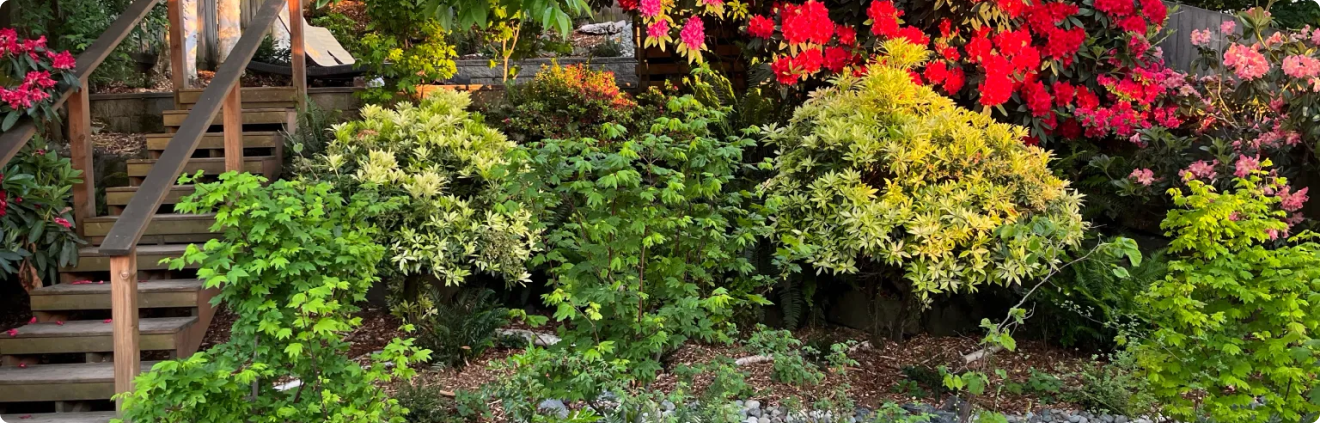
Plants grow into one another, canopy shade changes, and a newly planted area develops its own structure. Some plants establish as expected. Others struggle, spread beyond their intended area, or leave gaps that change how water, light, and foot traffic affect neighboring plants.
Observation should follow those changes. Look at which plants are gaining or losing space, where stems are crowded, and whether the original circulation and visibility still work. Compare current growth with the design intent and the known mature form of the plant.
Seasonal differences also matter. A bed that looks open in winter may fill by midsummer. During prolonged rain, a path that works in dry weather may reveal drainage or access problems. Stewardship uses observations across seasons before treating one visit as the whole picture.
The response may be selective care, a change in timing, a revised planting relationship, or further assessment. Current site conditions determine which choice is reasonable. Stewardship does not promise that every intervention will produce a particular ecological result.
Soil and Water Observations Guide the Next Visit
Soil and water conditions deserve their own record because they shape plant response. Useful observations include pooling after rain, runoff across a path, compacted travel areas, exposed roots, persistent dry spots, or a sudden change in plant vigor.
In its urban soil management guide, WSU identifies drainage, infiltration, compaction, rooting depth, and water-holding capacity as soil-quality indicators. The guide also notes that on-site inspection answers some questions, while other conditions require soil testing or more detailed assessment.
That distinction sets a practical boundary. A stewardship visit can document where water stands, how long a wet area persists, or where foot traffic has compressed the surface. It should avoid turning one visible symptom into a confident diagnosis.
Keep the record simple and repeatable. Photograph the same location, note recent weather, and describe the condition without guessing at the cause. A pattern across visits offers more useful evidence than a single label.
Many Gardens Need Both Kinds of Care
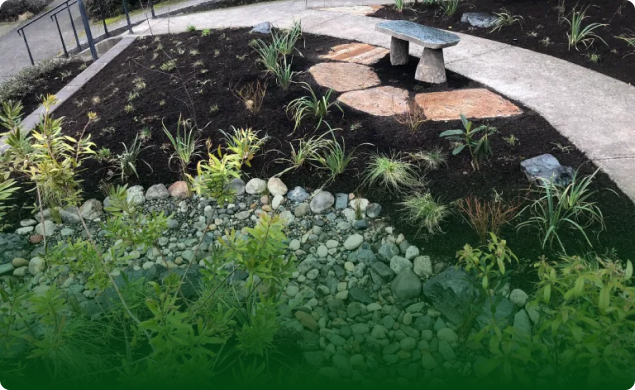
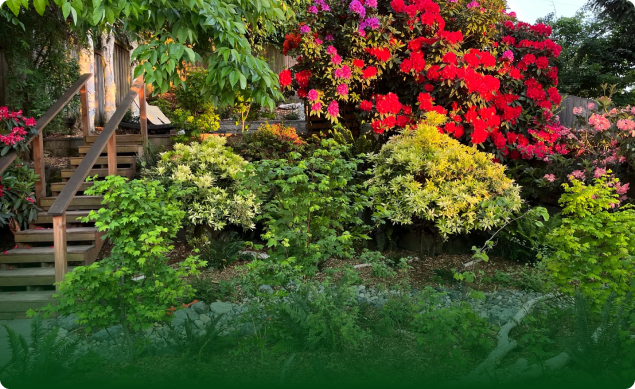
A garden rarely needs one care model in every zone. Formal entry planting may benefit from a defined maintenance standard. Developing native borders, young tree layers, drainage-sensitive slopes, and changing edible areas may need closer observation and periodic revision.
The two approaches can share one seasonal plan. Routine tasks keep access and agreed conditions consistent. Stewardship checkpoints create time to review plant relationships, soil and water observations, and the fit between current conditions and goals for the garden.
Start by dividing the property into functional areas. For each area, name the intended use and the condition you want to preserve. Then identify which tasks can stay on a schedule and which decisions depend on observation.
Review the plan when a season changes or when the same concern appears repeatedly. The review may confirm the existing cadence. It may also narrow a task, change its timing, add an observation point, or call for diagnosis before more work occurs.
This combined model still requires honest expectations. Neither routine maintenance nor stewardship guarantees reduced labor, fewer inputs, lower cost, savings, or a specific ecological outcome. Their value lies in choosing work from defined goals and current site evidence.
When Diagnosis Should Replace a Recurring Task
Pause repetition when a task keeps returning without a stable explanation. Repeated dieback, poor establishment, standing water, erosion, rapid decline, recurring plant damage, or an abrupt change in growth can signal a condition beyond routine care.
First, document what is visible. Record the affected plants or area, timing, recent weather, irrigation changes, nearby construction, foot traffic, and earlier work. Avoid choosing a treatment from one symptom because several causes can look similar.
Next, decide which expertise the condition requires. Plant identification, soil testing, drainage assessment, irrigation review, or qualified arborist input may be appropriate. Large limbs, structural tree concerns, utility conflicts, and other safety hazards should leave the routine landscape-care scope immediately.
After diagnosis, choose prevention, ecological care, or a least-toxic response that fits the affected plant and surrounding garden. Site understanding cannot be replaced by homemade toxic treatments, toxic fertilizers, or toxic chemical pesticide and herbicide use.
If your property needs a care plan that combines seasonal work with ongoing site observation, explore stewardship services from Rutheo Designs. We can assess the goals, current conditions, and appropriate cadence of the garden before defining the next visit.