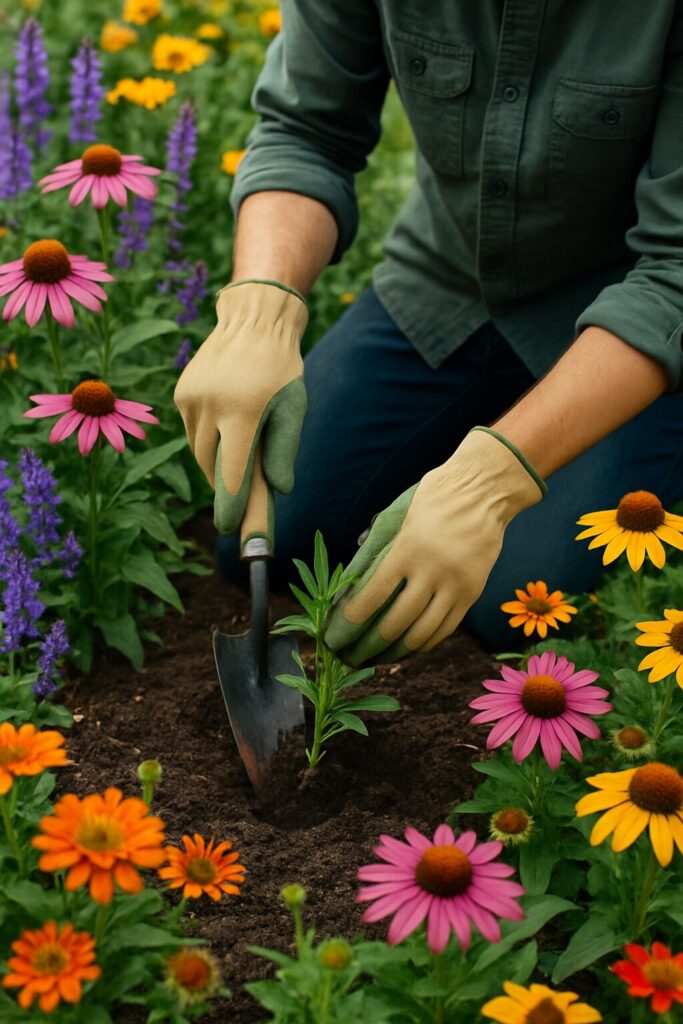
We help our clients shape gardens that feel alive in every season, places where color unfolds gradually, pollinators stay well-fed, and the landscape remains resilient despite Seattle’s shifting microclimates. When we plan seasonal bloom cycles, we look closely at each site’s light, soil texture, and moisture patterns so we can layer plants that thrive together and carry the garden’s color story from early spring hellebores to late-autumn aster displays. Our approach pulls from ecological planting principles, using succession flowering and structural “anchor species” to create a dependable habitat that supports native bees, hoverflies, and migrating pollinators long after typical gardens fade. We also design with long-term sustainability in mind, choosing species and cultivars that maintain strong nectar flow, handle Seattle’s wet winters, and bounce back during our increasingly dry summers.
Strong pollinator gardens rely on sequences where flowers open in an overlapping pattern. We plan early season layers with hellebores, ribes, pulmonaria, and early bulbs like crocus and muscari. These plants support the first active bees that appear after winter. As the season warms, we introduce midseason structure using lupine, penstemon, salvia, and California poppy. These species offer reliable nectar flow and adapt easily to many microclimates found throughout Seattle. Late season color depends on species that remain stable as temperatures cool again. We select asters, sedum, and echinacea to extend feeding opportunities well into autumn. This type of seasonal sequencing helps stabilize pollinator activity and keeps gardens visually balanced.
Color planning is most effective when plants are arranged in communities rather than isolated placements. We group species that share soil preferences, water needs, and sun exposure so the landscape forms a cohesive whole. Color harmony is important for homeowner enjoyment, but it also plays a role in pollinator attraction. We design with repetition of hues that guide insects through the space. Cool colors often dominate early in the season, followed by warm colors during peak summer, and then a return to deeper hues in fall. By planning these transitions as clusters instead of scattered placements, we ensure stronger habitat function. This community-based method also reduces maintenance since plants support each other’s growth patterns.
Each Seattle garden has microclimates that influence how well certain species perform. We evaluate shade from conifers, heat pockets near patios, and moisture gradients created by sloped terrain. Plants such as native huckleberries, sword ferns, and ocean spray support pollinators in shadier areas, while drought resilient species like yarrow, thyme, and blanketflower work well along hot edges. We also consider soil compaction, which is common in many neighborhoods. Loosening the soil and adding organic material allows root systems to expand, which increases bloom stability through the summer. When each microclimate is paired with plants that thrive in its specific conditions, color remains consistent from one part of the landscape to another.
Native plants form the backbone of sustainable pollinator gardens. Many Seattle pollinators depend on specific nectar ratios or flower structures found in native species. We use plants like ceanothus, Oregon grape, and native aster species because they maintain strong ecological relationships with local insects. As climate patterns shift, we also incorporate climate-responsive plants that tolerate warmer summers and irregular rain. Species like coneflower, goldenrod, and certain grasses handle variable conditions while still supporting diverse pollinators. This blend of native and climate-adjusted species builds long-term resilience and reduces the need for irrigation and chemical inputs.
A pollinator garden benefits from a defined structure that holds visual interest when blooms are not present. We rely on evergreen shrubs, fine-textured grasses, and plants with persistent seedheads to anchor the garden through winter. Structure provides shelter for insects and creates navigational cues during active seasons. Many seedheads, such as those from echinacea and rudbeckia, remain through the colder months and provide food for birds. These elements add to the ecological function of the space while maintaining attractive forms that help the garden feel complete in every season.
Color planning includes more than flower petals. Foliage color plays a significant role in shaping how the garden reads throughout the year. Blue-green leaves, burgundy tones, and variegated patterns allow for steady visual interest even between bloom cycles. In our designs, foliage texture helps differentiate planting layers. The contrast between broad leaves, airy seedheads, and fine needle-like structures creates depth that supports pollinators by increasing spatial diversity. This type of variation encourages insects to move freely through the garden and use multiple layers of habitat.
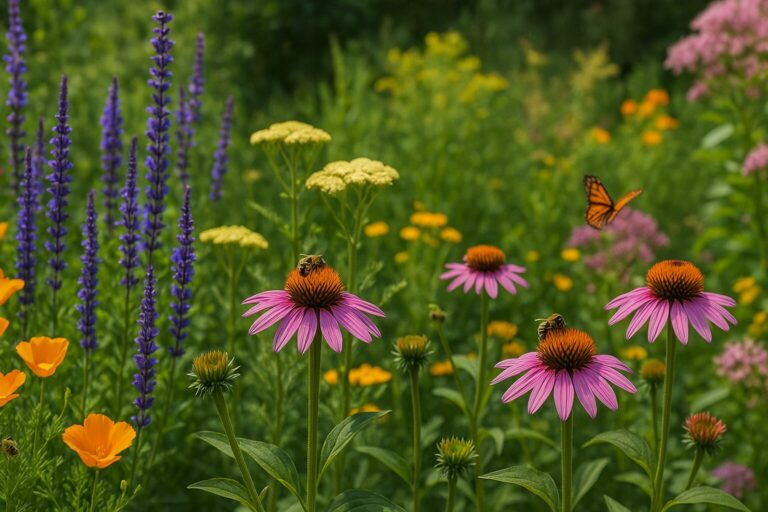
Food availability is only one component of a functioning pollinator garden. We incorporate shallow water sources, nesting materials, and undisturbed ground areas so pollinators can complete full life cycles. Water features with gentle edges allow bees and butterflies to drink safely. Dead wood and hollow stems remain in place whenever possible to support nesting. Leaf litter provides overwintering shelter for many beneficial insects. These small additions strengthen pollinator populations and make the garden healthier over time.
Seasonal color planning often reduces maintenance needs. When plant communities are matched properly, they shade soil, conserve moisture, and suppress weeds. We encourage natural mulching through plant debris rather than relying heavily on imported mulch. This method improves soil structure and supports soil organisms that help regulate moisture and nutrients. Proper species pairing also reduces the amount of pruning required since plants grow in forms appropriate to their place in the landscape.
A pollinator friendly garden in Seattle becomes most effective when the seasons guide the design approach. Seasonal bloom planning creates a rhythm that supports insects, improves soil health, and provides steady color for homeowners. When each layer of the garden is selected with awareness of climate, microclimate, and plant community behavior, the result is a landscape that remains active and visually rich throughout the year.
Our goal is to help you build a landscape that offers reliable forage for pollinators while maintaining vibrant color and structure from early spring to late fall. We invite you to reach out and start transforming your outdoor space with Rutheo Designs’ coaching expertise. Email us at connect@rutheodesigns.com or call (360) 844-2989. Whether you want support choosing seasonally balanced plant combinations, planning bloom succession, strengthening habitat layers, or improving long term garden resilience, we’re here to support you every step of the way.
We use cookies to improve your experience on our site. By using our site, you consent to cookies.
Manage your cookie preferences below:
Essential cookies enable basic functions and are necessary for the proper function of the website.
Google Tag Manager simplifies the management of marketing tags on your website without code changes.
Statistics cookies collect information anonymously. This information helps us understand how visitors use our website.
Google Analytics is a powerful tool that tracks and analyzes website traffic for informed marketing decisions.
Service URL: policies.google.com (opens in a new window)
Google reCAPTCHA helps protect websites from spam and abuse by verifying user interactions through challenges.
Marketing cookies are used to follow visitors to websites. The intention is to show ads that are relevant and engaging to the individual user.
Facebook Pixel is a web analytics service that tracks and reports website traffic.
Service URL: www.facebook.com (opens in a new window)
You can find more information in our Cookie Policy and Privacy Policy.