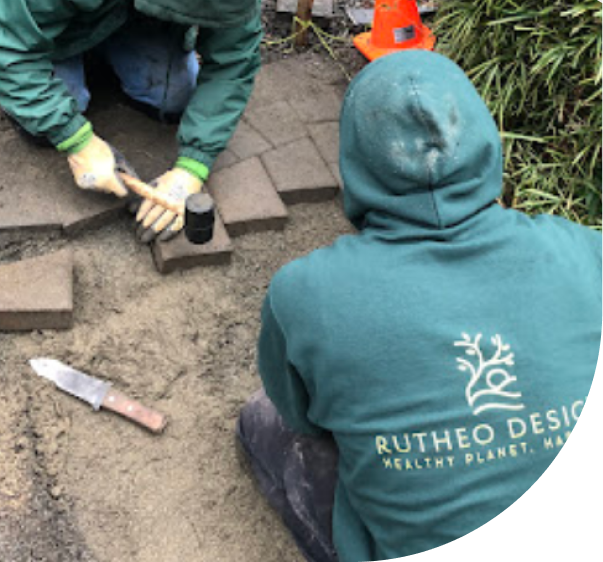
At Rutheo Designs, we view vegetable gardening as both a practical and regenerative solution for homeowners who want to grow their own food while contributing to a healthier ecosystem. Our approach to vegetable garden planning in Seattle begins with thoughtful site assessment—analyzing sun exposure, drainage, microclimates, and soil health to determine what will grow best in each space. We factor in crop rotation, succession planting, and companion planting strategies to build resilient, productive gardens that thrive across all seasons. Whether we’re working with raised beds, in-ground beds, or containers, we always design for function, beauty, and low-maintenance care—balancing vegetable yield with ecological integrity.
A thoughtfully designed vegetable garden offers more than fresh produce—it creates direct access to seasonal, nutrient-dense foods that haven’t traveled thousands of miles or sat in cold storage. Growing vegetables at home supports daily nutrition, especially when the garden includes a diversity of crops that span the growing season. In addition to health benefits, the cost savings over time can be substantial, especially as grocery prices and supply chain disruptions become more frequent. By harvesting directly from the garden, there’s also a noticeable reduction in food waste, since produce is picked only when needed.
The value extends beyond the plate. A vegetable garden increases a household’s food security, allowing homeowners to rely less on commercial food systems. Whether a client is cultivating a full-season pantry or supplementing store-bought greens with backyard lettuce, a home garden supports independence and resilience. Even for beginner gardeners, the results can be transformative—with many expanding their plots year after year as confidence grows.
A vegetable garden reduces environmental impact by replacing high-emission food supply chains with hyper-local production. From a sustainability perspective, growing vegetables at home eliminates the packaging, refrigeration, and transport typically required to deliver store-bought produce. Gardeners also tend to become more aware of seasonal cycles, pollinator activity, and ecosystem dynamics. This shift in perspective naturally leads to more ecologically conscious decisions across other aspects of daily life.
Vegetable gardens also encourage lifestyle integration. When placed conveniently near the kitchen or patio, a garden becomes part of the daily rhythm—snipping herbs while cooking, harvesting greens for lunch, or checking for ripe tomatoes during a morning walk. Over time, gardening becomes an enjoyable and grounding ritual rather than a chore.
We design gardens that fit seamlessly into any outdoor space, whether it’s a compact urban lot or a sprawling suburban yard. In smaller spaces, vertical growing systems, tiered containers, and modular raised beds make it possible to grow a surprising amount of food in tight quarters. Layouts are planned to optimize sunlight, airflow, and plant access while maintaining a clean and organized look that complements existing landscaping.
In larger spaces, we have more room to create multi-zone gardens that accommodate diverse crop types, rotating beds, composting systems, and pollinator strips. Regardless of scale, we ensure the vegetable garden design supports function, beauty, and ease of use. By blending productivity with aesthetic considerations, vegetable gardens become permanent features that elevate both the landscape and the homeowner’s connection to it.
Seattle’s maritime climate demands careful timing. Cool, wet springs and short, warm summers make it important to understand planting windows and harvest timelines. Cool-season crops like kale, arugula, and broccoli perform well in early spring and late summer, while warm-season crops such as tomatoes, peppers, and squash need careful placement and protection to thrive during brief sunny months.
Succession planting ensures consistent harvests by staggering sowing times. For example, lettuces and radishes can be planted every two weeks for a rolling yield, while fall crops like garlic and overwintering spinach extend the harvest well past summer’s end. Planning around these cycles supports more food from the same space without exhausting the soil.
Seattle sits in USDA Zone 8b, a designation that informs what types of vegetables can be grown and when. Hardy crops like carrots, chard, and snap peas handle early and late season conditions, while cherry tomatoes and bush beans make good use of brief warm spells. Selecting short-season varieties ensures crops mature before cooler weather sets in.
We often recommend heirloom and open-pollinated seeds that are adapted to the Pacific Northwest. These selections not only offer better flavor and diversity but also support seed-saving practices, which increase local resilience over time.
The Pacific Northwest’s rainfall patterns can overwhelm standard garden setups without proper planning. Raised beds with well-draining soil are essential to avoid root rot, and strategic placement of crops based on elevation and sun exposure maximizes growth. We utilize row covers, cloches, and hoop houses to shield crops from cold snaps or wet conditions, especially during transitional seasons.
Many Seattle-area properties have partial shade from surrounding trees or buildings. Identifying and using microclimates—such as south-facing walls or warm corners protected from wind—can make the difference between a poor yield and a thriving crop. These localized zones help warm-season vegetables like cucumbers or eggplants reach full potential, even in marginal summer conditions.
Before planting begins, we conduct a full soil assessment to measure pH, drainage, and nutrient availability. Seattle soils often trend toward compact clay with acidic pH, which limits nutrient uptake and root development. Adjusting with organic amendments such as lime, compost, and trace minerals creates a more balanced growing environment.
It’s important not to over-correct. Excessive fertilization—especially with high-nitrogen products—can lead to lush leaves at the expense of fruit or root development. We focus on targeted, slow-release nutrition that matches the plants’ seasonal needs and growth stages.
We use compost, worm castings, and well-rotted leaf mulch to increase soil organic matter, which improves aeration and moisture retention. Mulching also protects soil from erosion and suppresses weed growth. Over time, organic matter feeds the soil microbiome, enhancing the symbiotic relationships between roots and beneficial fungi.
No-till and low-disturbance methods help preserve soil structure and biology. We may use cover crops during the off-season to prevent erosion and replenish nutrients naturally. These strategies are key for long-term soil health and reduce the need for inputs year after year.
Raised beds are an excellent solution for Seattle’s wet climate. They allow for better drainage, reduce soil compaction, and warm up faster in the spring. We size beds to match ergonomic access—typically no wider than four feet—and space them to accommodate efficient movement and irrigation.
Where raised beds aren’t suitable, alternatives like lasagna beds (layered sheet mulching) or sub-irrigated wicking beds offer different paths to success. These systems are particularly useful for clients who want high yields but have limited time for maintenance. The flexibility of these approaches ensures that almost any space can be turned into a productive growing area.
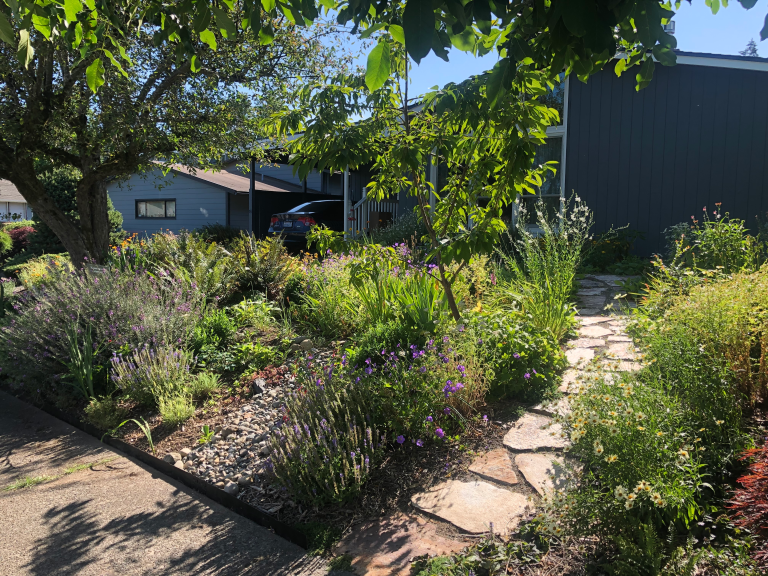
At Rutheo Designs, we are dedicated to transforming your outdoor spaces into beautiful, sustainable landscapes that reflect your vision and the unique character of the Seattle area. Whether you’re looking to enhance your garden with native plants, need expert advice on water-efficient irrigation systems, want to explore custom hardscaping for your outdoor living space, or discuss a comprehensive landscape design, our team is here to assist you every step of the way. We offer services in native plant landscaping, water-efficient irrigation, custom landscape design, and hardscaping solutions tailored to your goals and the local environment. Every project is unique, and we take the time to listen to your needs and offer personalized solutions that align with both your aspirations and Seattle’s natural surroundings.
We invite you to reach out to us to start the conversation about your landscaping needs. You can contact us by email at connect@rutheodesigns.com or give us a call at (360) 844-2989. Whether you have specific questions or are ready to schedule a consultation, we’re eager to help you bring your outdoor vision to life with the care and expertise that Rutheo Designs is known for.
We use cookies to improve your experience on our site. By using our site, you consent to cookies.
Manage your cookie preferences below:
Essential cookies enable basic functions and are necessary for the proper function of the website.
Google Tag Manager simplifies the management of marketing tags on your website without code changes.
Statistics cookies collect information anonymously. This information helps us understand how visitors use our website.
Google Analytics is a powerful tool that tracks and analyzes website traffic for informed marketing decisions.
Service URL: policies.google.com (opens in a new window)
Google reCAPTCHA helps protect websites from spam and abuse by verifying user interactions through challenges.
Marketing cookies are used to follow visitors to websites. The intention is to show ads that are relevant and engaging to the individual user.
Facebook Pixel is a web analytics service that tracks and reports website traffic.
Service URL: www.facebook.com (opens in a new window)
You can find more information in our Cookie Policy and Privacy Policy.