A food forest is a multi-layered, perennial planting system modeled after natural woodland ecosystems. Instead of relying on annual crops and chemical inputs, we build polycultures that promote cooperation between plants, soil organisms, and wildlife. The goal is to mimic how forests function in the wild—using multiple layers of vegetation to stabilize the soil, regulate moisture, and cycle nutrients efficiently. Our food forests are designed for long-term resilience, incorporating species that thrive in community rather than isolation. This emphasis on polyculture over monoculture reduces pest and disease pressure and creates a more self-regulating environment.
We also plan for ecological succession. That means starting with hardy, fast-growing pioneer species to prepare the soil and canopy while slower-growing long-term species establish. Each planting stage supports the next, so the system becomes more productive and self-sustaining over time. This process creates a living infrastructure that not only yields food but also supports habitat, water retention, and carbon storage—essential functions in a changing climate.
Once established, a food forest requires fewer inputs than a traditional garden. Because the plant relationships are designed to support one another, the need for external fertilizers, pesticides, and irrigation is significantly reduced. Many of our clients are surprised by how quickly their systems begin to manage themselves, especially once soil health and fungal networks take hold. These systems are especially valuable in urban and suburban settings, where resource efficiency and ecological value are both high priorities.
In addition to producing fruits, nuts, herbs, and vegetables, a food forest improves the land it grows on. Deep-rooted plants aerate compacted soils, fallen leaves replenish organic matter, and diverse planting creates a more stable and adaptive landscape. Biodiversity increases at every level—from microbes in the soil to pollinators and birds in the canopy. Over time, the system becomes a resilient response to climate variability, supporting both personal food security and regional ecosystem health.
Unlike traditional vegetable gardens, which rely on annual planting cycles and intensive soil disturbance, food forests use permanent plantings arranged in vertical layers. These layers replicate natural forest structure and include trees, shrubs, herbs, groundcovers, vines, and root crops. Each layer is chosen for a specific ecological function—some fix nitrogen, others repel pests, and many provide food or medicine.
Traditional gardens typically require replanting each season and depend heavily on human input to maintain productivity. Food forests, by contrast, are designed to regenerate themselves. Native plants are often integrated to support local pollinators, birds, and beneficial insects. This makes food forests not only productive but also regenerative, offering long-term ecological benefits far beyond food yield.
The uppermost layer consists of large trees that anchor the system. In Seattle’s climate, we often use cold-hardy chestnut, walnut, or larger apple cultivars. These trees offer long-term yield and serve as the structural backbone of the forest. Their foliage filters sunlight and creates microclimates for the layers below, helping to moderate temperature and moisture levels.
Canopy trees also support carbon sequestration, intercept rainfall, and contribute leaf litter that feeds the soil. Proper placement ensures that light reaches lower layers while minimizing competition between species. When designing, we space canopy trees to allow room for underplanting while accounting for their mature size and root spread.
Beneath the main canopy, we layer smaller trees such as fig, plum, or dwarf pear varieties. These trees often begin producing earlier in the life of the system and are easier to harvest from. We frequently graft varieties suited to urban lots onto dwarfing rootstocks to optimize space and accessibility.
Sub-canopy trees are placed to avoid shading out shrubs and herbs while still benefiting from the protection of taller neighbors. We also consider their compatibility with adjacent trees to encourage pollination and mutual benefit. Their presence increases productivity without overcrowding the upper canopy.
The shrub layer includes both fruit-bearing and medicinal species. In Seattle, native options like evergreen huckleberry, red currant, and salal thrive in partial shade and add diversity to the understory. These plants provide early or late-season blooms, extending forage time for pollinators and offering yields during different parts of the year.
Medicinal plants like elderberry and aronia also fit well into this layer. Shrubs play a critical role in defining the edges of the food forest, creating habitat for wildlife and reducing erosion along slopes and swales. Their versatility makes them essential for both ecological and culinary functions.
The herbaceous layer contains non-woody plants such as herbs, leafy greens, and pollinator-supporting perennials. We commonly include comfrey, yarrow, chives, and oregano—not only for their edible or medicinal value but also for their ecosystem roles. Many of these species act as dynamic accumulators, pulling up nutrients from deep in the soil and making them available at the surface.
This layer also provides ground-level bloom, attracting bees and other pollinators needed by fruiting trees and shrubs. We choose species that complement the surrounding layers and help regulate plant health naturally.
Groundcovers help hold moisture, suppress weeds, and protect the soil from erosion. Creeping thyme, white clover, and alpine strawberries are popular choices in our designs because they form dense mats that stabilize soil while producing edible yields or attracting beneficial insects.
Living mulch contributes organic matter to the soil and helps buffer the temperature swings common in the Pacific Northwest. Groundcovers are especially important in early years when trees are young and there’s more light reaching the soil surface.
Below the surface, we integrate edible root crops like garlic and sunchokes with soil-enhancing plants such as dandelion and chicory. These species help break up compacted soil, improve water infiltration, and create habitat for soil microbes. Deep-rooted plants also access nutrients that shallow-rooted species can’t reach, supporting overall fertility.
Root crops are carefully placed to avoid competition with perennial tree roots. We also use fungal-supportive practices—like spreading wood chip mulch—to encourage symbiosis between roots and mycorrhizal fungi, which are essential for nutrient uptake in perennial systems.
Vines like hardy kiwi, grapes, and runner beans make use of vertical space without crowding the ground layers. We install trellising systems or train these climbers up trees that can support them without being overwhelmed. This layer adds seasonal fruit yield and diversity while maximizing use of sunlight.
Managing light competition and pruning vines properly ensures they don’t shade out lower layers or damage host trees. When placed strategically, vines add both productivity and visual interest to the forest.
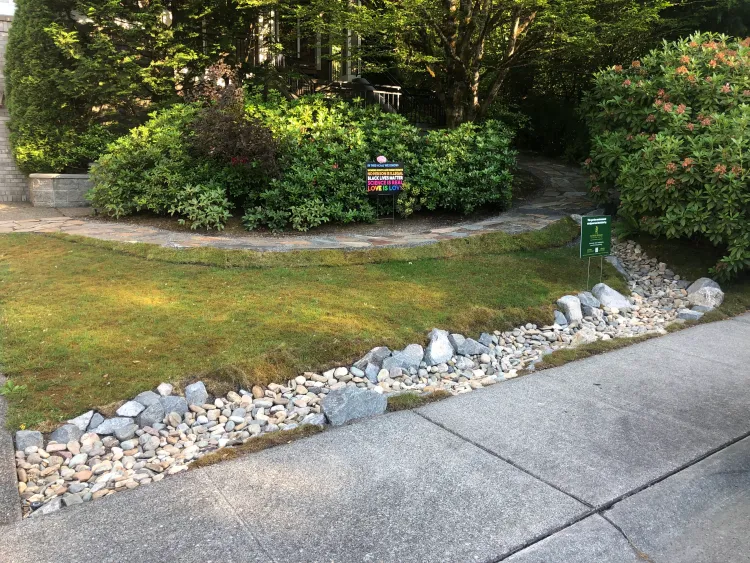
At Rutheo Designs, we are dedicated to transforming your outdoor spaces into beautiful, sustainable landscapes that reflect your vision and the unique character of the Seattle area. We offer services in native plant landscaping, water-efficient irrigation, custom landscape design, and hardscaping solutions tailored to your goals and the local environment. Every project is unique, and we take the time to listen to your needs and offer personalized solutions that align with both your aspirations and Seattle’s natural surroundings.
We invite you to reach out to us to start the conversation about your landscaping needs. You can contact us by email at connect@rutheodesigns.com or give us a call at (360) 844-2989. Whether you have specific questions or are ready to schedule a consultation, we’re eager to help you bring your outdoor vision to life with the care and expertise that Rutheo Designs is known for.
Explore Permaculture Design.
We use cookies to improve your experience on our site. By using our site, you consent to cookies.
Manage your cookie preferences below:
Essential cookies enable basic functions and are necessary for the proper function of the website.
Google Tag Manager simplifies the management of marketing tags on your website without code changes.
Statistics cookies collect information anonymously. This information helps us understand how visitors use our website.
Google Analytics is a powerful tool that tracks and analyzes website traffic for informed marketing decisions.
Service URL: policies.google.com (opens in a new window)
Google reCAPTCHA helps protect websites from spam and abuse by verifying user interactions through challenges.
Marketing cookies are used to follow visitors to websites. The intention is to show ads that are relevant and engaging to the individual user.
Facebook Pixel is a web analytics service that tracks and reports website traffic.
Service URL: www.facebook.com (opens in a new window)
You can find more information in our Cookie Policy and Privacy Policy.