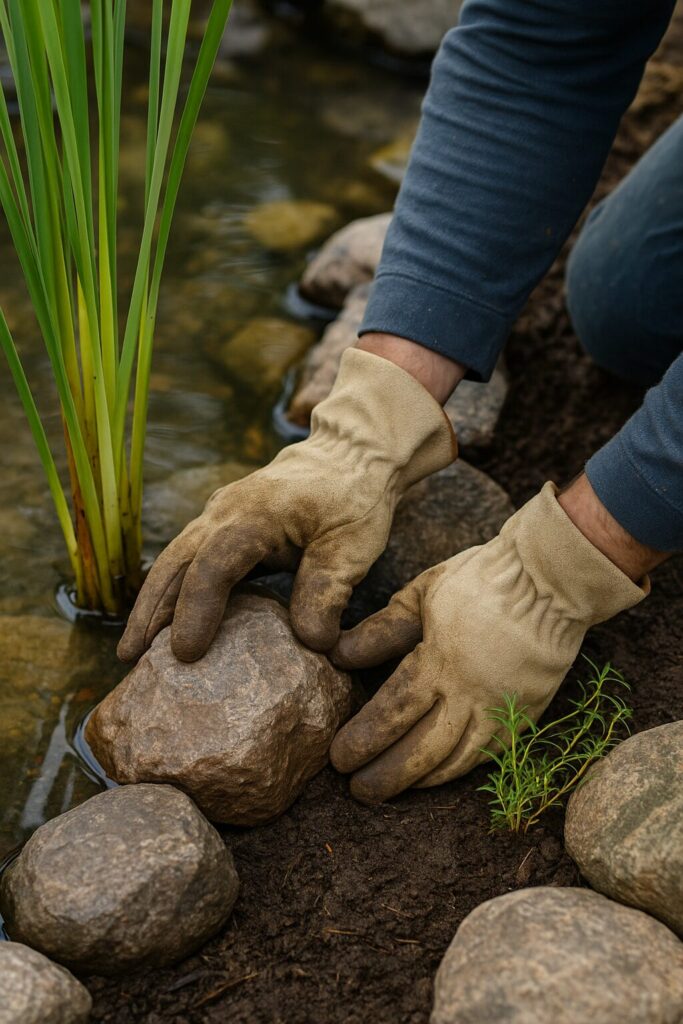
We love helping homeowners transform their outdoor spaces into thriving sanctuaries, and one of the most enchanting ways to do that is by creating wildlife ponds that invite frogs, dragonflies, and other beneficial species right into the heart of your garden. When we design these features, we balance ecological function with natural beauty, shaping shorelines with native emergent plants, integrating oxygenating species for water clarity, and using layered microhabitats that give amphibians and insects the conditions they need to flourish year-round.
Seattle’s mild, moisture-rich climate gives us an ideal canvas to craft ponds that feel like they’ve always belonged on your property, blending seamlessly with surrounding plantings and supporting long-term biological health. We’re intentional about every choice we make, from selecting native sedges and rushes that stabilize pond edges to incorporating shallow gradients that encourage safe breeding zones for frogs and perching sites for dragonflies. Our approach ensures your pond becomes a functional part of the local ecosystem, helping control pests, increase biodiversity, and naturally balance your garden’s rhythms without relying on chemicals.
A wildlife pond gains much of its ecological value through thoughtful structure, and we shape the physical form in a way that mirrors natural freshwater edges found throughout western Washington. Depth variation is essential because it supports multiple species simultaneously. Shallow shelves warm up early in spring, which encourages frog breeding activity, while deeper pockets help dragonfly nymphs survive through cooler months. We create gentle slopes that allow easy entry and exit for frogs, which is important for their daily feeding patterns. Textured edges built with natural stone, woody debris, or native planting pockets provide frogs with hiding places and reduce stress caused by predators. These structural details also help aquatic insects complete their molts and transition into adult forms. Because habitat complexity directly impacts population diversity, we avoid smooth, uniform edges that limit ecological function. Instead, we blend structural elements with native wetland plants so the pond operates as a continuous, layered ecosystem.
Plant communities define the long-term performance of a wildlife pond, and we prioritize species that naturally occur in the Pacific Northwest because these plants align with the seasonal rhythms of both frogs and dragonflies. Native emergent species such as Juncus effusus, Carex obnupta, and Iris tenax improve water quality while offering dense cover for developing amphibians. Submerged vegetation, including Elodea canadensis and native pondweeds, provides oxygenation and structure for dragonfly nymphs, which rely on sturdy stems for climbing when they emerge. Floating species help moderate water temperature and reduce algae growth by limiting direct sun exposure. We layer these plant types so each zone of the pond has its own function, creating microhabitats that support breeding, feeding, and shelter. The use of native plants also increases resilience during Seattle’s seasonal shifts by adapting naturally to wet winters, intermittent summer droughts, and local soil chemistry.
Wildlife ponds work best when the water system functions through natural processes instead of mechanical intervention. Frogs and dragonfly larvae are extremely sensitive to pollutants, so avoiding chemical treatments is essential. At Rutheo Designs, we rely on balanced plant communities and natural microbial activity to manage nutrient levels and keep water clear. This approach prevents issues such as algal blooms without relying on artificial filtration systems that can disrupt breeding sites or harm aquatic organisms. Still water or very gentle circulation supports amphibian eggs by preventing dislodging during early development. We also use rainwater whenever possible because it avoids chemical residues commonly found in treated municipal water. Over time, the pond establishes a self-regulating cycle where plants absorb excess nutrients, microorganisms break down organic matter, and the wildlife that moves in helps maintain ecological balance.
Creating secure habitat around the pond is just as important as shaping the water itself. Frogs require shaded pockets, leaf litter, and low-growing vegetation that protect them as they move between feeding areas and the pond. To meet this need, we incorporate plantings that create shelter while maintaining soil moisture. Rocks, logs, and small brush clusters provide hiding places for both adult frogs and juvenile dragonflies. Dragonflies rely on vertical structures for resting, scanning for prey, and drying their wings after emergence, so we include tall reeds, branching stems, or simple wooden stakes to provide suitable perching sites. Surrounding vegetation also acts as a buffer zone that minimizes disturbance from foot traffic or pets. This edge habitat improves the overall functionality of the pond by giving wildlife secure movement corridors and consistent humidity levels.
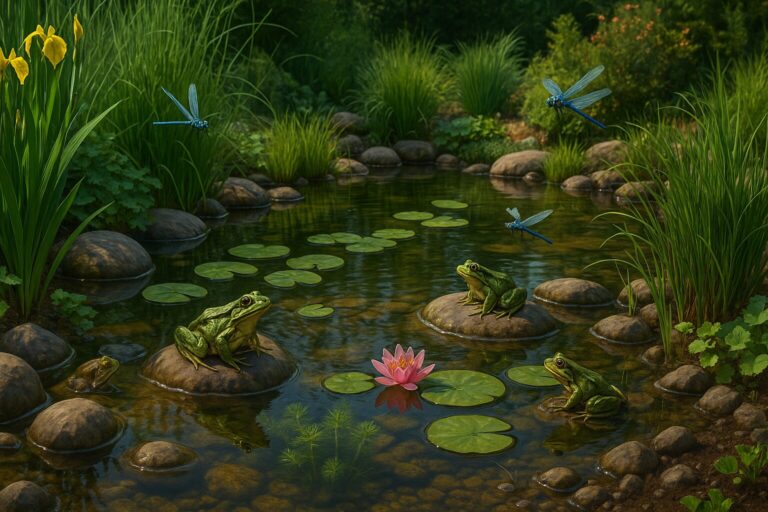
A wildlife pond influences a much larger area than the water itself, and once frogs and dragonflies establish themselves, the surrounding garden becomes more active and ecologically stable. Frogs help regulate insect populations, reducing the pressure of pests that commonly affect edible gardens, ornamental beds, and young plantings. Dragonflies feed on mosquitoes, gnats, and other airborne insects, which increases comfort throughout the yard. Birds and pollinators benefit from the water source as well, especially during dry periods in summer. We encourage homeowners to maintain a chemical-free garden near the pond so these beneficial species can continue supporting the broader landscape. Features such as low-mow sections, decomposing wood, and native shrub layers strengthen biodiversity by offering habitat and food sources for a wider range of species.
Seattle’s climate naturally supports wildlife ponds because of its mild temperatures, long wet season, and consistent humidity. These conditions reduce the need for supplemental irrigation and help maintain stable water levels throughout the year. Amphibians benefit from the cool, moist environment, which prevents excessive evaporation and protects developing eggs during spring. Dragonflies also thrive because summer temperatures reach levels warm enough for active feeding without creating extreme heat that stresses aquatic vegetation. By designing ponds that respond to the climate rather than resist it, we create systems that remain functional with very little seasonal adjustment. The region’s natural rainfall patterns support robust plant growth and strengthen the overall ecological balance of the pond.
Once a wildlife pond becomes established, it forms a predictable rhythm that enhances the entire garden environment. Frogs often return to the same breeding sites each year, and dragonflies complete their life cycles within the same pond generation after generation. Over time, homeowners observe these seasonal patterns more clearly, gaining a deeper understanding of how their garden functions as a living community. The pond becomes a focal point where changes in temperature, rainfall, and plant growth become visible through the behavior of wildlife. This connection to natural cycles makes the garden feel more dynamic and grounded, offering an experience that evolves with each season.
We provide step-by-step guidance that helps you understand seasonal pond care, breeding habitat requirements, predator-safe design choices, and long-term ecological stability. If you’re ready to bring more wildlife into your outdoor space through thoughtful pond planning, we’re here to help. Email us at connect@rutheodesigns.com or call (360) 844-2989. Whether you need support with native planting strategy, pond structure layout, shelter design, or habitat enhancement, we’re here to support you every step of the way.
We use cookies to improve your experience on our site. By using our site, you consent to cookies.
Manage your cookie preferences below:
Essential cookies enable basic functions and are necessary for the proper function of the website.
Google Tag Manager simplifies the management of marketing tags on your website without code changes.
Statistics cookies collect information anonymously. This information helps us understand how visitors use our website.
Google Analytics is a powerful tool that tracks and analyzes website traffic for informed marketing decisions.
Service URL: policies.google.com (opens in a new window)
Google reCAPTCHA helps protect websites from spam and abuse by verifying user interactions through challenges.
Marketing cookies are used to follow visitors to websites. The intention is to show ads that are relevant and engaging to the individual user.
Facebook Pixel is a web analytics service that tracks and reports website traffic.
Service URL: www.facebook.com (opens in a new window)
You can find more information in our Cookie Policy and Privacy Policy.