We believe pollinator habitat restoration begins right in our own gardens, and native bees are at the heart of that effort. Unlike honeybees, many native bee species live in solitary nests and have specific preferences for soil, stems, or wood cavities where they can thrive. By integrating native plantings with layered bloom cycles, undisturbed ground patches, and sustainable landscape features, we create environments where these essential pollinators can flourish.
When we design a landscape with native bee habitats in mind, we look at every detail—sun exposure, soil composition, shelter opportunities, and floral diversity to balance beauty with ecological purpose. We build gardens that provide more than visual delight; they become self-sustaining spaces where native plants and pollinators form symbiotic cycles. This approach reduces reliance on chemical interventions, promotes healthier soil systems, and increases long-term garden vitality.
We recognize that many native bees nest in soil, stems, or wood cavities, and that effective habitat restoration must address these diverse needs. Most wild bees are ground-nesting species, relying on bare, well-drained, lightly compacted soil to construct burrows that house their brood. Leaving patches of exposed, mulch-free soil and even simple rock or leaf-litter refuges plays a vital role in sustaining these underground nesters.
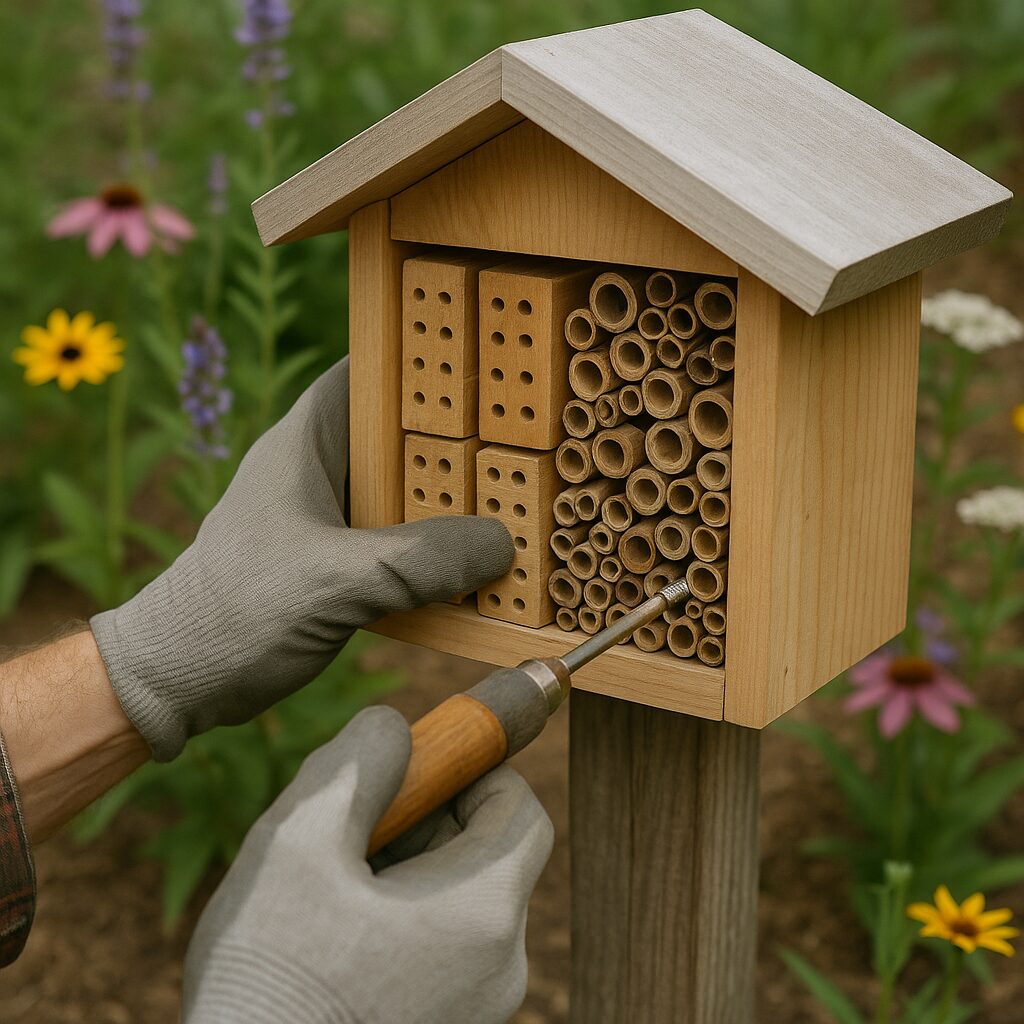
Above-ground, bee hotels offer essential nesting opportunities, particularly for solitary cavity-nesting bees such as mason bees and leaf-cutter bees. These structures mimic natural cavities by using hollow tubes or drilled wood blocks to provide compact, safe nest sites, especially where natural materials are scarce. In recovery from disturbances, bee hotels have been shown to significantly aid recolonization by cavity-nesting native bees.
However, we know bee hotels must be well-designed and well-managed. Smaller structures with fewer tubes tend to attract more diverse species than oversized units, and varied tunnel materials can lure a broader range of bees. Seasonal maintenance, including removing used tubes into an emergence box and refreshing nesting materials each year, prevents the buildup of parasites and fosters healthier native-bee populations. Poorly maintained hotels can unintentionally favor invasive species or pests, which is why we always pair them with broader habitat improvements to support a full suite of local pollinators.
We place equal importance on foraging resources, planting natives that bloom across seasons to ensure continuous pollen and nectar sources. Restorations focused solely on generalist flowers often fall short; instead, we integrate local native species that coevolved with specialist bees to preserve ecological balance and support maximum diversity. A layered planting palette that includes early spring bloomers, midsummer perennials, and late-season composites provides a continuous food supply, helping pollinators maintain their life cycles without seasonal gaps.
In some urban or transitional environments, pollinator-friendly ornamentals may serve briefly to support bees before native plants establish but only as short-term supplements, not long-term replacements. Long-term success requires prioritizing native floral assemblages to sustain specialized plant-bee interactions. Beyond flowering blooms, we incorporate non-floral resources into our designs, such as leaves, plant resins, and even nearby woody vegetation, materials many bees use in nest construction, protection, or immune health.
Our approach clusters complementary habitat elements for more resilient pollinator support. In practice, we:
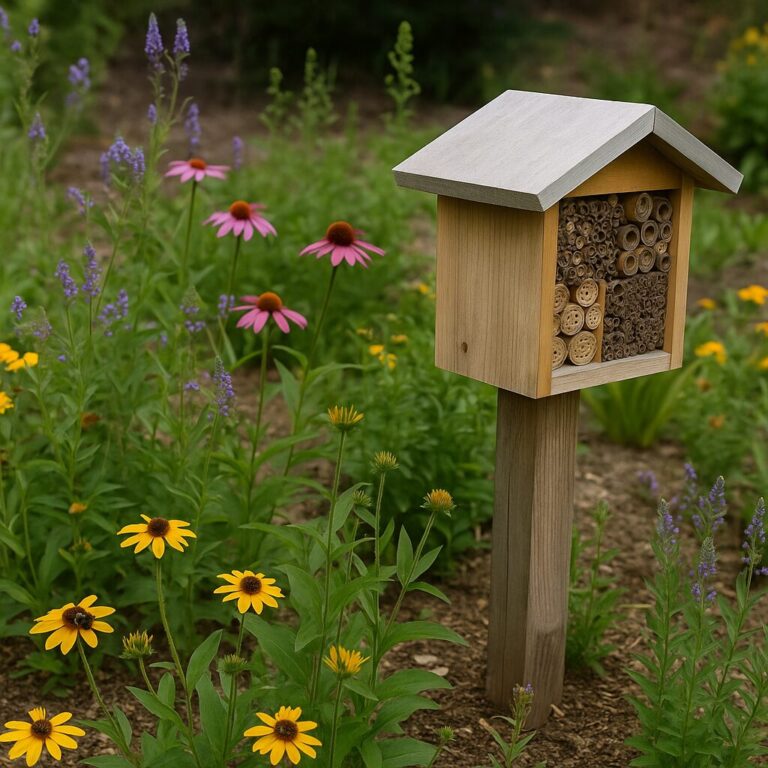
Install bee hotels in sunny, sheltered locations, with a slight downward tilt, facing east or morning sun. We screen openings when needed to reduce predator access, and clean or refresh tubes each spring.
This multi-layered habitat like soil, plants, debris, and nesting structures, gives bees a complete toolkit: safe places to nest, rich sources of food, and materials for brood development.
We approach habitat restoration as a journey, beginning with careful observation and planning. Each site is different, so we start by studying its microclimates, soil types, and existing plant communities to understand what pollinators are most likely to thrive there. We also look at the broader landscape are there nearby fields, hedgerows, or woodlands that can be tied into the design? By identifying which specialist bees need very specific plants, and which generalists will use a wide variety, we ensure our designs benefit the full spectrum of pollinators.
During implementation, our team integrates multiple elements to create a layered, functional habitat. Bee hotels are installed with attention to sunlight, shelter, and maintenance needs. Native seeds and plants are chosen to bloom in succession, ensuring no gaps in nectar or pollen availability. Ground nesting zones are left intentionally open and free of disturbance, while stems and natural debris are placed to give stem-nesting and overwintering bees secure shelter. Even small choices like the orientation of a hotel or the density of certain plants are made with long-term bee health in mind.
After installation, we shift into monitoring and adaptive care. Pollinator activity is tracked season by season to see which flowers are most visited and which nesting spots are in use. If we notice gaps, we make adjustments—adding new plant varieties, refreshing nesting materials, or reworking the arrangement to strengthen ecological connections. This feedback loop allows each project to evolve over time, ensuring the habitat not only succeeds but continues to flourish as conditions and pollinator needs change.
When all of these strategies are combined, the result is far more than a decorative garden. It becomes a living system where every component has a role: soil patches that host underground burrows, stems that carry future generations of pollinators, flowers that sustain life from early spring through late autumn, and bee hotels that provide safe cavities in a managed, reliable way. These habitats do not just attract bees, they encourage healthy reproduction, support population stability, and ultimately create a ripple effect that benefits birds, butterflies, and countless other species.
The beauty of this approach is how dynamic it feels. In spring, solitary bees emerge to take advantage of the earliest blooms; in midsummer, leaf-cutter bees carry bits of greenery into bee hotels; in autumn, the late flowers support pollinators as they prepare for winter. Each season brings visible signs of life, turning the garden into a place that feels active and connected to the wider ecosystem. Over time, this continuous cycle of nesting, foraging, and regeneration creates a resilient habitat that is self-sustaining and adaptable.
We specialize in creating landscapes that welcome and sustain native pollinators through thoughtful habitat design. From installing well-crafted bee hotels to planting seasonal foraging flowers, setting up ground-nesting areas, and integrating natural shelter features, our services are designed to support thriving bee populations in Seattle’s unique environment. During an initial consultation, we evaluate your space for soil quality, sun exposure, and existing plant diversity, then craft a plan that blends ecological function with aesthetic beauty. Whether you’re interested in boosting pollination for your garden, increasing biodiversity, or simply creating a healthier ecosystem, our expertise ensures lasting results. Connect with us at connect@rutheodesigns.com or call (360) 844-2989 to begin designing a pollinator-friendly landscape that makes a difference for both your garden and the environment.
We use cookies to improve your experience on our site. By using our site, you consent to cookies.
Manage your cookie preferences below:
Essential cookies enable basic functions and are necessary for the proper function of the website.
Google Tag Manager simplifies the management of marketing tags on your website without code changes.
Statistics cookies collect information anonymously. This information helps us understand how visitors use our website.
Google Analytics is a powerful tool that tracks and analyzes website traffic for informed marketing decisions.
Service URL: policies.google.com (opens in a new window)
Google reCAPTCHA helps protect websites from spam and abuse by verifying user interactions through challenges.
Marketing cookies are used to follow visitors to websites. The intention is to show ads that are relevant and engaging to the individual user.
Facebook Pixel is a web analytics service that tracks and reports website traffic.
Service URL: www.facebook.com (opens in a new window)
You can find more information in our Cookie Policy and Privacy Policy.