Winter garden care in Seattle involves fewer jobs than summer, but a few of them matter more. Clear storm drains, stay off wet soil, rake leaf mulch back after storms, and protect hoses and irrigation from freezing. Most other work can wait until spring. This winter garden checklist covers what to check, what to do, and what to skip.
It draws on guidance from Seattle Public Utilities, the Garden Hotline partnership, and a western Washington planting handbook. It stops where a site-specific question begins.
Check the water first
Winter rain tests a yard’s drainage more than any other season, so start there. After a heavy rain, note where water runs, where it pools, and where it reaches the house or paving. Photograph anything that looks wrong and write down the date.
Seattle Public Utilities asks residents to keep leaves, debris, snow, and ice from blocking drains. Clear a drain only if it is safe. Stand on the sidewalk or parking strip rather than in the road, and use a tool instead of your hands. If you cannot clear it safely, report a plugged storm drain to the City.
Check your gutters and downspouts too. Make sure they aren’t overflowing and that the water leaves them where you expect.
Stay off wet beds
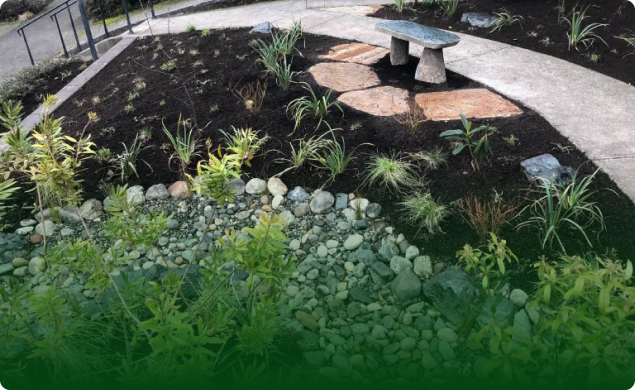
Walking on saturated soil compresses it, and compressed soil drains slowly and leaves less room for roots. A western Washington planting guide from Cascade Water Alliance advises avoiding walking on or working soil that stays wet in winter. For paths, it suggests coarse mulch, pavers, or crushed gravel.
Mulch protects the soil from the other direction. The same guide suggests 3 to 4 inches of wood chips or 2 to 3 inches of leaves around shrubs, trees, and woodland plants. Ferns, perennials, and bulbs do well with 2 to 3 inches of leaves. Keep mulch about a palm’s width away from stems.
If a bed has no clear path to it, note that for spring. A planting plan can add a stepping route before the next wet season.
After a windstorm
Seattle Public Utilities’ seasonal guide says to rake winter leaf mulch back onto garden beds after windstorms. Do that first, because bare soil takes the full force of the next rain.
Then walk the yard and look for damage. Check for split limbs, leaning stakes, and ties that have started to cut into young trunks. Leave large limbs and anything near power lines to a qualified arborist or the utility.
Protect pipes and irrigation
The City recommends turning off automatic irrigation, detaching hoses from spigots, and storing them for the winter. It also suggests faucet covers over hose bibs to protect pipes from freezing. Do this before the first hard freeze, not after.
If your yard has an irrigation system, photograph the visible parts before shutdown so you can compare them in spring. Our guide to a seasonal irrigation record walks through what to capture.
Most gardens do not need winter watering because rain usually covers it. Areas under eaves, new plantings, and long dry spells may need extra attention. Seattle Public Utilities advises checking soil moisture before watering and watering only when plants need it.
What to leave alone
- Fertilizer. Seattle Public Utilities’ calendar lists organic fertilizer in spring and September for lawns, not in winter.
- Heavy pruning. The City suggests removing dead or crossing branches while plants are dormant. Many shrubs flower on wood that is already set, so you can wait on shaping cuts.
- Digging and amending. Skip soil work while the ground is saturated.
- Seed heads and leaf litter in beds. They give wildlife food and shelter, so leaving them is a reasonable choice. Our post on winter structure shows how to keep that look tidy along paths.
Winter is also the City’s suggested time to plan and clean up. That includes checking storage areas for unwanted chemicals and disposing of them safely.
What this winter garden checklist can’t tell you
A checklist cannot tell you why one corner floods every January, whether a tree is sound, or which plants a spot can hold. Persistent pooling near the house, a leaning tree, or a moving bank are questions for a drainage professional or a certified arborist. The City’s guidance for your address applies too.
For general questions, the free Garden Hotline at 206-633-0224 or gardenhotline.org is a good first call. It is run by Seattle Public Utilities, King County’s hazardous waste program, and Cascade Water Alliance.
When you would rather hand it off
If a storm leaves more than you want to handle, Rutheo offers landscape maintenance for Seattle-area yards. Seasonal upkeep is one place a team can help. Either way, start with the questions in this winter garden checklist: where the water goes, what the soil can take, and what to leave in place.