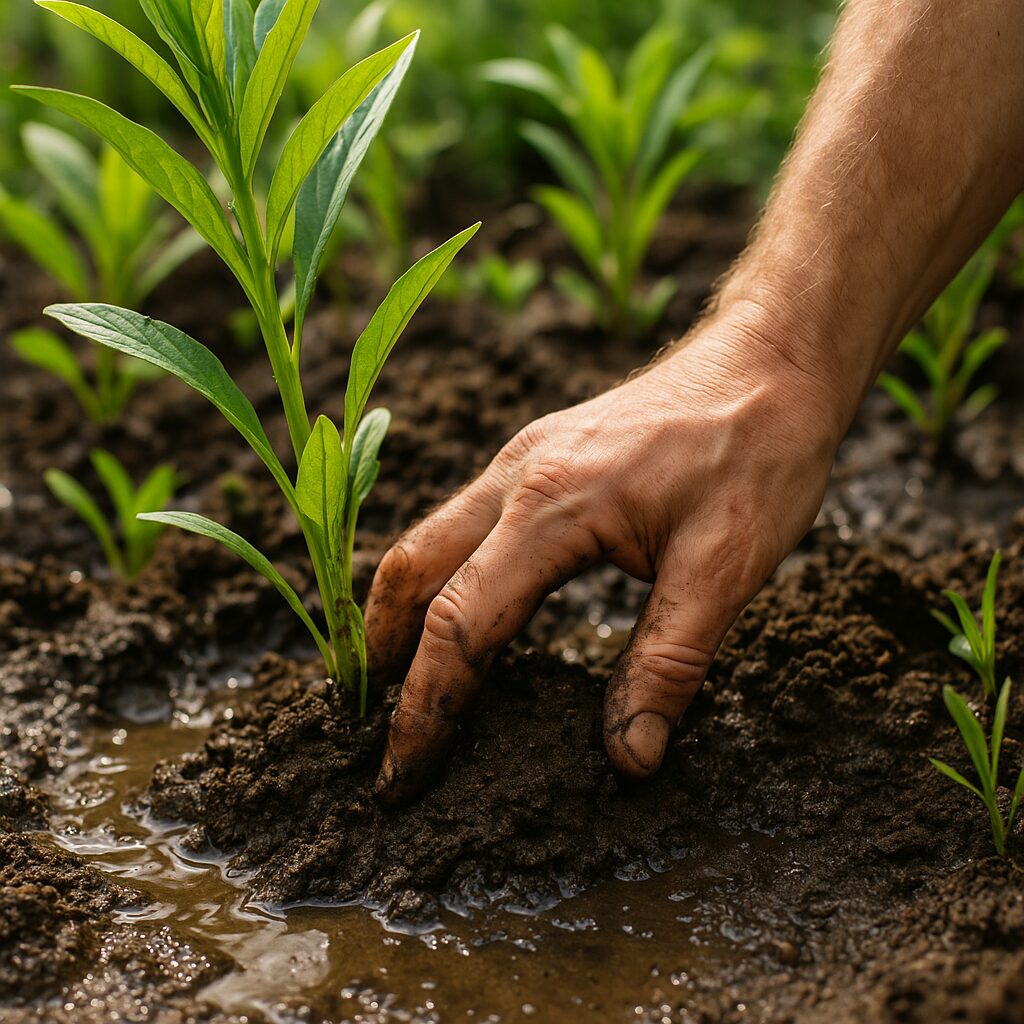
We create rain gardens that blend form and function, capturing runoff while supporting native plants and pollinators. We begin by assessing your site’s soil permeability, sun exposure, and low-lying areas to guide water toward a defined planting zone. Integrating bioswales and shallow depressions improves stormwater infiltration and reduces erosion. We select hydrophilic species, such as blue flag iris and swamp milkweed, and arrange them according to moisture needs. Our designs include organic mulch layers and rock accents to stabilize soil and foster healthy root systems, ensuring your garden thrives with minimal upkeep.
Rain gardens serve as effective bioretention features that mimic natural wetland processes and support habitat restoration efforts. By capturing and filtering stormwater runoff from impervious surfaces, rain gardens reduce erosion, improve water quality, and recharge groundwater. In the context of habitat restoration, these gardens offer a transition zone—known as a riparian buffer—between developed areas and natural ecosystems. We design each rain garden to blend layers of engineered soil media with native plant palettes, ensuring that surface runoff is detained long enough for pollutants to settle and for microbes in the rhizosphere to break down organic compounds. Through careful grading, we establish shallow basins and gently sloping swales that align with predevelopment drainage patterns, fostering the return of natural hydrologic function. This approach not only limits nutrient loads to downstream water bodies but also regenerates local flora and fauna corridors, creating pockets of biodiversity in urban or suburban landscapes.
In our habitat-focused projects, we emphasize ecological connectivity: each rain garden functions as a stepping stone habitat for pollinators, amphibians, and beneficial insects. Rather than relying solely on ornamental selections, we prioritize native sedges, rushes, and wetland-edge wildflowers whose root systems penetrate deeply, enhancing soil permeability and sustaining microbial biomass. These deep roots create macropores that promote infiltration and sustain a diverse microbiome, fundamental for the longitudinal health of the restored habitat. By clustering these details under one heading, we clarify how rain gardens integrate stormwater management with broader restoration goals, balancing engineered structure with ecological processes.
Before breaking ground, we conduct a thorough site assessment to evaluate soil texture, infiltration rates, topography, and sunlight exposure. In cases where compaction has occurred often adjacent to construction zones or heavy foot traffic—our team incorporates broadfork cultivation or lightweight aeration tools to reduce bulk density without disturbing existing vegetation beyond necessary. We perform percolation tests at several points to measure infiltration capacity; if infiltration is slower than 0.5 inches per hour, we amend the subsoil with a mix of sand, compost, and locally sourced topsoil to achieve optimal drain times of one to four days post-storm event. Such timing prevents prolonged root saturation, which can lead to anaerobic conditions and undermine plant health.
Next, we focus on soil layering: a sublayer of coarse sand and gravel creates an underdrain if native soils prove poorly drained, while a transition layer of loamy compost boosts nutrient availability. At the surface, we add a 4–6 inch layer of humus-rich, organic topsoil to support seed germination and seedling establishment. Throughout this process, we monitor soil pH and nutrient ratios, especially nitrogen and phosphorus levels, to prevent eutrophication when the rain garden receives nutrient-laden runoff. By grouping these site preparation steps under a dedicated heading, we provide clarity on how soil structure, compaction, and nutrient balance lay the foundation for a thriving rain garden habitat.
Selecting the right plants is critical to achieving both habitat restoration and aesthetic goals. We begin by developing a plant palette tailored to local ecoregions, integrating ecotypes of wetland-edge species that are proven performers in our region’s climate. Common choices include swamp milkweed (Asclepias incarnata), blue flag iris (Iris versicolor), cardinal flower (Lobelia cardinalis), and native sedge species such as Carex vulpinoidea. These plants excel in moist to fluctuating moisture regimes, stabilizing banks with fibrous roots and offering nectar to butterflies, bees, and hummingbirds. For more structured zones, we incorporate native rushes (e.g., Juncus effusus) and moisture-tolerant grasses (e.g., Panicum virgatum) to create vertical structure and year-round habitat.
Beyond hydrologic tolerance, we consider bloom succession to provide continuous forage: early-blooming spring bulbs like Eutrochium purpureum lead into mid-summer wildflowers such as purple coneflower (Echinacea purpurea), finishing with late-season goldenrods (Solidago spp.) that feed migrating pollinators. By arranging species in clusters rather than uniform rows, we foster microhabitats—sunlit patches for warm-season butterflies and shaded niches for shade-tolerant ferns or sedges. We also work with local seed banks or conservation nurseries to procure regionally adapted genotypes, reducing the risk of introducing maladapted plant stock. All these decisions ensure that our rain gardens not only manage stormwater but also serve as meaningful habitat islands within urban landscapes.
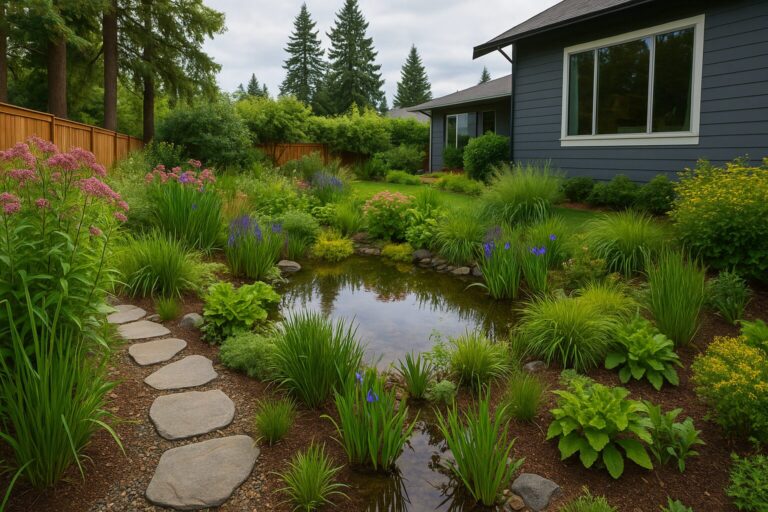
Our installation workflow aligns with industry best practices, starting with staking out the rain garden perimeter based on pre-planned elevations and catchment areas. We typically size the basin to capture 1 inch of runoff from the contributing impervious area, adjusting for soil infiltration and desired ponding depth, usually between 4 and 8 inches. When grading, we create subtle berms or spoil piles on the low side to contain runoff, ensuring overflow structures such as rock-lined underdrains or emergency spillway channels direct excess water safely away from property foundations. In ponding zones, we install a geotextile fabric to separate amended soil from coarser bedding layers, preventing clogging over time.
To promote longevity, we incorporate rock check dams or coir logs at the inlet to dissipate flow energy and prevent soil erosion at entry points. For example, using locally sourced cobblestones in a graded swale can both armor the inlet and provide an aesthetic nod to natural streambeds. We also encircle the basin with permeable edging—such as untreated lumber or recycled composite—to define the rain garden’s footprint without impeding surface flow. Throughout the installation, our team monitors grade elevations with laser levels, verifying that the basin’s bottom plane is level to support uniform ponding rather than channelized flow. By dedicating a section to design and structural tips, we cluster crucial details that inform both form and function.
When restoring an existing rain garden or converting a conventional planting bed into a bioretention area, we follow a systematic approach that addresses soil compaction, plant overgrowth, and invasive species. First, we excavate the existing topsoil to a depth of 6–8 inches, identifying any compacted layers or perched water tables. We break up compaction with hand tools or lightweight machinery and then re-amend the soil profile as described above. Next, we selectively remove aggressive native volunteers or nonnative invasives, such as reed canary grass (Phalaris arundinacea) or Japanese knotweed (Fallopia japonica), which can outcompete desired species under wet conditions.
Following excavation, we re-establish structural elements, repairing berms, resetting rock check dams, and replenishing organic mulch to a depth of 2–3 inches. We often introduce mycorrhizal inoculants directly into planting holes or broadcast over the basin to reestablish beneficial soil fungi, which enhance nutrient uptake and drought resilience. For planting, we stagger sizes: placing larger, container-raised plants in critical inlet zones for rapid establishment, while seeding graminoids and wildflower plugs across the remainder. This mixed strategy accelerates canopy closure, reducing weed pressure and ensuring even coverage. Post-installation, we implement a maintenance schedule that includes monthly inspections during the first growing season, checking for excessive ponding, adjusting any displaced soil, and hand-weeding emerging invasives. We also monitor hydrology after major storm events to ensure the rain garden drains within 48 hours, preventing prolonged saturation that could stress native species.
Beyond capturing stormwater, rain gardens contribute to broader ecological health by serving as educational demonstration sites. We encourage clients to collaborate with local conservation groups or schools to install signage that explains bioretention processes, illustrating how wetland-edge plants filter pollutants through rhizofiltration and how deep-rooted species improve soil structure. These interpretive elements transform a functional landscape feature into a community amenity, fostering awareness of watershed stewardship. Scientifically, rain gardens can improve local microclimates by increasing evapotranspiration, reducing urban heat island effects, and even sequestering carbon in the soil over time. Moreover, by integrating diverse native plant assemblages such as early spring ephemerals and late-fall seed-producing perennials, we support invertebrate lifecycles that are crucial for migrating birds and pollinators.
Economically, properly designed rain gardens can lower long-term maintenance costs compared to turf or conventional ornamental beds, since once established, native plants require minimal supplemental watering. By grouping information on ecological services and community engagement under a single heading, we underscore how rain gardens stretch benefits beyond hydrologic function, serving as living laboratories and habitat connectors in suburban or urban contexts.
We specialize in rain garden installation and restoration services, incorporating native plant landscaping, water-efficient irrigation, and custom design elements to manage stormwater while enhancing local habitat. Every rain garden is crafted to align with Seattle’s climate, topography, and native ecosystems, and we take the time to listen to your needs and offer personalized solutions that blend functionality with ecological resilience.
We invite you to reach out to us to begin planning your rain garden project. You can contact us by email at connect@rutheodesigns.com or give us a call at (360) 844-2989. Whether you have specific questions about rain garden design, restoration, or native plant selection, or you’re ready to schedule a consultation, we’re eager to help you create a thriving, environmentally friendly landscape with the expertise and care that Rutheo Designs is known for.
We use cookies to improve your experience on our site. By using our site, you consent to cookies.
Manage your cookie preferences below:
Essential cookies enable basic functions and are necessary for the proper function of the website.
Google Tag Manager simplifies the management of marketing tags on your website without code changes.
Statistics cookies collect information anonymously. This information helps us understand how visitors use our website.
Google Analytics is a powerful tool that tracks and analyzes website traffic for informed marketing decisions.
Service URL: policies.google.com (opens in a new window)
Google reCAPTCHA helps protect websites from spam and abuse by verifying user interactions through challenges.
Marketing cookies are used to follow visitors to websites. The intention is to show ads that are relevant and engaging to the individual user.
Facebook Pixel is a web analytics service that tracks and reports website traffic.
Service URL: www.facebook.com (opens in a new window)
You can find more information in our Cookie Policy and Privacy Policy.