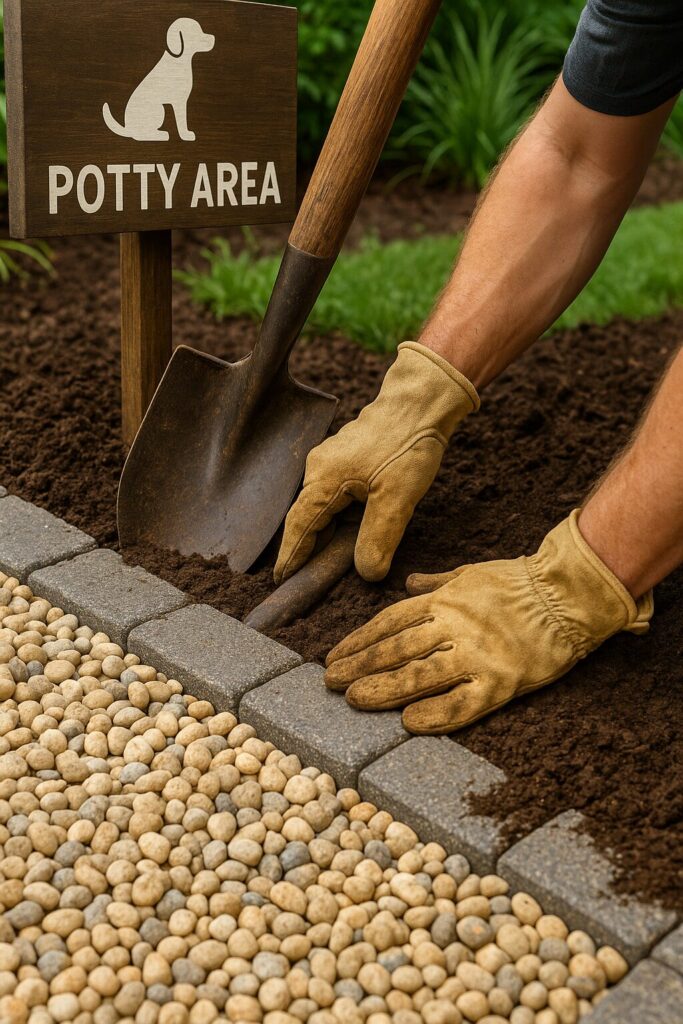
We know that pets are part of the family, and their needs are just as important when it comes to creating a landscape that truly works for everyone. That’s why we design designated potty areas with natural filtration layers and strategic plantings that can withstand regular use without compromising beauty or sustainability. By integrating hardy ground covers, permeable surfaces, and odor-minimizing soil treatments, we make sure these areas remain functional and discreet while blending seamlessly with the rest of your outdoor environment. It’s about making sure your pets have a space to do their business, while keeping the rest of your garden thriving.
We also offer complete waste management solutions that reduce maintenance stress for you while keeping your landscape healthy. Our team can incorporate hidden waste stations, composting methods, or eco-friendly disposal systems that turn a messy chore into a clean, sustainable routine. By thinking ahead with smart placement and durable, pet-safe materials, we help ensure your outdoor living spaces remain inviting for guests and comfortable for pets.
Beyond the potty area itself, managing pet waste is essential for maintaining a healthy garden. We design integrated waste disposal systems that align with ecological landscaping principles. For example, we may conceal a waste station (bin or compost container) behind a shrub screen, with a wash-down hose connection and a small sediment trap at its base. In more advanced schemes, we install an underground “bio-chamber” (e.g. an aerated composting tank suitable for pet waste) that safely breaks down waste into less harmful components. For clients unwilling or unable to compost on site, we include service access points so that professional waste collection can be arranged without disrupting the garden.
To minimize odor and microbial buildup, we layer absorbents such as zeolite or biochar beneath waste bins and periodically flush with diluted enzyme cleaners or beneficial microbes. Regular maintenance (weekly or biweekly) is scheduled as part of our service plan: scooping, rinsing, and refreshing the substrate. In wetter seasons, we account for potential leaching and adjust buffer plantings or soil amendments accordingly.
Where a potty area is placed has a direct impact on how well it functions and how easy it is to maintain. We carefully consider sun exposure, wind direction, and proximity to gathering spaces before finalizing placement. Areas that receive good sunlight allow surfaces to dry more quickly, which helps prevent odors and bacterial growth. At the same time, locating the zone downwind of patios or seating areas ensures the rest of the garden remains comfortable for outdoor living. For homes with larger yards, situating the area near an existing fence line can create a natural sense of separation without interrupting the overall garden design.
We also take into account the daily routine of both pets and people. A potty zone near a door or pathway makes it more likely that pets will use it consistently. For multi-pet households, a slightly larger zone with multiple scent posts prevents overcrowding and keeps behavior predictable. By clustering the potty area with existing hardscape elements, like side paths, utility sheds, or service corridors, we create functional spaces that remain discreet and well integrated.
Plant choice is another key factor in maintaining both pet safety and garden beauty. We exclusively recommend non-toxic species that are resilient under occasional trampling and resistant to nitrogen burn from pet urine. Hardy groundcovers such as creeping thyme, clover blends, or certain ornamental sedges are well-suited to border potty areas. These plants are not only durable but also contribute to soil stabilization and natural filtration.
Around the perimeter, we often use ornamental grasses, tall perennials, or evergreen shrubs to visually buffer the space and subtly guide pets toward their designated zone. These plantings double as odor filters by capturing airborne compounds while providing seasonal texture to the landscape. Clustering these species near the potty area allows the entire zone to feel like a deliberate design feature rather than a compromise for pet ownership.
The type of surface chosen greatly influences durability and cleanliness. Gravel remains a popular option because it naturally drains and can be easily refreshed when compacted. Pet-safe turf offers a smooth surface and can be sanitized quickly with hose-down systems. Mulch is effective for softer aesthetics, though it requires more frequent replenishment due to decomposition and moisture retention. We match the material to the client’s maintenance preferences, climate, and pet behavior.
Maintenance is managed through cycles of raking, washing, and occasional substrate replacement. We integrate these cycles into the overall landscape care plan so the potty zone doesn’t feel like a separate chore. For instance, when irrigation is scheduled, enzyme rinses can be applied; when beds are refreshed with mulch, a top-up can also be made in the potty zone. By clustering material choice with cleaning routines, we extend the lifespan of the surface and ensure the area stays fresh throughout the year.
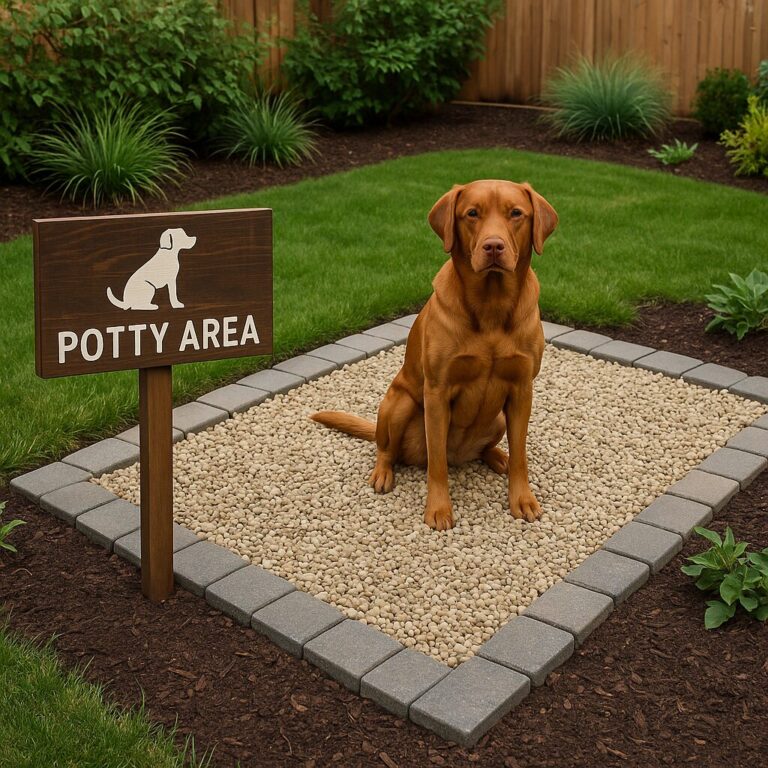
Effective drainage is essential to prevent pooling and long-term soil degradation. We install subsurface gravel beds, perforated drain pipes, or dry wells where necessary to capture and redirect excess liquid. In high-traffic areas, we sometimes add a sand or fine gravel layer that promotes filtration while maintaining permeability. Good drainage ensures that waste breakdown occurs aerobically, minimizing odor and preventing harmful pathogens from lingering in the soil.
To keep soil health balanced, we incorporate organic amendments such as biochar or compost blends. These not only absorb excess nitrogen but also improve microbial diversity in the surrounding soil. Over time, this helps maintain the fertility of adjacent planting beds and prevents nutrient imbalances caused by repeated pet use. By clustering drainage design with soil health management, we create a long-lasting foundation that supports both plants and pets.
Design isn’t only about aesthetics, it must also be intuitive for pets. We often install features such as low posts, natural logs, or even a strategically placed boulder to give pets a clear target. These cues encourage consistent behavior, which reduces cleanup needs across the wider garden. Comfort is also important: choosing materials that don’t overheat in summer or freeze hard in winter ensures pets are willing to use the area in all seasons.
We also consider sensory elements. Pets are more likely to accept a new potty zone if it feels private and distinct. Adding a small hedge or partial screen can provide a sense of enclosure without isolating the space. Over time, pets form habits around these cues, helping owners maintain a cleaner, more organized landscape. By clustering comfort features with training cues, we make the designated potty area a natural part of the pet’s daily routine.
A successful potty zone is one that adapts to seasonal changes. In colder climates, snow and ice can cover surfaces, so we recommend gravel or permeable pavers that remain functional year-round. In hot climates, surfaces are chosen for their ability to stay cool, such as light-colored gravel or shaded turf systems. Seasonal plant rotations can also add resilience, ensuring that border plants recover from stress and continue filtering odor effectively.
We design these zones with durability in mind, anticipating heavy use over many years. Modular edging, replaceable surface layers, and renewable plantings make it easy to refresh the area without a full renovation. By clustering long-term resilience with seasonal adaptability, we ensure that the landscape continues to serve both people and pets without loss of function or visual appeal.
Designated potty areas and structured waste management are more than convenience features, they are essential components of modern pet-friendly landscapes. When built with careful planning, these zones protect soil, preserve garden beauty, and provide a healthy environment for pets and people alike. By clustering drainage, materials, plantings, and waste systems into one coherent design, outdoor spaces can remain both sustainable and enjoyable, even in households with the most active pets.
Our team works closely with you to assess site conditions, pet habits, and overall landscape goals, developing a plan that balances beauty with everyday usability. Whether you’re interested in low-maintenance surfaces, year-round durability, or incorporating waste stations that complement your existing layout, we’ll design solutions that fit seamlessly into your outdoor space. Email us at connect@rutheodesigns.com or call (360) 844-2989 to learn how we can help you create a sustainable, pet-friendly landscape that works for both you and your four-legged companions.
We use cookies to improve your experience on our site. By using our site, you consent to cookies.
Manage your cookie preferences below:
Essential cookies enable basic functions and are necessary for the proper function of the website.
Google Tag Manager simplifies the management of marketing tags on your website without code changes.
Statistics cookies collect information anonymously. This information helps us understand how visitors use our website.
Google Analytics is a powerful tool that tracks and analyzes website traffic for informed marketing decisions.
Service URL: policies.google.com (opens in a new window)
Google reCAPTCHA helps protect websites from spam and abuse by verifying user interactions through challenges.
Marketing cookies are used to follow visitors to websites. The intention is to show ads that are relevant and engaging to the individual user.
Facebook Pixel is a web analytics service that tracks and reports website traffic.
Service URL: www.facebook.com (opens in a new window)
You can find more information in our Cookie Policy and Privacy Policy.