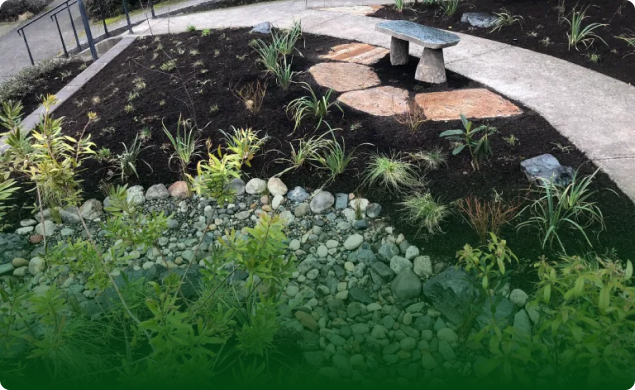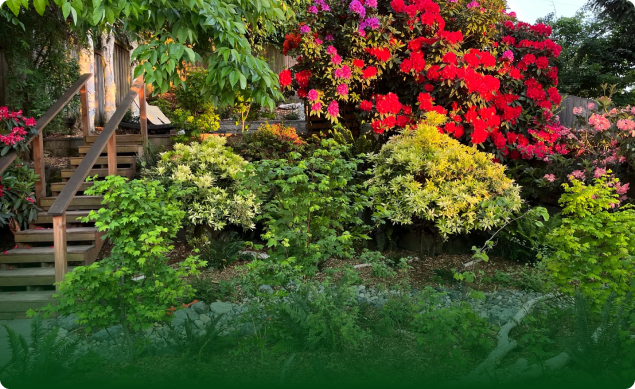
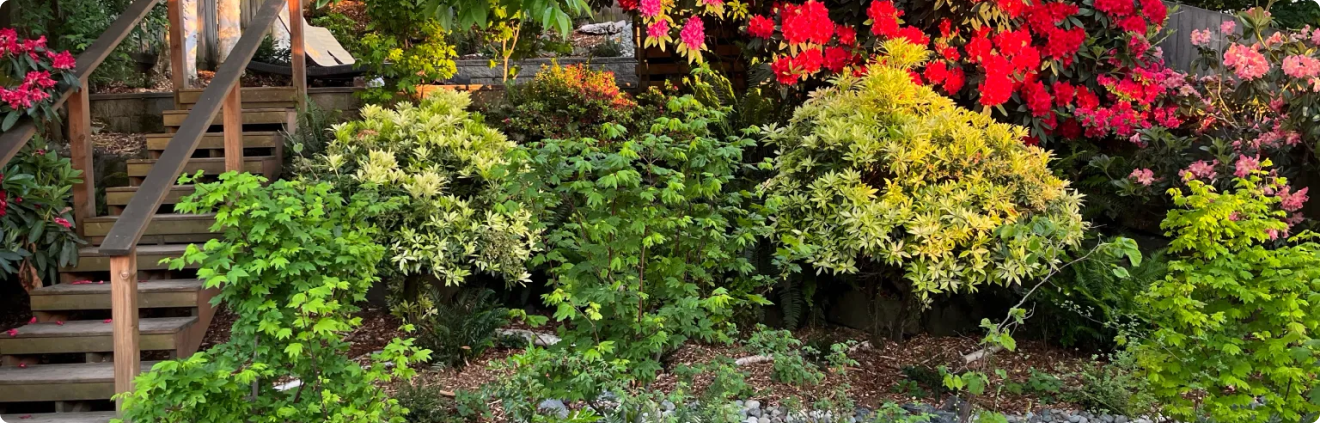
A useful privacy screen begins with a specific view or activity. It might soften the view toward a window, give a sitting area more enclosure, or separate a working zone from the main garden. Each job calls for a different height, width, density, and seasonal presence.
Plant labels such as “native” and “evergreen” describe useful qualities, but neither label proves that a plant fits the site. Selection still depends on mature size, sunlight, soil moisture, access, and the amount of pruning the household can sustain. This guide focuses on that plant-selection decision. For layout options and broader care planning, read Privacy Planting for Seattle Homes.
Name the View or Activity the Screen Should Address
Stand at the place where privacy matters: a chair, doorway, window, path, or working area. Look toward the part of the view you want planting to change. Record the height and width of that view from the actual viewing position.
Then describe the function in plain language. “Soften the upper part of the view from the patio” gives the designer a location and a vertical target. It is more useful than “add privacy plants.” The specific statement also leaves room to preserve daylight, garden views, and access around the planting.
Repeat the observation during seasons when nearby deciduous plants hold leaves and when their branches are bare. A screen that feels sufficient in summer may expose more of the view in winter. The reverse can also happen when low winter sun makes a dense planting cast more shade.
Mark the parts of the view that can remain open. Complete visual separation may require more plant mass than the space can support. A narrower target can produce a better fit with fewer long-term conflicts.
Measure the Space at Mature Plant Size
Measure the planting area before choosing a plant. Record bed width, available height, distance from paths and structures, gates, utility access, existing roots, and any doors or windows that need clear use. Include the working space needed to reach both the plant and nearby features.
Research the mature height and spread for every candidate from a reliable plant source. Washington State University advises gardeners to consider the mature size of trees and shrubs along with physical obstructions, view planes, and site uses. Draw that mature outline on the plan instead of relying on the nursery-container size.
A plant that exceeds the available width creates a permanent pruning obligation. Regular shearing also imposes a chosen form on the plant. If the desired screen depends on keeping a much larger plant within a narrow strip, remove that candidate from the list.
Height deserves the same test. A tall screen can affect windows, roof access, overhead lines, and the amount of light reaching nearby planting. Choose a plant whose expected form fits the available volume and the intended view at maturity.
Sun, Soil Moisture, and Access Change the Plant List
Map direct sun and shade at different times of day. Note where buildings, fences, and established trees change the exposure. Repeat the observation during more than one season because the sun angle and overhead canopy can alter the planting area.
Check soil moisture after sustained rain and during a dry period. One end of a narrow bed may stay wet while the other dries quickly under roof overhangs or tree roots. WSU recommends matching plants to the sunlight, soil, water, temperature, and other conditions of the landscape. A candidate that conflicts with those conditions is unsuitable for that location, even if its size and appearance seem right.
Access can rule out an otherwise promising plant. Leave a usable route to gates, utility points, windows, drains, and the back of the bed. The gardener also needs a stable place to inspect the plant, renew mulch, water during establishment, and prune without standing in another planting.
Native Plants Need the Right Site Too
Native status can help a planting connect with the region, but it does not create one universal set of growing conditions. WSU notes that native plants differ in their water needs and should be grouped according to those needs. Sun, drainage, soil moisture, and mature form still determine whether a native candidate belongs in a particular screen.
Read Native Plant Landscaping in Seattle for broader native-plant context. For the screen itself, verify the current botanical identity, mature form, site needs, and seasonal foliage of each candidate. Consult a reliable plant source. Species-level facts should guide the choice rather than a generic native-plant list.
A native plant may fit one part of the yard and fail in another. If the screen crosses several moisture or light zones, divide it into sections and select for each zone. This approach respects the site instead of forcing one plant through conflicting conditions.
Evergreen Does Not Mean Maintenance-Free
Evergreen foliage can provide screening during the leafless season. It also creates year-round plant mass that needs room, access, and observation. Branches grow, foliage sheds, mulch needs renewal, and young plants require watering while they establish.
Write down the expected care before approving a candidate. Include establishment watering, inspection, pruning access, cleanup, and any species-specific needs supported by the plant source. Compare that work with the time and physical access available to the household.
Avoid treating pruning as a way to correct a poor mature-size fit forever. Treat pruning response as species- and cultivar-specific. Confirm that response from a reliable source before building the screen around a pruning schedule.
WSU sustainable landscape guidance recommends choosing plants for the site and identifying a problem before selecting a response. Apply that sequence to the screen: confirm site fit, observe the plant, and diagnose the problem before choosing ecological or least-toxic care. Leave homemade toxic treatments, toxic fertilizers, and toxic chemical herbicides or pesticides out of the plan.
Plan for Boundaries and Long-Term Pruning
Show the documented site edges, structures, access routes, and planting footprint on one plan. If an edge is uncertain, resolve the survey or site information before fixing the screen location. Planting should remain reachable for care without relying on access beyond the confirmed work area.
Draw the mature spread from the intended planting position. Include room for branch movement, seasonal growth, and a person to work around the plant. Where the available strip is narrow, a smaller plant or partial screen may fit better than a large shrub kept small through frequent pruning.
Decide how the screen will change over time. Young plants leave gaps. Mature plants may overlap, shade their lower branches, or crowd a route. Review spacing against the exact plant information and the desired mature effect rather than reducing spacing to chase a faster result.
Set a review rhythm based on the plants and site. Look for blocked access, crowded stems, moisture stress, rubbing branches, and growth that has reached a structure or route. Early selective work can address a developing conflict while preserving the intended plant form.
When a Mixed or Partial Screen Works Better
A single solid row is only one option. Mixed screens can combine plants with different mature forms when all of them suit the same site. Partial screens can place plant mass only where the measured view needs it, leaving light and circulation open elsewhere.
Mixed planting needs a coherent site plan. Each plant still requires enough light, moisture, root space, and maintenance access at maturity. Variation alone does not guarantee resilience or a good fit. Check every component and its relationship to the plants beside it.
Screens can also work in layers. A small tree or tall shrub may address the upper view, while a lower shrub handles the seated view. Open space between those layers may preserve daylight and make pruning easier. The exact combination depends on the measured view and available growing conditions.
Choose a smaller or partial solution when the full target would crowd a path, block needed access, overtake the planting bed, or demand an unrealistic pruning schedule. The goal is a durable fit between function, site, and care capacity.
If you want help selecting a screen for a specific Seattle yard, talk with Rutheo Designs about evergreen shrubs and trees. We can assess the view, mature space, sunlight, soil moisture, access, and care expectations before choosing plants.