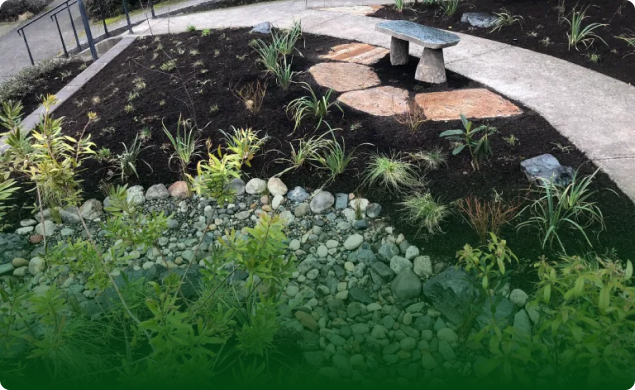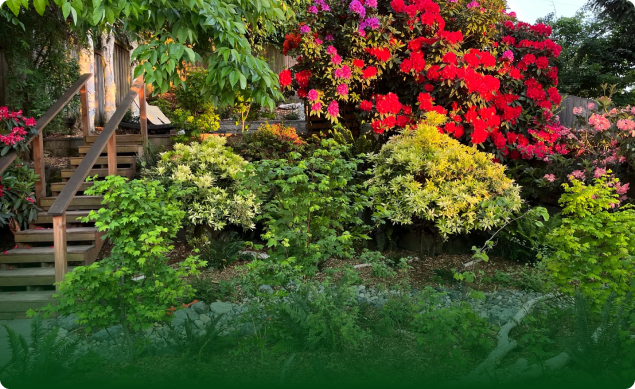
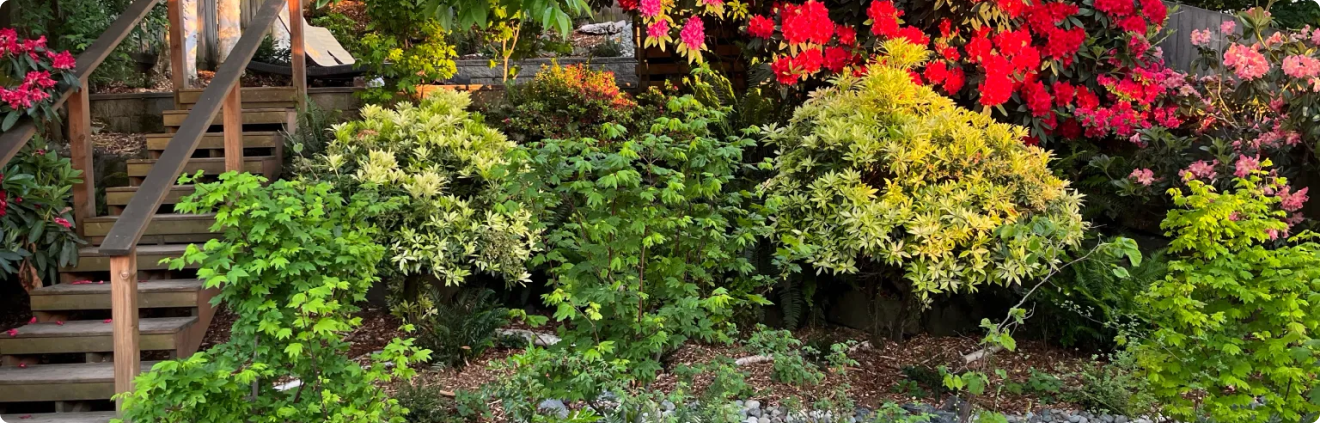
Interest in pollinator garden design in Seattle keeps growing, but many homeowners still carry one concern that stops them from moving forward: they do not want the yard to look unmanaged. They want habitat value and better ecological performance, but they do not want a garden that reads as accidental, chaotic, or hard to maintain.
That concern is reasonable. A pollinator garden is not successful just because it contains flowers that bees visit. It also has to fit the site, hold structure through the year, and make sense in the context of a residential landscape. Otherwise, the garden can become a short bloom window surrounded by visual clutter and maintenance confusion.
The good news is that a Seattle pollinator garden can be both supportive and polished. In fact, the strongest pollinator landscapes often look more intentional than conventional plantings because they are designed around plant roles, bloom timing, and year-round structure instead of impulse plant shopping. For broader planning context, pair this article with native plant landscaping in Seattle, sustainable landscape design in Seattle, and front yard landscape design in Seattle.
What a Pollinator Garden Should Actually Do
A pollinator garden is not simply a colorful perennial bed. It is a landscape system designed to provide forage, shelter, seasonal continuity, and ecological support for pollinating insects and, in many cases, birds and other beneficial wildlife.
That means a well-designed pollinator garden should:
- offer bloom across multiple seasons rather than one short flush
- include plant diversity that supports different pollinator relationships
- provide structure and habitat, not just nectar
- avoid excessive chemical dependence and high-disturbance maintenance
- function as part of the wider yard rather than a disconnected feature
In Seattle, this work matters because urban and residential landscapes can become meaningful habitat patches when they are designed intentionally. Even modest gardens can support better ecological continuity if they reduce barren space, offer staggered bloom, and create stable planting communities.
But performance is only half the job. For most homeowners, the garden also has to look coherent from paths, windows, and the street. That is why the best pollinator gardens start with design logic, not just a pollinator plant list.
The Difference Between “Wildlife-Friendly” and “Messy”
Many people assume wildlife-friendly planting automatically looks loose or unkempt. That confusion usually comes from gardens that have ecological ambition but weak composition. The plants may be beneficial, but the layout does not tell the eye how to read the space.
Pollinator gardens look intentional when they include:
- clear bed lines or path edges
- repeated plant masses rather than scattered singles
- evergreen or woody anchors that hold the design in winter
- layered height transitions instead of random height jumps
- visible maintenance choices such as cutback timing, mulch strategy, and access paths
In other words, design discipline is what separates habitat value from visual disorder. You can allow plants to move more naturally within a defined framework. You can support bees and birds while still keeping the front or backyard legible and refined.
This is especially useful in neighborhoods where front-yard appearance matters. A pollinator-focused front yard does not have to imitate a meadow. It can use smaller-scale layering, stronger edging, and more architectural planting to signal care while still serving ecological goals.
Plant for Bloom Sequence, Not One Peak Moment
One of the most common pollinator-garden mistakes is overloading the bed with midsummer color and neglecting the rest of the year. Pollinators need resources across seasons, and the garden itself looks stronger when interest is staggered.
A better design approach includes:
- early-season bloom to support emerging pollinators
- spring and early summer transitions that build visual momentum
- high-season flowering mass without overcrowding the bed
- late-season bloom that extends support into fall
- seedheads, stems, and woody structure that continue to carry value after bloom
This sequence-based approach also makes the garden more satisfying for homeowners. Instead of one dramatic burst followed by a long visual drop-off, the space evolves through the year. That rhythm supports both aesthetics and ecology.
When combined with strong evergreen and shrub structure, sequential bloom helps a pollinator garden avoid the “all flowers, no framework” problem. That is often the turning point between a garden that feels curated and one that feels temporary.
Support Pollinators Without Sacrificing Maintenance Control
Pollinator-friendly does not mean zero maintenance. It means the maintenance supports ecological performance instead of constantly fighting the planting.
Practical maintenance-aware design choices include:
- leaving enough plant spacing for healthy airflow at maturity
- organizing plants in repeatable groups that are easier to steward
- building access paths or reach zones into deeper beds
- using mulch and ground-layer coverage to reduce weed pressure
- choosing a realistic cutback rhythm instead of all-or-nothing cleanup
This is where many homeowners get stuck. They want a lower-input garden, but they install a dense, overly diverse bed that demands constant editing. Good pollinator design avoids that trap by simplifying plant communities and making upkeep legible.
If your landscape goals include deeper habitat support across the property, native plant landscaping in Seattle is a natural companion to this topic. It expands the conversation from pollinator beds to broader site ecology.
Where Pollinator Gardens Fit Best in Seattle Yards
Pollinator gardens can work in front yards, side-yard transitions, backyard borders, and dedicated habitat zones, but the right design expression changes by location.
For example:
- front yards often benefit from tighter structure and stronger visual repetition
- side yards can act as connective habitat corridors if access is preserved
- backyards may allow deeper planting and more layered habitat edges
- runoff-prone areas may combine pollinator value with water-wise or rain-garden logic
The key is to place the pollinator garden where it can succeed ecologically and feel integrated with the rest of the site. A great pollinator bed should not look like it landed from another design language. It should strengthen the yard’s overall layout.
This is also why full-site thinking matters. If the property has drainage issues, poor soil, or severe summer dry stress, the pollinator garden will perform better when those conditions are addressed within the wider design system. The rain garden design in Seattle conversation becomes especially relevant when habitat and runoff goals overlap.
Common Pollinator Garden Mistakes to Avoid
Homeowners usually have good instincts about wanting more habitat value. Problems show up when implementation shortcuts take over.
The most common mistakes are:
- choosing plants by pollinator popularity without matching site conditions
- building for midsummer bloom only
- ignoring winter structure and visual order
- packing the bed too densely at install
- treating the pollinator garden as a decorative side feature instead of part of the landscape plan
Another mistake is assuming every ecological garden should look informal. Some sites call for softness. Others benefit from crisper structure. The better question is not “How wild should this look?” but “What level of order helps this landscape perform and feel right here?”
That question is exactly where design experience matters. A pollinator garden should be alive and dynamic, but it should still feel like somebody meant it.
When to Bring in Design Help
DIY pollinator planting can work well when the site conditions are straightforward and the bed is modest in scale. Design help becomes more valuable when you want ecological performance without losing strong visual control, or when the pollinator zone intersects with bigger site issues.
That often includes:
- highly visible front-yard pollinator projects
- projects with drainage or irrigation conflicts
- sites where plant failures have already created frustration
- properties that need a habitat strategy integrated with privacy, circulation, or lawn reduction
- homeowners who want ecological impact without a maintenance experiment
If you want site-specific direction before building, garden coaching or an on-site consultation can help define the right scale, plant structure, and care strategy for your property.
FAQ
Can a pollinator garden still look neat and intentional?
Yes. Structure, repetition, and clear edges make the difference. Pollinator-supportive planting does not have to look messy when it is designed with year-round form and visual order.
Do I need only native plants for a pollinator garden?
Not necessarily. Native plants can be very valuable, but the larger goal is a resilient, site-appropriate plant community that offers seasonal support and strong ecological function.
Are pollinator gardens high maintenance?
They do not need to be. They require observation and seasonal care, but thoughtful plant grouping, spacing, and access planning can keep maintenance practical instead of constant.
Where should a pollinator garden go in a small yard?
Start where the site conditions support the planting and where the garden can connect to the rest of the yard. In small spaces, even a border or transition zone can provide meaningful ecological value.
What is the biggest design mistake to avoid?
Building the garden around a short bloom season with no structure. Without year-round framework, the bed often loses both visual clarity and ecological stability.
If you want a pollinator garden that supports bees and birds without sacrificing design quality, schedule a consultation with Rutheo Designs. We can help you shape a habitat-focused planting plan that fits your site, your maintenance tolerance, and the way you want your Seattle landscape to feel.