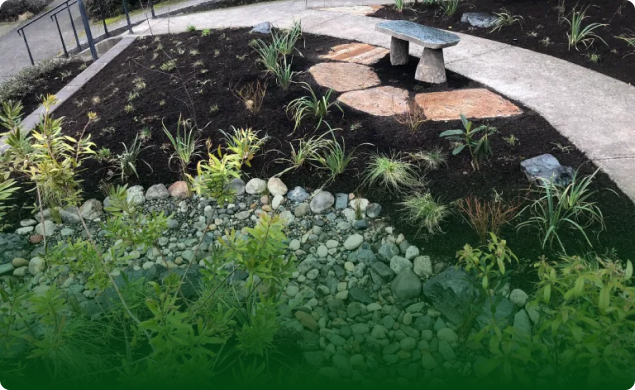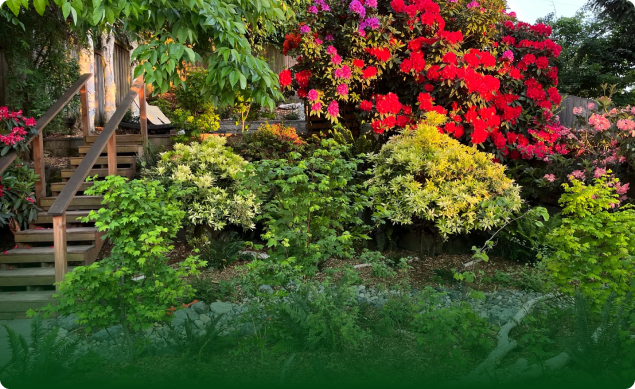
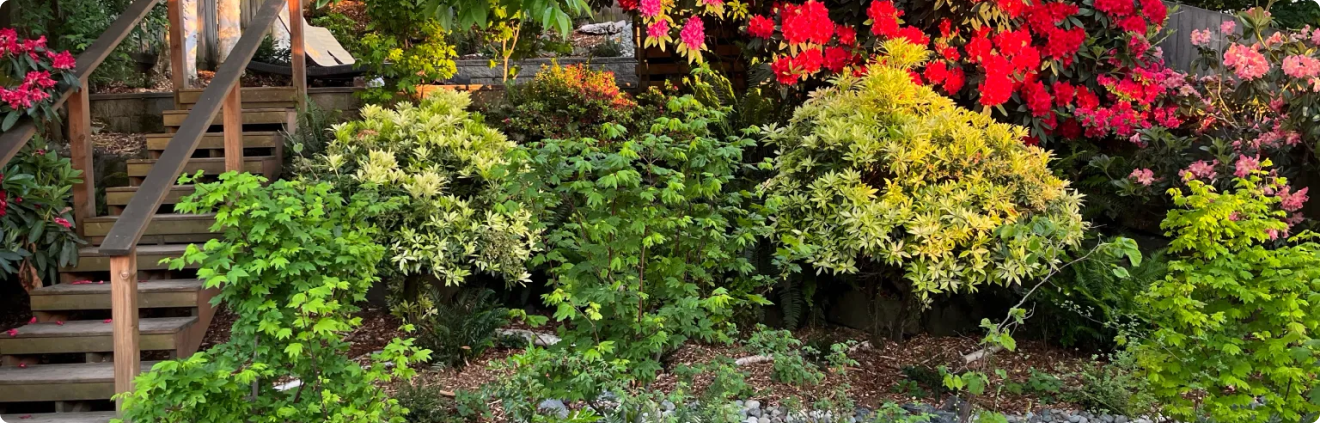
New shrubs can leave a Seattle planting bed looking bare on installation day. Pulling them closer may fill the view sooner, but it spends room the yard will need as branches widen.
Along a path or foundation, that lost room becomes wet foliage at shoulder height, a window hidden behind new growth, or a downspout outlet nobody can see during rain. The usual fix is repeated clipping where the plant keeps pushing outward.
At Rutheo Designs, we plan spacing around the shrub’s mature habit and the access each part of the yard must keep. One distance cannot fit every plant or property, so the first step is to stop reading the nursery container as the plant’s finished size.
Start With Mature Habit, Not the Nursery Container
A nursery pot shows the size of the root ball that arrived at the yard, not the room a shrub’s branches may occupy later. When we lay out shrubs in a Seattle yard, we check the exact species and cultivar, its expected mature height and width, and whether its habit is upright, arching, or broad-spreading. Those published sizes are useful estimates, not promises. Light, soil moisture, exposure, and pruning can all change how a plant grows on one property.
Before digging, we mark the plant center and rough out the likely outer canopy with a hose, flags, or even a line scratched into mulch. The usable route stays outside that outline, as do any window we need to open, wall we need to reach, or downspout outlet we need to see. A ground sketch won’t predict every branch, but it exposes a bad match while the shrubs can still be moved.
Small nursery evergreens can leave plenty of open paving along a narrow side path on installation day. As the shrubs broaden, wet foliage may start brushing shoulders, and a yard-waste bin can catch outer branches on its way to the gate. Shearing the path side recovers passage for a while but adds recurring work. The named plant and the conditions in that yard decide how quickly the conflict develops.
Maintenance belongs in the original spacing choice. WSU Extension’s home-pruning guidance treats regular severe size reduction as a sign that a plant may be too large for its location. A deliberately clipped hedge can still make sense, but that shape carries recurring work. If screening is the main goal, our guide to privacy planting for Seattle homes compares hedge and layered-screen choices. The useful question is whether this shrub can keep its expected form without taking back the access the yard needs.
Protect the Route Before You Lay Out the Hedge
A usable route includes the space above its paved footprint. We test the gate swing and each turn with the largest thing that regularly passes through. A stem can stay off the path at soil level and still occupy shoulder or handle space above it. Along a hedge, that upper growth often decides whether the route still works.
A gravel path can stay open while the turn beyond its gate does not. When the gate swings toward a proposed hedge and a yard-waste bin must turn as soon as it clears the latch, long or arching stems can occupy the needed space. A more upright cultivar may behave differently, though light, soil, exposure, and pruning still affect its shape. Cutting only the inside corner recovers the turn but adds a recurring job and can leave a flat notch in the hedge.
Shrub spacing has to protect both the moving line and the places where someone stops. At a corner, the long object matters as much as the person carrying it. Where the route reaches a window or downspout, it needs a working pocket to set down tools and reach the house without standing inside the shrub. A clipped hedge also needs room for the cut itself and for gathering branches afterward.
We mark that working route before setting hedge centers. If the available strip remains tight, fewer shrubs or a plant with a different habit may serve the yard better than a compressed row. Our small backyard design guide looks at circulation across the whole yard; along a hedge, the test is whether ordinary movement still works without constant cutting.
Leave Windows and House-Side Access Reachable
A foundation bed can leave the path open and still make the house awkward to use. We treat a window as a working part of the wall: an outward-opening sash needs room for its motion, screens may need removal, and exterior glass needs cleaning. The view from the room may matter too. Those uses define the planting area better than the wall alone.
Those limits change with both the window and the plant. A casement with a low sill differs from fixed glass higher on the wall. Dense evergreen foliage may create a year-round screen, while a lower, open deciduous shrub may change the view by season. The homeowner’s privacy preference matters too. Instead of one rule, we decide what plant form can be kept there without interfering with the window’s use.
A broad young shrub below an outward-opening window may leave the wall exposed at first. As its shoots rise into the opening and across the view, clipping the top and house side can become routine. Washing the glass or removing the screen may then require leaning over wet foliage, while repeated cuts create an unintended flat-topped shape. The species or cultivar, window type, site conditions, and intended pruning all belong in the original spacing decision.
Our test is practical: open the window, look out from the room, and stand where hands and tools must reach the exterior. Then we compare the intended plant form with those tasks. The wall does not need a generic bare strip; the planting needs to leave that window usable for the work that matters there.
Keep Downspout Outlets Visible and Serviceable
Our spacing check is plain: can you see where roof water appears at the ground during rain? Seattle Public Utilities explains that rooftop runoff is stormwater and that maintaining a property’s drainage system is the owner’s responsibility. The outlet may need little attention during dry weather, which makes its planting limit easy to overlook. Shrubs won’t direct the water, but their form can preserve or block the view needed to notice what is happening.
What needs to stay visible depends on the outlet already there. An exposed end near the soil presents a different condition from a downspout entering a closed connection, while an extension or fitting that needs handling calls for its own working pocket. Long arching stems may hang across these parts; a more upright shrub could leave them easier to see. Nothing may look wrong during dry weather, but dense foliage can block the view of where water appears during sustained rain. Clearing fallen leaves or checking a shifted extension then means pushing through wet branches, and repeated clipping around the pipe may leave a hollow in the shrub.
Check the relationship while water is moving, then judge whether the outlet, its connection, and the nearby ground remain observable without cutting a permanent opening into the plant. If branches would close over that area, shifting the shrub or choosing a different habit may reduce the work. Any pruning needed to preserve that view belongs in the planting decision.
Price the Future Pruning Into the Planting Decision
Decide which shape you are buying: the shrub’s natural habit or a deliberately clipped hedge. Each choice creates a different maintenance job. If a shrub will keep most of its natural outline, that outline has to belong in the available bed. A formal hedge can be held to a smaller outline, but that clipping is part of the design from the start.
The workload depends on the species or cultivar, its vigor at that site, and the finish the homeowner wants. A naturally narrow shrub may need less correction than a broad, arching one in the same strip, though a nursery description can’t promise how either will behave there. Shearing an even outer surface is different work from making selective cuts. If flowers or fruit are part of the reason for choosing the plant, check its pruning window before assuming any clipping schedule will retain them.
Before buying, write down both the published size estimate and the smaller maintained outline you intend to keep. Mark that outline at the planting location and be specific about the work required to hold it. Who will prune, how crisp must the finish stay, and what happens if the work is delayed? If the outline only works when substantial growth is removed again and again, compare a narrower cultivar, fewer plants, or more room before accepting that burden. Replacement may eventually make more sense than repeated severe size control, but that judgment belongs to the actual plant and site.
Our tree planting service shows how site conditions and long-term size guide selection and placement. Where an existing hedge or shrub needs planned size and form work, our tree and shrub pruning and trimming services cover that care. Pruning can maintain an intentional form, but it does not replace a workable planting choice.
Before planting, we want the maintenance commitment to be explicit: either the shrub can keep most of its expected habit, or the hedge will be clipped on purpose. If the intended result depends on constant correction but no one wants that job, the plant choice or spacing is still unresolved.
Shrub spacing in a Seattle yard comes down to matching the plant and its care to the space the site actually offers. We would rather leave a young planting some room than crowd it to make the bed look finished sooner. If the expected habit of the chosen species or cultivar suits the available bed under that property’s conditions, and the pruning plan is work the homeowner accepts, the open ground on planting day is doing useful work.
If the choice still depends on constant size control, request a consultation before planting so we can talk through the site and intended hedge form.