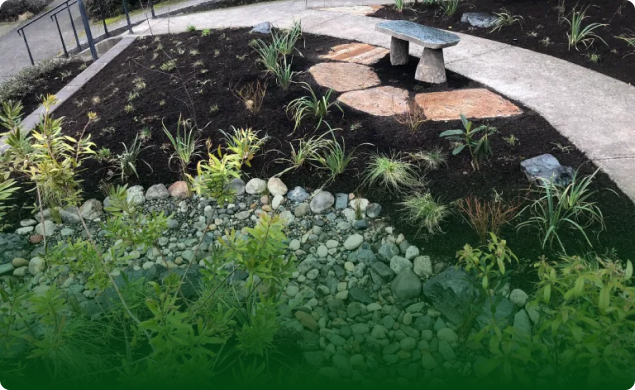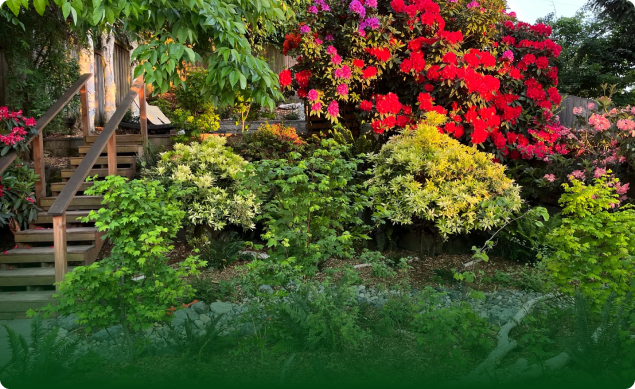
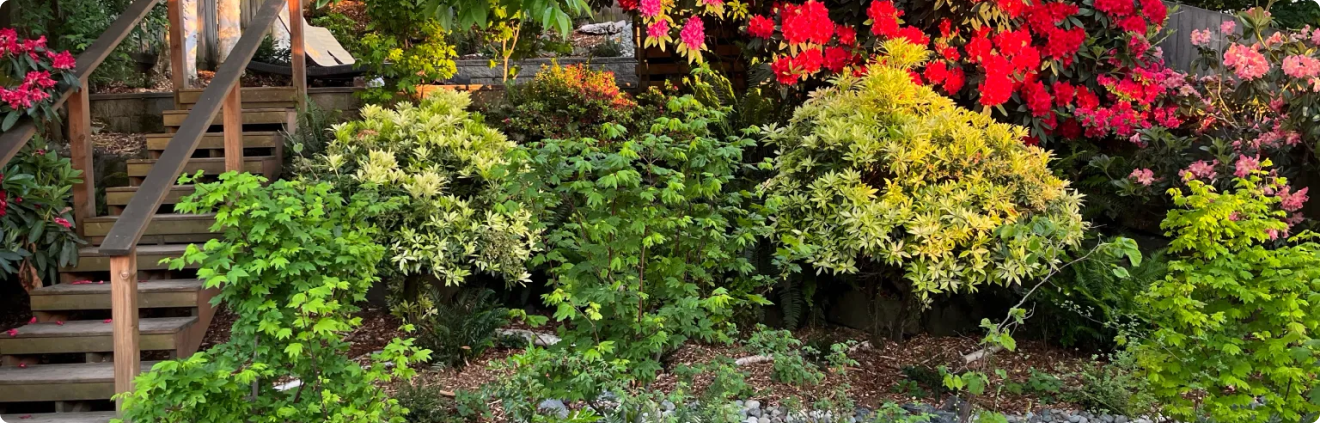
An edible landscape can take many forms. Two common models ask different things of the gardener: seasonally replanted edible beds and a perennial food forest with plants arranged in layers. The better fit depends on how you want to garden, what you hope to harvest, and what your site can support.
Start with the commitment rather than a plant list. Compare the time you can give the garden, the kind of change you enjoy, the space available at maturity, and the access needed for care. Those choices can point toward annual beds, perennial layers, or a deliberate mix of both.
How Annual Edible Gardens and Food Forests Differ
An annual edible garden usually concentrates seasonal crops in defined beds or containers. The layout can change between growing seasons, and the gardener makes recurring decisions about sowing, transplanting, clearing, and replanting. Beds also make it easy to reserve clear paths and organize work in a compact area.
A food forest uses a longer-lived structure. Washington State University describes food forests as systems with multiple overstory and understory layers managed together. In a residential landscape, that concept may involve woody plants, lower perennial growth, and climbing or ground-level layers that share the same space.
The word “forest” can make the perennial model sound self-managing. It still requires deliberate care. Spacing, pruning access, plant health, soil coverage, water, and changes in shade remain part of ongoing management as the layers mature.
Both models qualify as edible landscaping when food-producing plants form part of the residential landscape. The Oregon State University Extension edible landscaping overview covers a wide range of edible designs. A design may add a few edible plants to an existing garden or devote most of the landscape to edibles.
Match the Garden to Your Time and Harvest Goals
Picture the work you want to do during an ordinary year. Some gardeners enjoy planning new crops, tending open beds, and changing the layout each season. Others prefer to shape a perennial system over several years and manage the growth of established plants.
Harvest goals matter too. A household seeking frequent seasonal choices may prefer the flexibility of annual beds. Gardeners interested in a long-lived structure may accept a slower planning horizon and fewer opportunities to move major plants later. Neither approach supports a guaranteed harvest; weather, plant health, site conditions, and care still affect results.
Seasonal Replanting and Flexible Beds
Oregon State University defines an annual as a plant that completes its lifecycle within one year or growing season. That lifecycle creates a recurring seasonal rhythm. The gardener prepares space, establishes the crop, tends it, clears the finished plants, and decides what comes next.
This repetition demands time, yet it also preserves flexibility. You can change the use of a bed, adjust its planting pattern, or leave part of it open during a future season. Defined beds may suit a gardener who values visible organization and direct access from the path.
The commitment extends beyond planting day. Watering, soil care, monitoring, and harvest all need attention at the relevant stage. Plan for the work you can sustain during busy weeks, not only the work that feels appealing at the start of the season.
Perennial Layers and Long-Term Management
Perennials live for more than two years, according to the same OSU lifecycle guide. Woody perennials may remain in place much longer. Their mature width, height, root space, and shade can therefore shape future use of the garden.
Layering adds relationships that annual beds may avoid. One plant can change the light, access, and air movement around another as it grows. Paths that feel generous at installation can narrow, and harvest or pruning points can become difficult to reach.
Long-lived does not mean low-maintenance. A food forest needs observation and active management through establishment and maturity. The companion article Food Forest Design for Seattle Backyards addresses that setting-specific planning in more detail.
Light, Access, and Mature Size Set Real Limits
Map light before assigning any part of the yard to edible production. Note direct sun, open shade, and deep shade at different times of day. Existing trees, buildings, fences, and neighboring vegetation can create a pattern that changes across the year.
Space must be judged at maturity. The OSU edible landscaping overview advises gardeners to consider location, available space, mature plant size, time, and care. A young perennial layer may leave wide gaps that close as woody plants spread.
Access deserves equal weight. Annual beds need room for planting, tending, and clearing. Perennial layers need routes for observation, pruning, soil care, and harvest as plants grow. Include gates, stairs, narrow side yards, utilities, storage, and any place where tools or materials must pass.
These limits can rule out a garden model for one part of the property while leaving it suitable elsewhere. They can also reveal when a smaller edible area fits better than converting the whole yard.
A Hybrid Edible Landscape May Fit Better
A hybrid plan keeps annual and perennial areas distinct enough to manage while allowing them to share one landscape. Seasonally replanted beds might occupy the most accessible open area. Perennial layers may fit where their mature size and long-term shade have room.
The hybrid choice can also match different interests within a household. One person may enjoy seasonal planting, while another prefers pruning and tending established plants. Clear paths and boundaries make each responsibility easier to see.
Treat the hybrid as a concept, not a fixed formula. The balance can be mostly annual, mostly perennial, or limited to one small zone of each. Site conditions and management capacity should set that balance before individual plants enter the plan.
Inventory the Site Before Choosing Plants
Walk the property and record what already exists. Mark sun and shade, observed wet and dry areas, slopes, paths, doors, utilities, trees, structures, and the places where people gather or move. Add the mature footprint of vegetation that will remain.
Next, write down the available management time by season. Include watering, soil care, monitoring, pruning, replanting, and harvest access. This inventory turns a broad preference into a practical comparison between annual beds, perennial layers, and a hybrid landscape.
Bring your site inventory and seasonal care priorities to the Edible Gardens & Food Forests pathway. Rutheo Designs can use them to compare an annual, perennial, or hybrid edible landscape before individual plants are selected.