Small space ecological landscaping in Seattle starts with the realities of balconies, rooftops, courtyard edges, and side yards: shallow containers, wind, weight, hose access, shade, and tight paths. The goal is to make those compact places usable while giving pollinators, birds, and soil life something real to work with.
A third-floor balcony in Capitol Hill may hold only a few planters, but those planters can feed pollinators and soften a hot railing edge. A narrow Ballard side yard too shaded for a patio can become a ferny, soil-protecting passage. A rooftop above a garage needs wind, heat, water access, and container depth solved before planting.
The trick is to scale ecological goals to the space. Habitat does not require a large yard, but it does require enough soil volume, water awareness, plant layering, and maintenance access for planting to stay alive and useful. If you want broader planting context, pair this guide with pollinator garden design in Seattle and native plant landscaping in Seattle.
Start With the Hard Limits of the Space
Small ecological gardens fail when the planting idea is bigger than the site can support. Before choosing plants, look closely at the physical limits that cannot be wished away.
On balconies, the first questions are usually weight, drainage, wind, and water access. Large saturated planters can be heavy. Water running across decking or onto a neighbor’s space can create problems. Wind dries foliage faster than expected, especially above street level. If the building has rules about planters, railing attachments, or drainage, treat those as design limits rather than afterthoughts.
On rooftops, exposure becomes more intense. A plant that is comfortable in a protected front bed may struggle in shallow soil above a garage, where summer heat reflects off membrane roofing, walls, and paving. Containers may need more soil depth, more stable placement, and more careful irrigation than the same plants would need at ground level.
Side yards have the opposite problem. Many are shaded, compacted, narrow, and awkward to access. A side yard that stays damp in winter but dries hard in August needs different planting than a sunnier roof deck. Good design starts by naming those conditions clearly: dry shade, winter-wet shade, reflected heat, shallow soil, limited hose access, or foot traffic from trash bins and gates.
Use Containers as Soil Systems, Not Decoration
Containers are often treated like movable decor, but in small-space ecological landscaping they are the whole soil system. The size, material, drainage, and planting mix determine whether the container can support more than a short seasonal display.
Small pots dry out quickly and heat up fast in summer. They can work for herbs, annual flowers, or small accents, but they rarely support a layered habitat planting for long. Larger troughs, deep planters, and grouped containers create more stable root conditions. They also make it easier to combine evergreen structure, flowering perennials, and trailing or ground-layer plants.
A useful balcony or rooftop container group might include:
- one larger evergreen or shrubby anchor for winter structure
- several flowering perennials that bloom at different times
- a low spiller or ground-layer plant to shade the soil surface
- a seasonal edible or herb element where water access is reliable
- mulch or leaf litter where it will not blow away or clog drains
Drainage still matters. Ecological does not mean soggy. Containers need water to leave the root zone without causing mess or damage below. In tight spaces, saucers, risers, drain mats, and careful watering habits can matter as much as plant choice.
If summer watering is the main constraint, drought-tolerant landscaping for Seattle homes can help you think through plant stress, mulch, and establishment instead of simply buying plants labeled low-water.
Build Habitat in Layers, Even When the Footprint Is Tiny
Habitat value comes from layers. A full yard can use trees, shrubs, perennials, groundcovers, leaf litter, and dead wood. A balcony or side yard will not include all of that in the same way, but it can still borrow the pattern at a smaller scale.
Think in vertical and seasonal layers:
- overhead shade from an existing tree, pergola, or neighboring canopy
- shrub or tall perennial structure for cover and nesting interest
- flowers with staggered bloom times for pollinator feeding
- ground-layer foliage to protect soil and reduce evaporation
- seed heads, stems, and leaves left in place where the space allows
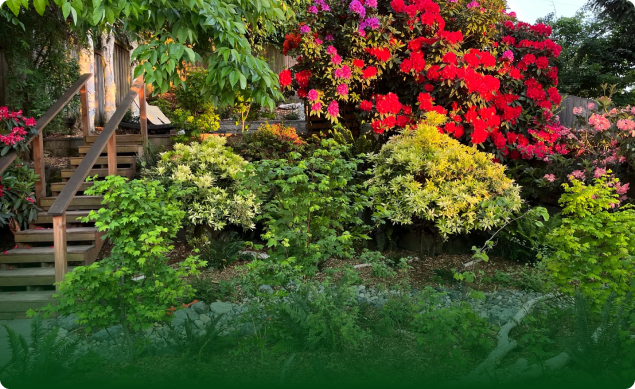
This is where a few well-chosen plants often do more than a crowded collection. A narrow side-yard bed with sword fern, salal, sedge, and a small flowering accent can provide cover, texture, and soil protection without blocking the walkway. A balcony trough with compact flowering perennials and an evergreen edge can offer bloom and shelter in a space only a few feet deep.
Habitat in small spaces is also about continuity. A balcony near street trees, a planted stoop, and a neighbor’s garden can become one more stop for insects and birds moving through the block. It does not have to carry the whole ecological load by itself.
Match the Planting to Exposure, Not Just Style
The same container can behave like a different garden depending on where it sits. South- and west-facing balconies often become hot, dry microclimates by late summer. North-facing balconies may stay cool and shaded but offer less bloom potential. Rooftops add wind. Side yards add root competition, narrow light, and sometimes roof runoff.
Plant choice should follow those realities. In hot exposed spots, favor plants that can handle sharper drainage, stronger sun, and more frequent dry-down between waterings once established. In shady side yards, look for foliage strength, root tolerance, and winter presence rather than forcing a bright flower display where light is too low.
Avoid mixing plants with opposite water needs in one container. A moisture-loving fern and a dry-summer perennial may both look good at the nursery, but one irrigation pattern will not suit both. Grouping plants by water need keeps maintenance simpler and reduces the chance that a small garden becomes a cycle of replacements.
For shady small spaces, shade garden design for Seattle yards is useful because many balcony corners and side-yard strips behave more like woodland edges than sunny patios.
Make Narrow Side Yards Useful Without Overbuilding Them
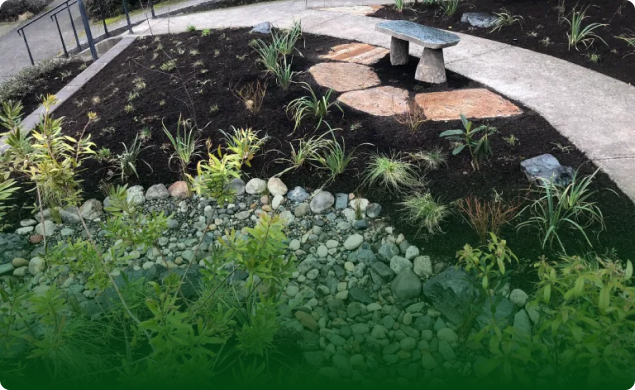
Side yards are often treated as leftover space, but in Seattle they can do real work. They can handle circulation, soften a fence, absorb a little runoff, hold a quiet planting layer, or connect the front and back gardens visually.
The key is to keep the walkway honest. If trash bins, bikes, garden tools, or a gate need to move through the side yard, the path cannot be narrowed by hopeful planting. A clear walking strip with planting on one side is often better than plants squeezed against both edges.
In a shaded side yard, ecological upgrades might include:
- replacing bare compacted soil with mulch and low woodland planting
- adding stepping stones where feet already travel
- using tough evergreen foliage near the darkest wall or fence
- directing downspout splash away from foundations and path edges
- choosing plants that can be brushed without breaking
If the side yard has erosion, standing water, or runoff from a roofline, solve that before making it more densely planted. French drain or rain garden? and rain garden design in Seattle can help separate a planting problem from a water-movement problem.
Design for Care You Can Actually Keep Up With
Small-space gardens are visible at close range. A balcony planter is seen from two feet away. A rooftop container may be the first thing you notice from the kitchen window. A side yard may be walked through every day. That closeness makes maintenance more obvious.
Choose a care pattern before choosing the final plant list. If a balcony has no hose bib, the design should not depend on daily summer watering. If a rooftop is difficult to reach, avoid fussy combinations that need constant deadheading, staking, or individual watering. If a side yard is used as a service route, avoid brittle stems and plants that flop into the path.
Good small-space ecological care often includes:
- deeper watering less often, matched to container size and plant need
- checking saucers and drains after heavy rain
- refreshing mulch where soil is exposed
- leaving some seed heads or stems without letting the space look abandoned
- editing plants early before they block access
This is also where seasonal stewardship matters. A small habitat garden can look intentional through winter when it has evergreen form, clean edges, and a few retained stems. It can look neglected if everything depends on summer bloom.
When Professional Help Is Worth It for a Tiny Space
Some small ecological spaces are perfect for DIY experimentation. A few containers near a kitchen door or a simple pollinator trough can be a good way to learn the site. Professional support becomes more useful when the space has structural limits, difficult exposure, or needs to connect with a larger home landscape.
That might include:
- a rooftop or balcony where weight, drainage, and wind need careful thought
- a narrow side yard with runoff, root competition, or muddy access
- a compact front entry where the planting has to look polished year-round
- a small garden that must support habitat without becoming cluttered
- a phased plan that connects containers, paths, and ground-level beds
An on-site consultation can help read the physical constraints quickly, while garden coaching can be useful if you already have containers or beds but want the planting to work better.
FAQ
Can a balcony really support habitat?
Yes, in a modest but meaningful way. A balcony with well-chosen flowering plants, evergreen cover, and clean water management can support pollinators and add another planted stop in the neighborhood.
What is the biggest mistake in rooftop container gardens?
Underestimating exposure. Rooftops are often windier, hotter, and drier than ground-level beds. Container size, watering access, and stable placement matter before plant variety.
Are native plants always best for small containers?
Native plants can be excellent, but the container has to match the plant’s root needs, water needs, and exposure. In small spaces, a climate-adapted mix may perform better than forcing a native plant into the wrong soil volume.
How wide should a planted side yard path be?
It depends on how the side yard is used. The practical test is whether people can move bins, tools, bikes, or garden materials through the space without stepping into the planting.
Do small ecological gardens need irrigation?
Many do, especially during establishment and summer dry spells. The goal is not to avoid water completely; it is to water in a way that matches the soil volume, exposure, and plant community.
If you want a balcony, rooftop, or narrow side yard to do more than hold a few decorative pots, schedule a consultation with Rutheo Designs. We can help you turn a small Seattle space into a planted, usable, habitat-supporting part of the home.