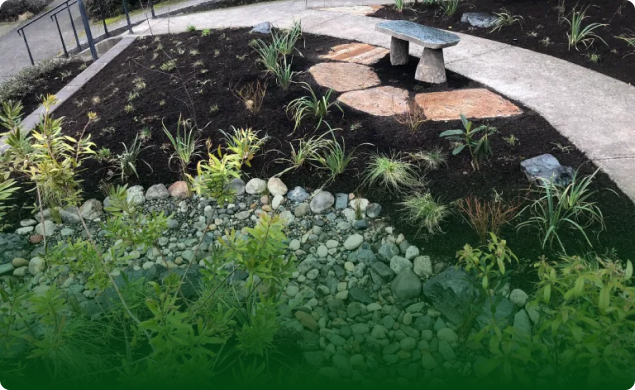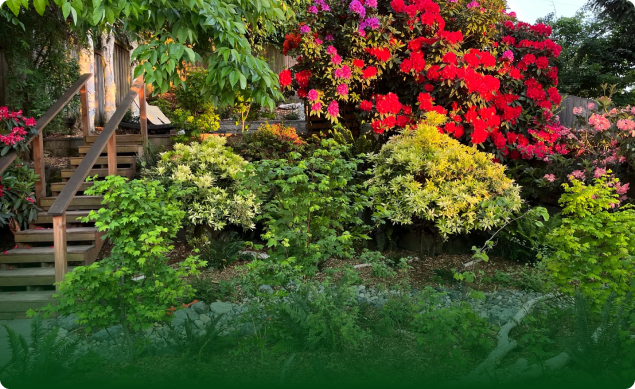
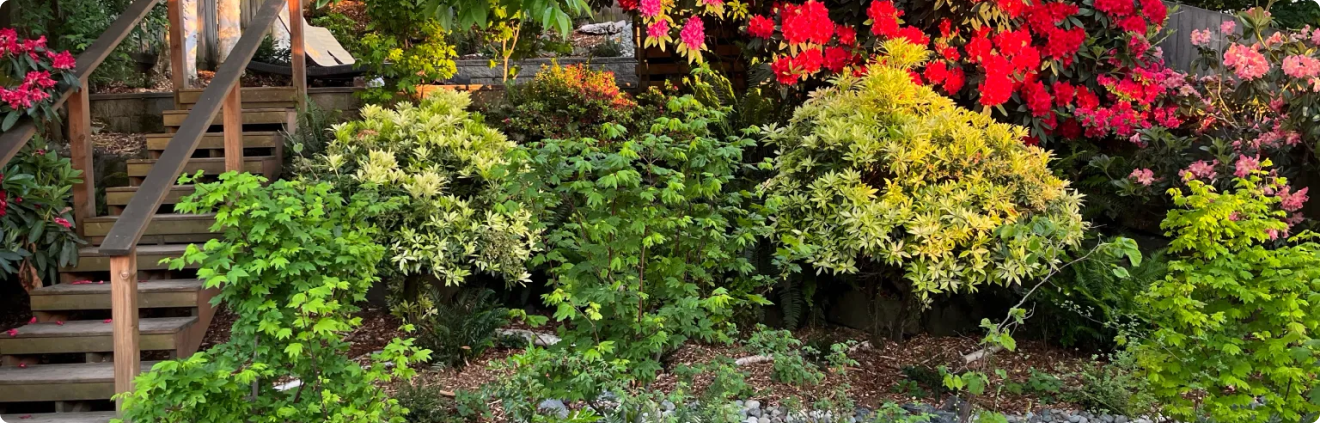
A pristine lawn can require frequent intervention, while simply abandoning a garden leaves important decisions unresolved. Intentional tolerance occupies the functional space between those two extremes. Allowing spontaneous, unmanicured vegetation to persist in targeted areas can conserve moisture, shade exposed soil, and offer habitat for local wildlife.
However, letting nature direct your garden does not mean walking away from property maintenance. A resilient landscape is an edited landscape, not a neglected one.
Wild-Looking Gardens Are Not Unmanaged Lots
Allowing spontaneous growth to settle into your yard works only when you remain an active curator. Left entirely alone, residential land in Washington rarely matures into a balanced native meadow. Instead, airborne seeds and bird droppings tend to favor aggressive, opportunist colonizers like Himalayan blackberry, herb Robert, and English ivy.
A wild-looking garden retains structure. It establishes crisp edges around softening interiors, keeps footpaths clear, and preserves sightlines. You can appreciate a stand of volunteer fireweed or broadleaf plantain without letting creeping vines climb the siding of your home or spread seed heads over a neighbor’s fence. The objective is to work alongside natural emergence where it offers low-risk benefits while stepping in early whenever high-consequence species appear.
The Framework: Identify, Classify, Decide, Monitor
When an unknown plant sprouts in your border, immediate panic and total indifference are equally unhelpful reactions. Use this four-step sequence to determine whether a plant stays, gets edited, or faces removal.
1. Identify First
Never pull or cut a plant based on messy aesthetics alone. Accurate identification reveals how a plant spreads, how long its seeds stay viable in the soil, and whether it poses a legal or structural hazard. It is essential to identify an invasive plant before removal so you understand its root architecture; digging blindly can shatter rhizomes and multiply the infestation.
Use local extension resources, county weed identification guides, or handbooks specific to the Pacific Northwest to confirm the species. Remote apps and photo tools provide helpful clues, but they frequently confuse harmless native lookalikes with noxious weeds. When in doubt, verify the physical leaf arrangements, stem cross-sections, and root structures against documented regional profiles.
2. Classify Behavior and Legal Status
Once you have a confirmed name, determine what category the plant falls into. Washington manages plant risks through the Washington State Noxious Weed Control Board, which groups regulated weeds into distinct classes:
- Class A Weeds: Highly destructive species with limited distribution across the state. Eradication is required by law to prevent statewide establishment.
- Class B Weeds: Species established in some parts of the state but not others. Control mandates vary by county or regional weed district to prevent spread into uninfested zones.
- Class C Weeds: Widespread, naturalized species. Counties decide whether to mandate control based on local agricultural, forestry, or infrastructure risks.
Legal obligations differ by county designation and weed class; there is no single, universal rule for every property in the state. Beyond legal definitions, assess the functional behavior of non-regulated plants. A non-native volunteer may be an aggressive runner, a taprooted annual, or a benign ground cover. Categorizing the plant tells you what risk it poses to your yard and neighboring properties.
3. Decide: Tolerate, Edit, or Intervene
Match your action to the plant’s profile and its specific location:
- Tolerate: The plant is non-regulated, non-invasive, and sits within an interior bed or low-traffic area. It protects the soil from sun-baking and heavy rain without choking out desired plantings.
- Edit: The plant has useful traits, such as soil coverage or pollinator interest, but tends to self-seed aggressively. Editing involves snipping flower heads before they drop seed, pruning back runners, or thinning dense clumps to preserve air circulation.
- Intervene: The plant is listed on a local noxious weed control list, possesses aggressive underground runners, threatens site drainage, or encroaches on neighboring property. This plant must be addressed systematically.
4. Monitor the Site
Ecological dynamics on residential lots shift with temperature, rainfall, and disturbance. An area where you permit self-sown vegetation requires regular check-ins throughout the growing season. Watch for sudden blooms, changes in density, or opportunistic weeds settling into the leaf litter. Tolerance is an ongoing operational choice, not a permanent pass.
Low-Risk Zones for Tolerance
Aesthetic tolerance works best in clearly defined, low-risk patches of the landscape. These include:
- Deep interior shrub beds: Areas well away from pathways, lawn edges, and boundaries where spontaneous ground covers can shade out worse invaders.
- Mature tree driplines: Zones where aggressive shallow digging could damage structural tree roots, making a soft layer of volunteer ground cover a practical alternative.
- Contained courtyard pockets: Microclimates surrounded by hardscaping, which physically stops underground stems and runners from migrating.
Keeping a spontaneous patch does not guarantee a functioning pollinator sanctuary or a self-sustaining miniature ecosystem. It does, however, conserve moisture, reduce your weeding hours, and allow local bio-mass to build organically in the soil. Keep these areas visibly bordered so the space reads as deliberate rather than neglected.
Scenarios That Require Timely Intervention
Certain conditions eliminate the option of relaxed tolerance. Step in promptly when you encounter:
- Property Line Encroachment: Allowing aggressive spreaders to cross fences strains neighbor relationships and spreads problems into the wider watershed.
- Structural and Infrastructure Threats: Taproots invading septic components, vines working under lap siding, or dense thickets obscuring electrical meters and foundation walls need clearing.
- Drainage Disruptions: Plants choking swales, culverts, or rain gardens alter site hydrology and risk redirecting runoff toward your foundation.
- Regulated or locally controlled plants: A plant confirmed on the applicable noxious-weed list should not be tolerated under the banner of “wild gardening.” Check its current class and local designation before choosing a response.
High-Level Integrated Responses
When a plant requires intervention, prioritize the least-disruptive effective methods to preserve soil health. Avoid reach-for-the-jug chemical applications, synthetic fertilizers, or unproven homemade concoctions involving salt and vinegar, which harm soil biology and alter soil chemistry without resolving deep-seated root systems.
Start by cutting reproductive cycles. If you lack the hours for complete removal, snip or mow seed heads and flowers before they mature. Preventing thousands of new seeds from entering your soil buys valuable time.
Next, address the ground immediately. Deciding what to do after invasive plants come out determines whether your remediation lasts or fails. Uprooting vegetation creates a bare-soil disturbance zone, which acts as a seedbed for whatever weed blows past next. Fill that void immediately using thick arborists’ wood chips, native ground covers, or intentional non-invasive plantings to claim the space.
Finally, track the area through the following spring and autumn. Even the best removal efforts leave dormant seed banks behind. Catching secondary flushes when they are two-inch seedlings prevents you from having to restart the cycle down the road.
Grounding Your Strategy
Letting nature fill in gaps can make your property more resilient and lower your weekly maintenance burden, but only if you know what has taken root. When regional weed lists, confusing lookalikes, or complicated site grading make it hard to tell a harmless volunteer from a serious threat, contact Rutheo to discuss a site-specific assessment and the next appropriate question for the property.