Homeowners often decide to replace lawn in Seattle after years of the same cycle: mowing, edging, patching, watering, reseeding, and still not feeling like the yard is doing much in return. The question is rarely whether turf takes work. The harder question is whether that work is justified in each part of the property.
That distinction matters because lawn is not automatically the enemy. In some landscapes, focused turf areas still serve real functional and visual purposes. In others, lawn dominates simply because it was the default choice when the landscape was first built. Those are very different situations, and they should not produce the same replacement plan.
This guide explains when turf still makes sense, when it is worth reducing, and what can replace it without creating a new maintenance headache. For broad context, pair this with sustainable landscape design in Seattle, drought-tolerant landscaping for Seattle homes, and front yard landscape design in Seattle.
Start by Asking What the Lawn Is Actually Doing
Many lawn replacement projects begin with frustration but not enough analysis. Homeowners know they are tired of the work, but they have not yet defined which parts of the lawn are failing functionally and which parts might still have value.
Ask:
- Is this turf actively used for play, circulation, or gatherings?
- Does it provide important visual openness in a tight yard?
- Is it only present because “yards are supposed to have grass”?
- Does the site support healthy turf without constant intervention?
- Is the maintenance burden out of proportion to the benefit?
These questions often reveal that the lawn is not one uniform category. A small usable play area might deserve to stay. A side strip, steep front slope, or awkward back corner often does not. Once you separate the useful turf from the leftover turf, replacement decisions become much clearer.
This step also keeps homeowners from overcorrecting. Removing all lawn without understanding how the space functions can create a different kind of regret. The better goal is not maximum removal. It is more intentional land use.
When Turf Still Makes Sense
Turf can still be the right material when it serves a job that other surfaces or plantings would do less well. In some Seattle yards, keeping a smaller, better-defined lawn area creates more success than eliminating turf entirely.
Lawn often still makes sense when:
- children or pets regularly use the area for open play
- a simple green surface balances denser surrounding planting
- the yard needs a visual pause between multiple landscape zones
- the site has enough light and drainage to support decent turf performance
- the homeowner is willing to maintain that smaller area well
The key word is smaller. Many properties do better when turf becomes a purposeful zone instead of a default blanket. That shift usually lowers maintenance immediately because the remaining lawn is easier to edge, irrigate, and care for consistently.
If lawn stays, it should stay because it earns its space, not because it has not yet been questioned.
When Reducing Lawn Usually Creates Better Results
Some lawn areas cost more in time, water, and frustration than they are worth. That is especially true in parts of Seattle yards where the site is working against turf from the start.
Reducing lawn often makes sense when:
- the area is heavily shaded and patchy year after year
- the slope makes mowing awkward or erosion-prone
- the strip is too narrow to use meaningfully
- irrigation demand is high but functional value is low
- runoff or compaction keeps the lawn chronically stressed
Front yards often contain large visual turf zones that are rarely used. Side yards frequently carry leftover strips that are difficult to mow and never look settled. Backyards sometimes hold more lawn than the household actually uses. In each case, reducing turf can free the landscape to do something more practical and more ecological.
That does not have to mean dense planting everywhere. It means asking what material or planting system fits the zone better than grass.
What to Use Instead of High-Maintenance Lawn
The best lawn alternatives depend on the job the existing turf was supposed to do. A replacement only succeeds when it matches use, visibility, and maintenance capacity.
Strong alternatives may include:
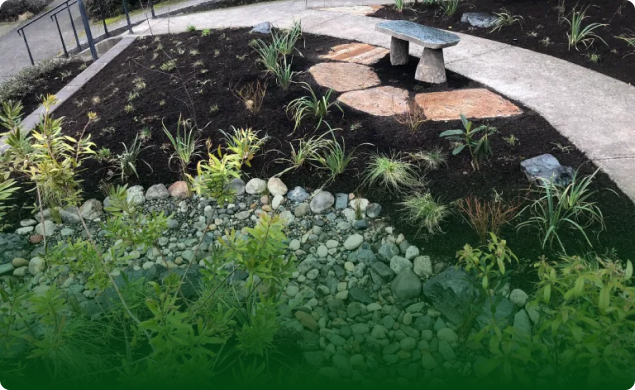
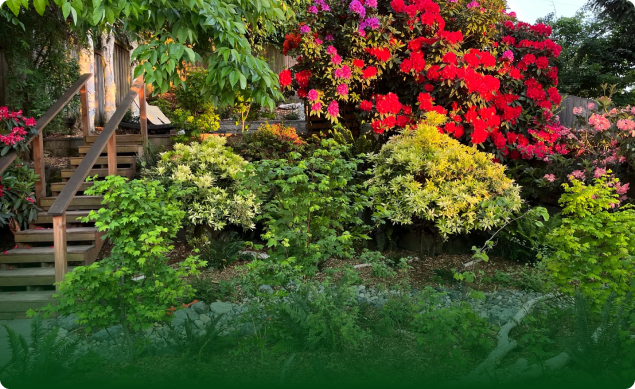
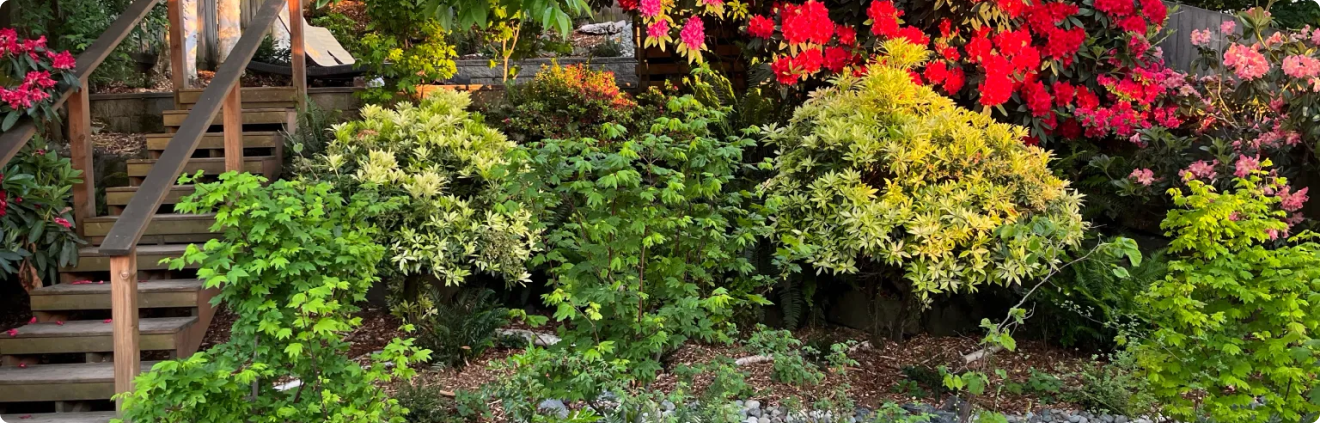
- layered planting beds with shrubs, perennials, and groundcovers
- pollinator-supportive meadow-style zones where scale and context fit
- lower-growing groundcovers for low-use transition areas
- permeable paths and gathering spaces where circulation matters more than greenery
- mixed ecological planting that improves soil coverage and habitat value
For some properties, the right move is a hybrid strategy: keep a smaller lawn panel and replace the rest with better-adapted planting. This often creates the best balance between openness and lower maintenance.
If the lawn area is connected to runoff issues or compacted soil, the replacement plan should also coordinate with site water behavior. In those cases, rain garden design in Seattle or Rainwise installation guidance may be part of the smarter long-term solution.
Do Not Replace Turf Before You Fix the Real Problem
One of the biggest lawn-replacement mistakes is assuming any non-lawn option will work better automatically. If the site suffers from poor drainage, compaction, difficult slope, or mismatched irrigation, those issues can damage the new landscape just as easily as they damaged the old lawn.
Before replacing turf, assess:
- how water moves through the area in winter
- whether soil is compacted or shallow
- how much light the zone actually receives
- whether the replacement will need different irrigation logic
- how the new material will affect access and circulation
This is why site analysis comes first. A lawn may be failing because it was a bad use of space, or because the underlying conditions were never addressed. Those are different design problems and they deserve different responses.
Homeowners who skip this step often end up replacing one disappointment with another. Thoughtful lawn reduction, by contrast, creates a more resilient and more coherent landscape.
How Lawn Reduction Supports Ecological Design
Reducing high-maintenance turf can be one of the most effective ways to improve ecological performance in a residential landscape. It opens room for better plant diversity, healthier soil coverage, and more intentional water use.
Potential benefits include:
- reduced mowing and fuel use
- lower summer irrigation demand
- more layered habitat value
- fewer chemically dependent maintenance routines
- stronger connection between landscape zones and site conditions
These gains are most meaningful when the replacement landscape is designed well. A reduced-lawn yard should not feel like lawn simply disappeared. It should feel like the property became more functional and more alive.
This is also where homeowners often discover that they wanted more than lawn reduction. They wanted better outdoor rooms, more privacy, or planting with real seasonal interest. Turf replacement can be the entry point into a much stronger full-yard plan.
When Professional Planning Is Worth It
DIY lawn reduction works well in some straightforward areas. Professional help becomes more valuable when the lawn question overlaps with bigger site decisions or when the yard needs to stay highly functional during the transition.
That often includes cases where:
- the existing lawn has drainage or slope problems
- you are not sure which turf areas should stay
- you want a cohesive replacement rather than isolated patches of change
- the project affects front-yard curb appeal or backyard usability
- you want ecological benefits without creating a maintenance experiment
An on-site consultation can help identify which lawn zones are worth keeping, what alternatives fit each area, and how to phase the work sensibly.
FAQ
Should I remove all of my lawn?
Not necessarily. Keep turf where it serves a real use or strong design purpose. Reduce it where it adds maintenance and water demand without enough practical value.
What is the best lawn alternative in Seattle?
There is no single best replacement. The right alternative depends on sun, drainage, slope, visibility, and how you use the space. Planting beds, groundcovers, paths, and hybrid layouts can all work well.
Is lawn replacement lower maintenance right away?
It can lower long-term maintenance, but the new landscape still needs establishment care and a good design framework. Replacing turf carelessly can simply trade one problem for another.
What if my lawn is failing because of shade?
That usually strengthens the case for selective lawn reduction. Shade-tolerant planting or a different landscape use often performs better than repeatedly trying to force healthy turf in poor light.
What is the first step before replacing lawn?
Clarify what the lawn is actually doing now, then assess site conditions such as water behavior, soil, light, and access. That gives you a better basis for deciding what should stay and what should change.
If you want to replace high-maintenance lawn with something that fits your Seattle property better, schedule a consultation with Rutheo Designs. We can help you decide where turf still belongs, where it should be reduced, and what kind of landscape will work better in its place.