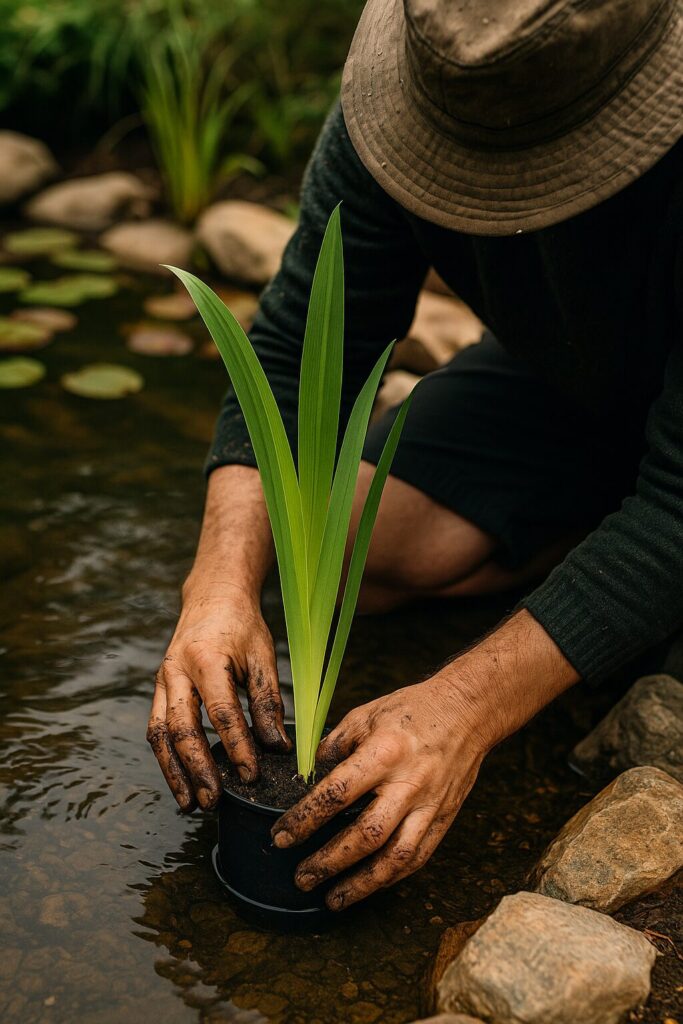
We approach every wildlife pond as a living system, one that deserves thoughtful plant selection and installation to thrive in Seattle’s unique maritime climate. We choose aquatic species that not only look beautiful but also actively stabilize water quality, support pollinators, and create habitat layers for amphibians and beneficial insects. By clustering native emergent plants, floating oxygenators, and submerged filtration species in balanced zones, we build ponds that stay resilient through seasonal rain cycles and summer drought stress. When we install aquatic plants, we do more than place greenery around the water’s edge. We intentionally sculpt microhabitats, root-depth gradients, and shaded refuges that encourage wildlife to claim the space as their own. Our planting methods reduce nutrient spikes and algae pressure, using natural filtration strategies instead of heavy-handed treatments. We bring in varieties that are rarely highlighted by competitors like native water plantain or dwarf bur-reed, that offer strong ecological performance without overpowering the pond.
Our plant list for Seattle wildlife ponds focuses heavily on native and climate compatible species with high ecological value. Native emergent plants such as soft rush, slough sedge, and small fruited bulrush offer sturdy stems that provide perching spots for dragonflies and nesting materials for birds. Their root systems knit together the edges of the pond and prevent erosion during heavy rain events. We also use native floating plants like water shield to give pond animals shaded cover and to create natural temperature moderation.
Some lesser known local aquatic species have strong ecological performance even though they rarely appear on basic pond plant lists. Water plantain, dwarf bur reed, and native marsh cinquefoil are examples of plants we integrate to increase biodiversity without overwhelming the pond. We avoid species that spread aggressively or require artificial management. Instead, we choose slow growing, well balanced species that form natural communities over time.
Aquatic plants perform best when arranged in zones that match their natural depth and moisture preferences. We organize planting areas so each species can function without crowding its neighbors. Shallow shelves near the pond edge support emergent plants that thrive in damp soil. Deeper pockets hold submerged oxygenating plants such as waterweed or hornwort that filter nutrients within the water column. Floating plants expand across the surface to soften sunlight and reduce algae fuel.
This zoned layout also creates diverse wildlife microhabitats. Shallow edges give safe access points for amphibians that move between land and water. Submerged zones create hiding areas for larvae, beetles, and small fish if the pond supports them. Floating vegetation attracts pollinators that rest on the surface before feeding on nearby shoreline flowers. These small interactions are essential for a functioning pond ecosystem. A wildlife pond is more than water and plants. It is a long term biological community that gains strength from proper structure.
When we install aquatic plants, we handle placement carefully to avoid disturbing the pond’s early nutrient balance. We secure emergent species with soil blends that remain stable underwater and do not cloud the water or release excess nutrients. Submerged plants are anchored so they can begin photosynthesis immediately. This allows them to contribute oxygen and nutrient absorption from the start.
We install plants with attention to spacing so each species can mature without forming stagnant areas. Crowded plants reduce water movement, but well spaced plants improve circulation that supports beneficial aerobic bacteria. These bacteria grow on plant stems and roots and help break down organic matter. This natural biological filtration is one of the most important functions of a planted pond. We also design installation layouts that anticipate growth patterns. Many aquatic species expand outward as they mature. Planning for this natural expansion keeps the pond balanced for years.
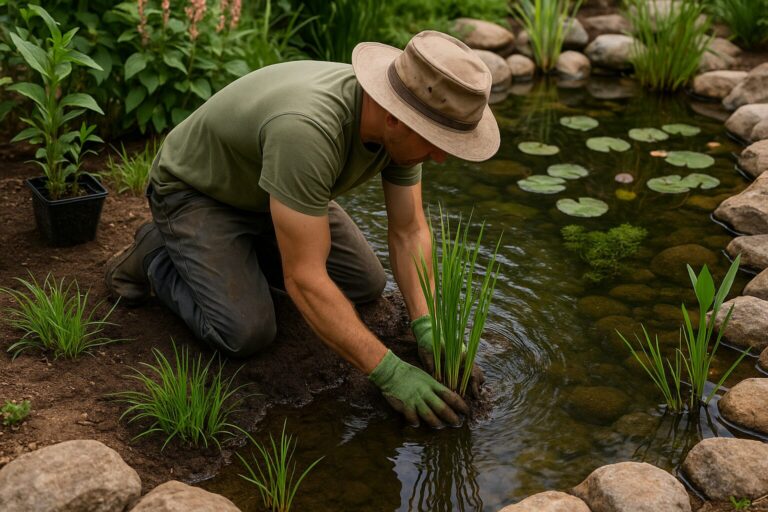
Seattle ponds experience seasonal changes that influence plant behavior. Winter rainfall can raise water levels and encourage rapid early spring growth. Summer heat lowers water levels and stresses plants not adapted to seasonal dryness. We choose species that tolerate these conditions so the pond maintains stability all year. Some emergent species store energy in rhizomes that allow them to survive seasonal stress. Submerged species often slow growth in winter and accelerate during long summer days.
These seasonal cycles help the pond maintain a natural rhythm. Wildlife relies on predictable plant behavior for feeding, nesting, and shelter. Dragonflies depend on early season emergent stems for egg laying. Amphibians rely on submerged plants during warm months when temperature control is essential. Understanding these cycles helps us match plant communities to the needs of the animals that will use the pond.
Proper aquatic plant selection supports long term ecological health. Plants that process nutrients consistently prevent algae dominance and reduce the need for artificial treatments. Diverse vegetation encourages beneficial insects that reduce pests. Balanced plant communities also make the pond more stable during extreme weather events. Stormwater surges become less disruptive when emergent plants slow water velocity. Heat waves become less stressful when floating plants cast protective shade.
A well-planted wildlife pond becomes a self-regulating natural area. Over time, the vegetation organizes itself into patterns that reflect the pond’s unique light, depth, and nutrient conditions. This natural adaptation is part of the beauty of working with aquatic plants. They transform static water features into living systems that grow richer each year.
We provide dedicated guidance for homeowners who want to build or enhance wildlife ponds using thoughtful, ecologically grounded aquatic plant strategies tailored to Seattle’s climate. Our expertise includes selecting species that support natural filtration, shaping plant zones that attract amphibians and pollinators, and creating stable shoreline edges that reduce erosion and improve long-term pond resilience. During an initial consultation, we evaluate water depth patterns, sun exposure, hydrology, and surrounding soil conditions to design an aquatic planting plan that strengthens habitat value and encourages balanced pond ecology. Whether your goal is to increase oxygenation, introduce native emergent plant communities, or establish low-maintenance aquatic biodiversity, we offer clear, practical support from the earliest planning stage through installation.
We invite you to reach out and start transforming your outdoor space with Rutheo Designs’ coaching expertise. Email us at connect@rutheodesigns.com or call (360) 844-2989. Whether you have questions about habitat creation, permaculture guilds, crop rotation schedules, or advanced pruning techniques, we’re here to support you every step of the way.
We use cookies to improve your experience on our site. By using our site, you consent to cookies.
Manage your cookie preferences below:
Essential cookies enable basic functions and are necessary for the proper function of the website.
Google Tag Manager simplifies the management of marketing tags on your website without code changes.
Statistics cookies collect information anonymously. This information helps us understand how visitors use our website.
Google Analytics is a powerful tool that tracks and analyzes website traffic for informed marketing decisions.
Service URL: policies.google.com (opens in a new window)
Google reCAPTCHA helps protect websites from spam and abuse by verifying user interactions through challenges.
Marketing cookies are used to follow visitors to websites. The intention is to show ads that are relevant and engaging to the individual user.
Facebook Pixel is a web analytics service that tracks and reports website traffic.
Service URL: www.facebook.com (opens in a new window)
You can find more information in our Cookie Policy and Privacy Policy.