Rooftop garden planning in Seattle begins with evaluating spatial fit and ecological design before physical work begins. At Rutheo Designs, our design process focuses on planting strategy, local habitat development, and general system selection suited to urban microclimates. This early planning clarifies how greenery can function within your available footprint before transitioning to specialized rooftop garden installation systems.
Rooftop gardens provide a layer of living vegetation that helps reduce Seattle’s urban heat island effect, especially during warmer months. By covering dark roofing materials with plants, we cool the microclimate around buildings and reduce surrounding ambient air temperatures. These green spaces also improve air quality by filtering fine particulates and absorbing carbon dioxide, which makes a measurable difference in dense urban areas.
Our designs support native biodiversity by using rooftop-adapted flowering plants that attract bees, butterflies, and birds. Even in small or modular gardens, we can incorporate plantings that offer nectar, seeds, and nesting materials. These elevated habitats are especially valuable in areas where ground-level green space is limited.
Seattle’s rainy climate creates a unique opportunity to use rooftop gardens as stormwater buffers. Green roofs slow down rainfall absorption, reduce runoff volume, and help filter pollutants before water reaches storm drains. In our systems, we include layers such as drainage mats and root barriers that protect the roof while allowing for proper percolation.
We pay close attention to local building codes and stormwater guidelines when designing for controlled runoff. Wherever possible, we pair rooftop gardens with cisterns, swales, or infiltration zones to extend their hydrological benefits beyond the roof itself.
Plants and soil act as insulation for buildings, reducing indoor temperature fluctuations and easing demand on HVAC systems. Our rooftop gardens are designed to lower summertime cooling needs while also helping to retain heat during winter months. This not only improves comfort but reduces energy bills and carbon emissions.
We select vegetation and soil depths carefully based on the building’s orientation, exposure, and insulation goals. In some cases, we use rooftop gardens strategically to shade mechanical units or windows that receive intense afternoon sun.
These are thin, lightweight systems with 2–6 inches of soil. We typically install them for clients focused on ecological performance rather than active gardening. They’re ideal for sedums, grasses, and mosses, and require minimal ongoing maintenance.
These roofs are especially effective for managing stormwater and reducing building heat, and they’re often used on commercial or flat-roofed residential buildings where accessibility is limited.
Intensive green roofs are deeper and more complex. We design these with 6 inches or more of soil, enabling the growth of shrubs, small trees, and even productive gardens. They include paths, benches, and planting beds, essentially transforming a rooftop into a full-scale outdoor room.
These systems require irrigation and regular maintenance, but they offer unmatched benefits in terms of usability, biodiversity, and beauty.
For clients seeking flexibility—especially in rental or retrofit scenarios—we design modular rooftop gardens using movable planters, troughs, and containers. These systems are easy to reconfigure and can integrate with drip irrigation or rainwater harvesting systems.
They’re perfect for experimenting with plant combinations or evolving a space season by season. They also allow for phased installation as budget or use patterns change.
Given the exposure and limited soil depth, we choose plants that are both drought-tolerant and resilient to wind. This often includes succulents like sedum, native grasses, and compact evergreens. For rooftop beds, we recommend Northwest-adapted natives like Oregon sunshine and kinnikinnick.
We avoid top-heavy or brittle plants that are prone to tipping or damage. Instead, we favor low-profile species that can thrive in rooftop microclimates with limited root zones.
We love incorporating edibles into rooftop landscapes. Compact vegetables like bush beans, cherry tomatoes, and greens work well in containers. Herbs like thyme, rosemary, sage, and chives are ideal for shallow soil and add fragrance, beauty, and utility.
Our rooftop gardens often include pollinator-friendly herbs interplanted with edibles to support yield and ecological diversity.
To maximize ecological benefit, we plant for all seasons and for multiple species. That includes selecting flowering plants for pollinators, seed-bearing species for birds, and dense groundcovers for insects and amphibians.
We layer habitat options, like small brush bundles or water sources, into the design. And we always steer clear of invasive plants that could spread or disrupt rooftop drainage or nearby green spaces.
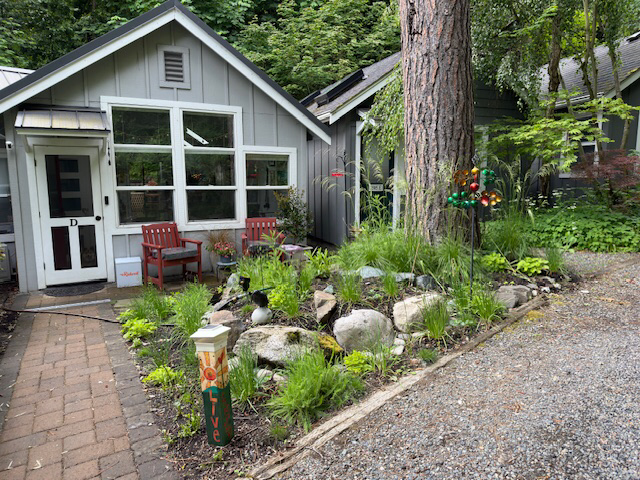
At Rutheo Designs, we are dedicated to transforming your outdoor spaces into beautiful, sustainable landscapes that reflect your vision and the unique character of the Seattle area. We offer services in native plant landscaping, water-efficient irrigation, custom landscape design, and hardscaping solutions tailored to your goals and the local environment. Every project is unique, and we take the time to listen to your needs and offer personalized solutions that align with both your aspirations and Seattle’s natural surroundings.
We invite you to reach out to us to start the conversation about your landscaping needs. You can contact us by email at connect@rutheodesigns.com or give us a call at (360) 844-2989. Whether you have specific questions or are ready to schedule a consultation, we’re eager to help you bring your outdoor vision to life with the care and expertise that Rutheo Designs is known for.
We use cookies to improve your experience on our site. By using our site, you consent to cookies.
Manage your cookie preferences below:
Essential cookies enable basic functions and are necessary for the proper function of the website.
Google Tag Manager simplifies the management of marketing tags on your website without code changes.
Statistics cookies collect information anonymously. This information helps us understand how visitors use our website.
Google Analytics is a powerful tool that tracks and analyzes website traffic for informed marketing decisions.
Service URL: policies.google.com (opens in a new window)
Google reCAPTCHA helps protect websites from spam and abuse by verifying user interactions through challenges.
Marketing cookies are used to follow visitors to websites. The intention is to show ads that are relevant and engaging to the individual user.
Facebook Pixel is a web analytics service that tracks and reports website traffic.
Service URL: www.facebook.com (opens in a new window)
You can find more information in our Cookie Policy and Privacy Policy.