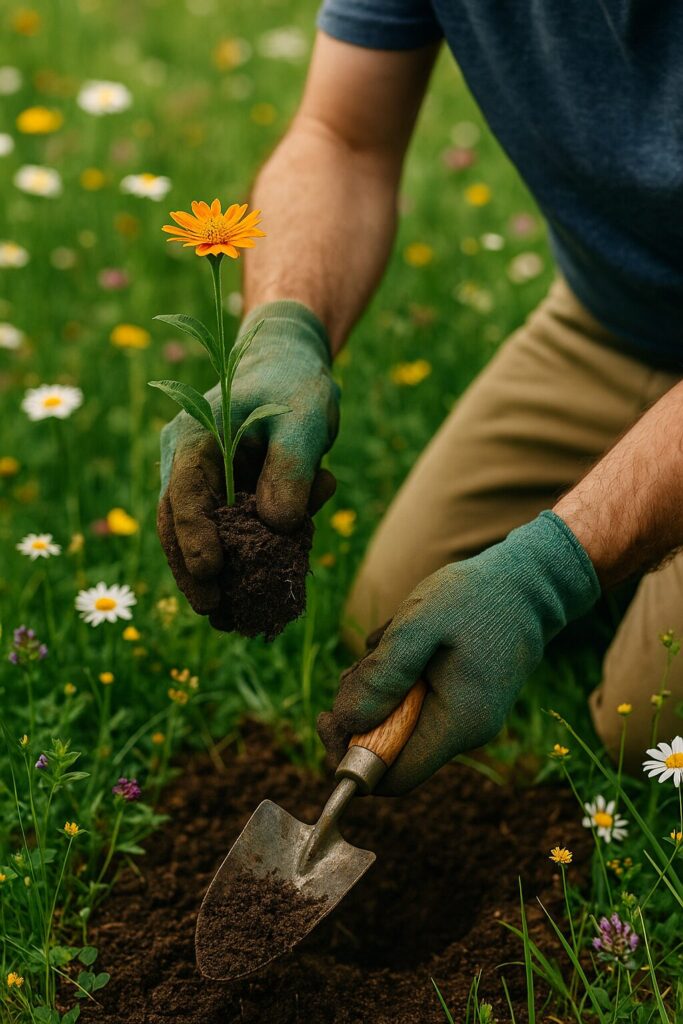
A healthy garden should not come at the expense of the environment, which is why our Meadow Gardens services focus on sustainable lawn care alternatives that support biodiversity and long-term soil vitality. Instead of relying on high-maintenance turf, we guide homeowners and communities toward meadowscapes filled with native grasses, pollinator-friendly blooms, and perennial groundcovers that thrive without excessive watering or chemical inputs. This approach not only reduces resource use but also creates living habitats that attract birds, bees, and butterflies, adding vibrancy and ecological balance to your outdoor space.
Our goal is to design landscapes that feel both intentional and naturally abundant, blending aesthetics with ecological function. By incorporating practices such as deep-rooted planting for improved carbon sequestration, adaptive irrigation systems for water conservation, and seasonal rotation of native flora, we ensure that each meadow garden evolves gracefully with the environment. These living systems require less mowing, foster soil regeneration, and promote resilience against pests and diseases, giving you a landscape that is not just beautiful today but sustainable for years to come.
When we talk about meadow gardens, we are really describing a carefully planned ecosystem that balances grasses and wildflowers in a way that feels natural but functions with intention. Traditional lawns are often dependent on fertilizers, pesticides, and constant mowing, while meadow-style plantings thrive with less intervention once established. The foundation of these designs often begins with native grasses, which anchor the soil, provide year-round texture, and suppress invasive weeds. Blended into this matrix are perennial wildflowers, chosen not just for their color and bloom time but also for the way they provide food and habitat to pollinators and birds. The right mix ensures resilience, beauty, and a constantly changing visual story throughout the seasons.
What makes meadow design so engaging is its adaptability. A common approach is to adjust the ratio of grasses to wildflowers based on goals. For instance, someone seeking a wilder, more colorful appearance may lean toward more wildflower species, while a meadow meant to function as erosion control or a soil stabilizer might rely more heavily on grasses. The diversity of species used allows for natural succession, where plants shift and settle into patterns over the years, creating a landscape that feels alive, layered, and never static. This dynamic nature sets meadow gardens apart from static lawns and makes them one of the most sustainable choices for modern landscapes.
Meadow gardens bring ecological rewards that extend far beyond their boundaries. Native grasses and wildflowers often develop deeper root systems than traditional turf, which means they store more carbon underground, contributing to soil health and helping combat climate change on a micro scale. Their roots also improve water infiltration, reduce runoff, and enhance drought resistance, creating resilient landscapes that can withstand changing weather patterns.
These plantings also attract a wide range of wildlife. Bees, butterflies, beetles, and hummingbirds find nectar and pollen sources across the growing season, while seed heads provide food for birds in winter. The tall grasses offer shelter to small mammals and beneficial insects, forming a rich web of life. By turning yards into functioning habitats, meadow gardens reestablish ecological connections that turf lawns simply cannot provide. This increase in biodiversity strengthens the local environment and creates a garden that not only looks beautiful but also sustains life at multiple levels.
Designing a meadow garden begins long before the first seed is sown. At Rutheo Designs, we carefully assess the site for soil type, sunlight exposure, drainage patterns, and existing vegetation. This groundwork determines the plant palette and ensures that chosen species are well-suited to the location, minimizing the need for future interventions. Removing turf and preparing the soil properly is critical, as it reduces competition and allows native seeds or plugs to establish more easily. Adding organic matter can improve soil fertility and structure, giving seedlings the foundation they need.
Once planted, meadows go through a crucial establishment phase where weed management is essential. Unlike lawns, which offer immediate results, meadow gardens evolve slowly. The first year often shows more grasses and fewer blooms, while the second and third years bring the full expression of color and diversity. Maintenance after establishment is minimal—usually a timed mowing or trimming to prevent aggressive species from taking over. These strategies ensure that the meadow thrives as a balanced, sustainable ecosystem with very little ongoing input.
Meadows are not just a lawn alternative, they fit seamlessly into broader climate-friendly landscaping practices. By reducing or eliminating the use of chemical fertilizers, pesticides, and frequent mowing, meadow gardens cut down on emissions and reduce the carbon footprint of the landscape. The choice of native species also ensures that plants are naturally adapted to local climate conditions, requiring less water, less intervention, and fewer resources to flourish.
Another advantage is the way meadow plantings contribute to water-sensitive design. Their dense root systems stabilize soil, filter rainwater, and even act as informal rain gardens, capturing stormwater and preventing erosion. This function is particularly valuable in urban or suburban areas where impermeable surfaces create runoff problems. Integrating meadow planting with pathways, swales, or natural borders means the garden not only looks intentional but also functions as part of a resilient, climate-conscious system.
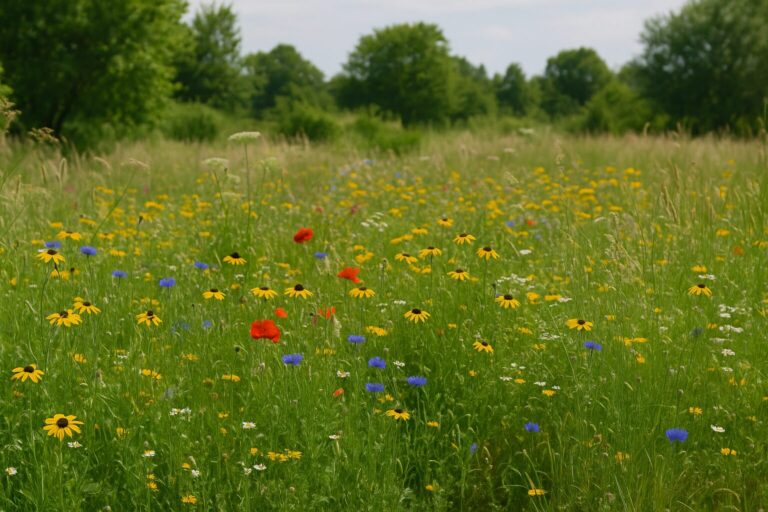
One of the unique ways we approach meadow design is through layered planting that adds both horizontal and vertical complexity. Rather than relying on a flat field of flowers, we combine species of varying heights, textures, and bloom times to create a multi-dimensional habitat. This encourages more types of wildlife to thrive and makes the garden visually rich from every angle. Seasonal variation also becomes a key design feature, with spring ephemerals, summer bursts of color, and autumn seed heads each playing their part in keeping the garden engaging year-round.
We also place emphasis on connecting meadows with other parts of the landscape. Paths, seating areas, or garden edges can be framed by meadow plantings, ensuring that they feel intentional and accessible rather than untamed. We often guide our clients to embrace the natural cycles of a meadow—understanding that brown seed stalks in winter, for example, are not signs of neglect but of ecological richness, as they feed birds and shelter insects. By blending ecological value with aesthetic design, we create meadow gardens that are not only sustainable but also deeply satisfying to live with over time.
Native grass and wildflower meadow gardens demonstrate how outdoor spaces can be both ecologically responsible and visually stunning. They offer sustainable lawn alternatives that improve soil, conserve water, increase biodiversity, and provide long-term resilience. With thoughtful design, careful preparation, and patience during establishment, these meadows transform from traditional lawns into living ecosystems. The result is a landscape that grows in harmony with nature, evolving beautifully while offering benefits for both people and the environment.
We specialize in creating meadow-inspired landscapes that replace high-maintenance lawns with thriving ecosystems of native grasses and wildflowers. Our Meadow Gardens services include site planning, species selection, soil preparation, and long-term care strategies to ensure your meadow evolves beautifully through the seasons. Whether you want a pollinator-rich haven, a low-maintenance lawn alternative, or a naturalized landscape that enhances biodiversity, we design solutions tailored to your property and environmental conditions.
Through a detailed consultation, we assess your soil health, sunlight patterns, and surrounding ecology to craft a plan that balances beauty with sustainability. From establishing wildflower meadows to blending ornamental grasses with perennial blooms, our approach ensures lasting results that require minimal intervention while supporting pollinators and wildlife. Let us help you bring the timeless charm and ecological value of a meadow into your outdoor space. Email us at connect@rutheodesigns.com or call (360) 844-2989 to begin planning your Meadow Garden today.
We use cookies to improve your experience on our site. By using our site, you consent to cookies.
Manage your cookie preferences below:
Essential cookies enable basic functions and are necessary for the proper function of the website.
Google Tag Manager simplifies the management of marketing tags on your website without code changes.
Statistics cookies collect information anonymously. This information helps us understand how visitors use our website.
Google Analytics is a powerful tool that tracks and analyzes website traffic for informed marketing decisions.
Service URL: policies.google.com (opens in a new window)
Google reCAPTCHA helps protect websites from spam and abuse by verifying user interactions through challenges.
Marketing cookies are used to follow visitors to websites. The intention is to show ads that are relevant and engaging to the individual user.
Facebook Pixel is a web analytics service that tracks and reports website traffic.
Service URL: www.facebook.com (opens in a new window)
You can find more information in our Cookie Policy and Privacy Policy.