Seattle is not the first city people associate with drought-tolerant landscaping, but that is exactly why many residential landscapes underperform in summer. Homeowners plan for winter rain and assume the planting will sort itself out later. Then the dry season arrives, irrigation demand spikes, shallow-rooted plants struggle, and the yard starts requiring more water and intervention than expected.
At the same time, many homeowners resist drought-tolerant design because they assume it means a sparse, gravel-heavy, desert-style landscape that does not fit the Pacific Northwest. That assumption leaves a lot of better options on the table.
Drought-tolerant landscaping in Seattle is not about pretending the city is Arizona. It is about designing for local seasonal contrast: wet winters, transitional springs, and summer dry spells that stress plantings not chosen or organized for that pattern. A Seattle-appropriate low-water landscape can still feel lush, layered, and regionally grounded. For broader planning context, pair this guide with sustainable landscape design in Seattle, replacing high-maintenance lawn in Seattle, and soil preparation for Seattle planting projects.
Why Seattle Homes Still Need Drought Planning
Seattle landscapes are shaped by two water realities that often get separated in planning: too much water in winter and not enough in summer. A yard that survives winter saturation is not automatically prepared for July and August stress. In fact, many common landscape decisions make summer performance worse.
Problems often come from:
- shallow-rooted plant palettes
- too much thirsty lawn for the actual use pattern
- poor soil structure that sheds water or dries unevenly
- irrigation systems that are poorly zoned or inefficient
- plant combinations with incompatible water needs
This is why water-wise design is a system question, not just a plant question. Drought tolerance improves when soil, plant community, irrigation, mulch, and layout all support each other. When they do not, homeowners end up compensating with extra watering and replacements.
Planning for summer dry spells does not mean eliminating all irrigation or choosing only extreme xeric plants. It means reducing unnecessary demand and helping the landscape hold up better under Seattle’s real seasonal rhythm.
Drought-Tolerant Does Not Mean Harsh or Minimal
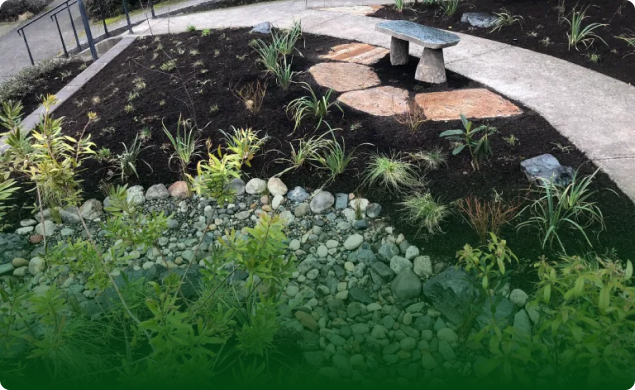
One reason drought-tolerant landscaping gets misunderstood is that people picture a narrow aesthetic: heavy gravel, spiky forms, and exposed hardscape. That can be one expression of low-water design, but it is not the only one, and it is not always the best fit for Seattle homes.
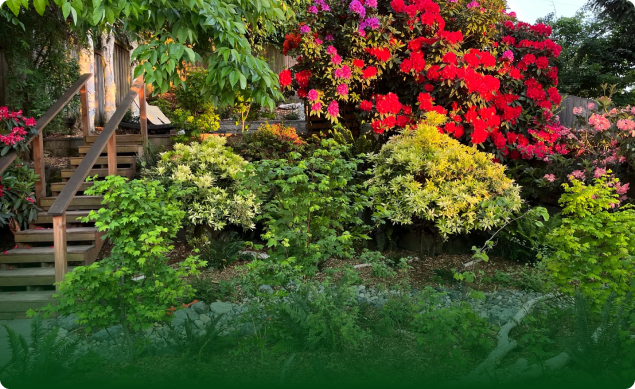
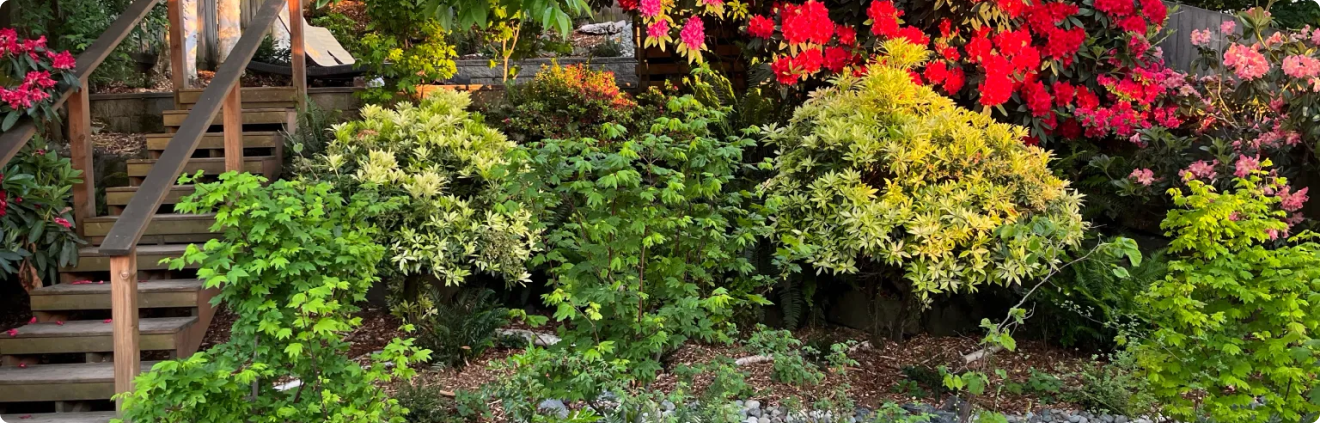
A Northwest-friendly drought-tolerant landscape can still include:
- layered planting with soft foliage and seasonal movement
- evergreen structure for year-round definition
- flowering perennials used strategically instead of excessively
- ground-layer coverage that protects soil and reduces evaporation
- a restrained palette that feels calm instead of sparse
The design goal is not to make the yard look dry. The goal is to make it perform better in dry periods while still feeling inviting and regionally appropriate. In many cases, that means shifting away from high-demand lawn and mixed water-use beds toward more coherent hydrozones and more resilient plant communities.
This is where Rutheo’s ecological approach becomes useful. Water-wise planting performs best when it is treated as part of whole-landscape health, not just as a style choice.
Start With Hydrozones and Site Conditions
Hydrozoning means grouping plants by similar water needs so irrigation and soil-moisture management make sense. This is one of the most practical tools in drought-tolerant landscape design, and one of the most overlooked in small residential yards.
Before choosing plants, assess:
- where the hottest and driest zones actually are
- which areas receive reflected heat from paving or walls
- where shade reduces summer stress
- how soil holds or loses moisture across the property
- which areas need to stay greener because of use or visibility
This prevents a common mistake: placing thirsty and low-water plants in the same irrigation logic. When that happens, somebody suffers. Either the drought-tolerant plants are overwatered or the higher-demand plants decline.
Hydrozoning also helps with phasing. You do not have to convert the whole yard at once. You can start with the areas that are least functional and most water-hungry, then refine the rest over time. If site water behavior is already confusing, garden coaching can help clarify what should be grouped and prioritized first.
Soil, Mulch, and Irrigation Matter as Much as Plant Choice
Homeowners often focus on plant names when they think about drought tolerance, but plant selection is only one layer of the outcome. A well-chosen plant in poor soil or mismanaged irrigation can still struggle. A moderately adaptable plant in healthy soil with smart watering often performs better than expected.
For Seattle low-water landscapes, key support systems include:
- soil preparation that improves root development and moisture holding
- mulch layers that protect the soil surface and moderate temperature swings
- irrigation zones matched to actual plant needs
- establishment watering that transitions gradually instead of stopping abruptly
- layout decisions that reduce unnecessary heat and evaporation stress
This is especially important in the first one to three years. A landscape does not become drought-tolerant on day one just because the plant tags say so. Plants need time to establish deeper roots and settle into the site. That establishment period should be planned, not improvised.
If your property needs irrigation updates alongside planting changes, review rain garden design in Seattle and Rainwise installation guidance as part of the broader water conversation.
Where to Keep More Water Use and Where to Reduce It
Not every zone of a Seattle yard needs to be equally drought-tolerant. The smarter question is where water use is justified and where it is not.
It may make sense to keep somewhat higher summer water use in:
- entry areas with strong visibility
- kitchen-adjacent herb or edible zones
- active-use spaces where turf or denser planting still serves a purpose
- specialty garden areas that provide clear value and receive attention
It often makes sense to reduce water demand in:
- low-use lawn areas
- awkward side strips
- broad ornamental beds with no clear planting logic
- difficult hot slopes or reflected-heat zones
This targeted approach keeps the landscape balanced. You do not have to make every part of the yard equally dry or equally lush. You need each part to justify its resource demand and fit within a coherent summer-care plan.
That planning tends to create better landscapes than an all-or-nothing conversion. Most homeowners want a yard that still feels generous and alive, just less wasteful and less fragile in heat.
Common Mistakes in Seattle Drought-Tolerant Design
The most common problems are conceptual, not cosmetic. Homeowners either overcorrect into a look that does not suit the property, or they make too few structural changes and expect plants alone to solve everything.
High-impact mistakes include:
- keeping the same water-intensive layout and only swapping species
- skipping hydrozoning and mixing incompatible plant needs
- assuming drought tolerance means no irrigation planning
- overusing gravel or exposed hardscape where planting would improve performance
- ignoring soil prep and mulch during installation
Another mistake is underestimating the design value of plant structure. Low-water gardens still need rhythm, height layering, and winter form. Without those elements, the yard can feel thin or unfinished even if the plant choices are technically sound.
The better model is not “less garden.” It is “better adapted garden.”
When Professional Design Support Helps
Drought-tolerant landscaping becomes more complex when you are balancing summer performance with curb appeal, ecological planting, and whole-yard use. Design support is especially valuable when the site includes multiple exposure zones, existing irrigation complications, or a desire to reduce lawn without losing visual softness.
That often applies when:
- the property has sunny hot spots and shady wetter zones in close proximity
- you want a cohesive design rather than a patchwork of low-water experiments
- you are reducing turf and need new outdoor-room logic
- runoff, drainage, or soil issues overlap with summer stress
- you want lower water demand without a stark aesthetic shift
In those cases, an on-site consultation can help identify where low-water design will deliver the most value and how to phase it sensibly.
FAQ
Does drought-tolerant landscaping make sense in Seattle?
Yes. Seattle’s summer dry period is real, and many residential landscapes are more water-dependent than they need to be. Drought-tolerant planning helps reduce stress, waste, and maintenance during those months.
Will a low-water landscape look dry or sparse?
Not if it is designed well. A Seattle-appropriate low-water landscape can still feel layered, soft, and inviting. The goal is lower demand, not a harsh aesthetic.
Do drought-tolerant plants need no irrigation?
No. Most plants need establishment watering, and some landscapes will still use irrigation strategically. The point is to reduce unnecessary demand and water more intelligently.
Should I remove all my lawn to make the yard drought-tolerant?
Not automatically. Keep lawn where it serves a real use or design function. Reduce it where it adds workload and water demand without enough value in return.
What is the best first step?
Start by identifying high-demand zones that are underperforming. From there, look at hydrozoning, soil support, and whether the irrigation layout matches the plants you actually want to keep.
If you want a Seattle landscape that holds up through summer dry spells without shifting into a desert look, schedule a consultation with Rutheo Designs. We can help you align plant structure, irrigation logic, and ecological goals into a drought-tolerant plan that still feels like the Northwest.