Pet-friendly landscaping in Seattle has to deal with mud, repeated foot traffic, shade, wet winters, and plants that curious pets may chew. A fence alone does not make a yard pet-friendly. A dog that runs the same loop every morning will carve a path through weak groundcovers. A side yard used as a potty area can smell bad, stay soggy, and drain toward the wrong place.
The best pet-friendly yards are practical first. They give pets clear places to move, rest, relieve themselves, and stay out of trouble, while still feeling like a garden. In Seattle, shaded backyards can turn slick for half the year, and sunny parking-strip edges can bake dry by late summer.
We approach pet-friendly landscaping as part of the whole yard, not as a synthetic-turf-first shortcut. Durable surfaces, non-toxic planting, drainage, shade, gates, and access all need to work together.
Design for the Routes Pets Already Use
Most pets tell you where the path belongs. Dogs patrol fence lines, cut corners between the back door and gate, and sprint the same narrow lane during play. If the design ignores those routes, the pet will draw them anyway.
Look for the worn strip before changing the yard. Is there bare soil along the fence? Mud at the bottom of the stairs? A trampled curve between the patio and side gate? Those marks are movement patterns.
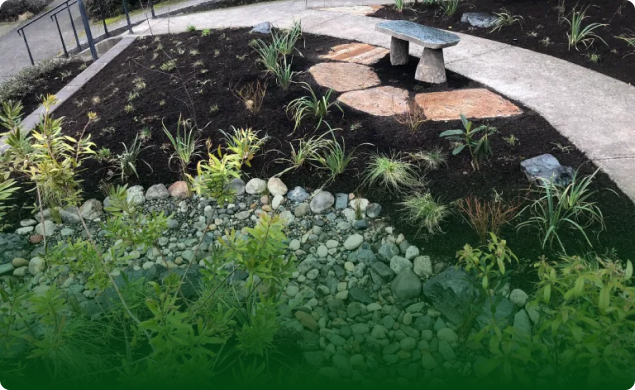
Once you see the routes, make them durable. A pet path does not need to be wide like a main garden walk, but it should be stable enough for wet paws and repeated use. Gravel, stepping stones, or permeable paving may make more sense at gates, narrow side yards, or shared access routes.
For yards where paths also need to manage runoff, permeable patios and paths for Seattle landscapes is a useful reference. The same thinking applies to pet routes: keep water moving into the ground where possible, and avoid creating a slick trench.
Build a Potty Area That Can Be Cleaned
A good potty area is boring in the best way. It drains, it can be rinsed, it is easy to find in the dark, and it is not tucked into a planting bed where waste disappears under leaves.
Pea gravel, larger rounded gravel, wood chips, or a designated mulch zone can all work depending on the pet, slope, drainage, and maintenance habits. The material should be comfortable enough for paws but not so fine that it sticks everywhere.
Placement matters. Keep potty areas away from edible beds, children’s play spaces, and low spots where water already collects. A narrow side yard may be convenient, but if it slopes toward the foundation or stays shaded and wet, it may need drainage work before it becomes a good pet zone.
The service page for designated potty areas and waste management covers this in more detail. Choose a place you will actually maintain. A hidden corner that never gets cleaned will not stay pet-friendly for long.
Choose Groundcovers for Traffic, Shade, and Recovery
No living groundcover enjoys constant digging, sprinting, and urine. Some plantings recover better than others when matched to the way the yard is used.
In Seattle shade, many lawns thin out under trees and become muddy by winter. In sunnier areas, turf may hold up to light play but struggle where a dog launches from the same step every day. Low groundcovers can help in quieter zones, especially where they are not the main running lane. Tougher shrubs and mulched beds may be a better choice where the pet traffic is predictable.
Avoid forcing a delicate groundcover into a high-speed path. Put the durable surface where the movement happens, then plant around it. This keeps the garden from becoming a cycle of bare spots, reseeding, and frustration.
If the yard already has a failing lawn, our guide to replacing high-maintenance lawn in Seattle can help sort out where turf still earns its place and where groundcovers, planting beds, or paths make more sense.
Use Non-Toxic Planting Choices Without Making the Yard Bare
Pet-safe planting does not mean the yard has to be empty. Plant selection should account for chewing, brushing, digging, and the animals using the space. Some plants are risky because of leaves, berries, bulbs, sap, thorns, or seed pods.
Do not rely on a single generic plant list. Check plant safety with a veterinarian or a trusted pet-toxicity database before planting, especially if your pet chews plants, eats fallen fruit, or digs up bulbs. Then design the yard so tempting plants are not placed right beside the main route or potty area.
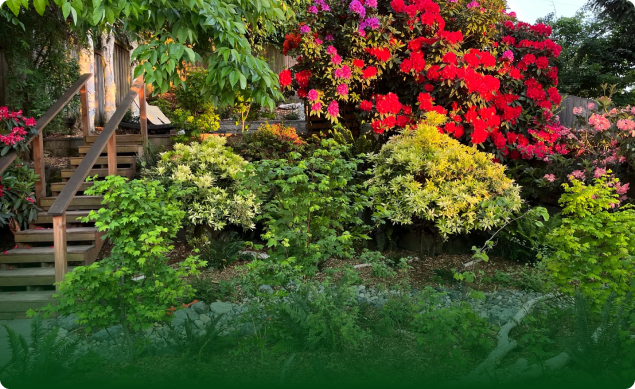
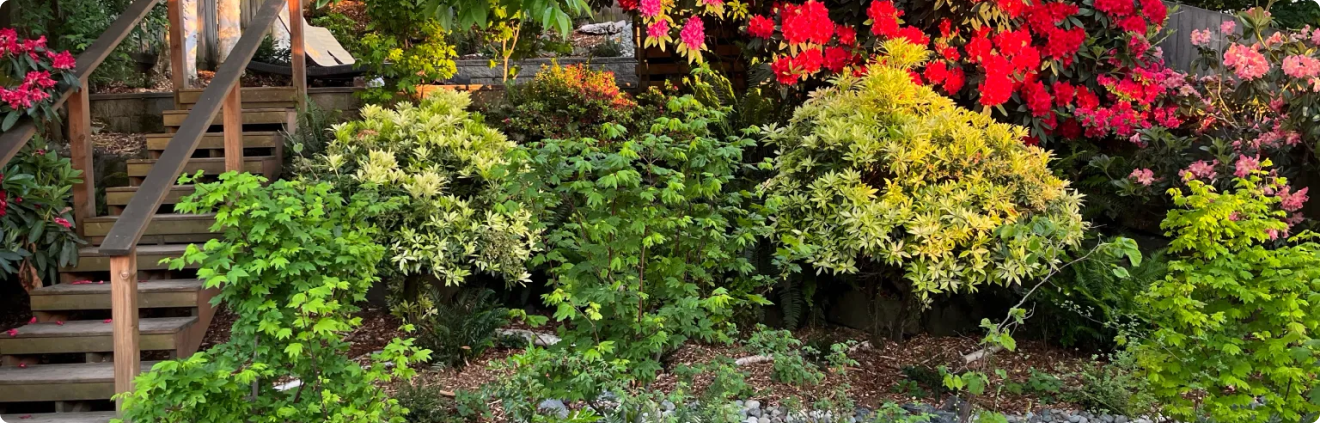
Good planting structure helps. Use sturdier shrubs as backbones, keep fragile plants out of play lanes, and protect new plantings while they root. A low fence, short edging, or a few well-placed stones can keep a dog from running straight through a young bed.
Rutheo’s non-toxic plant selection service focuses on practical choices for the actual household. A calm older dog, a plant-chewing puppy, and a cat with access to a patio all need different decisions.
Keep Shade and Rest Areas in the Plan
Seattle summers are not always scorching, but paved patios, gravel, and exposed south-facing yards can still get hot. Pets need shade, water access, and a place to rest away from the busiest path.
Existing trees may provide the best shade, but tree-root zones need care. Do not pile deep soil or mulch over roots just to make a pet bed. Do not compact the root zone with a heavy kennel surface. Work with what is already there: light mulch, a stable path outside the most sensitive roots, and planting that can handle dry shade.
Where shade is limited, a pergola, small tree, large shrub, or movable shade feature can help. Planting for shade is slower than buying a shade cloth, but it can improve the garden for people, pets, and pollinators.
The shade garden design guide helps when a pet yard sits under canopy and the usual lawn keeps failing.
Make Gates, Edges, and Fences Part of the Garden
A pet-friendly yard needs boundaries that work every day. Gates should latch reliably, paths should not funnel a dog into a planting bed, and fence-line planting should not create hidden escape points. Small gaps under gates matter more than plant choices if a pet can nose through them.
Check the ordinary failure spots:
- gate latches that are easy to bump open
- gaps behind shrubs where pets dig unseen
- loose edging that becomes a chew toy
- thorny or brittle plants along narrow paths
- slippery steps where paws lose traction in winter
Edges can guide movement without making the yard feel harsh. Low stone, wood edging, dense shrubs, or a shift in surface material can tell a pet where the path is. In many yards, that works better than trying to fence off every bed.
If the yard includes children as well as pets, keep the use zones legible. A play area, potty area, edible bed, and quiet planting bed should not all collapse into the same muddy corner.
Handle Mud Before It Becomes the Main Feature
Mud is usually a design problem before it is a cleaning problem. If the same gate area becomes a puddle every winter, adding more plants nearby will not fix it. If a dog jumps from the deck into one soft landing zone, that spot needs a tougher surface. If runoff from a roof or patio crosses the pet route, the water needs somewhere better to go.
Seattle yards often need a mix of solutions: grading, permeable surfacing, mulch renewal, stepping stones, drainage repair, or a change in where the pet enters the yard. The right fix depends on whether water is coming from rain, roof runoff, compacted soil, shade, or repeated impact.
Avoid chemical lawn fixes as the default answer. A pet yard can be healthier with less lawn, better paths, organic soil care, and planting that accepts real use. If drainage is the underlying issue, start with drainage and irrigation issues rather than repeatedly reseeding a wet patch.
Pet areas need waste removal, surface refresh, pruning along paths, and occasional reset after heavy winter use.
Keep the Yard Ecological and Livable
Pet-friendly does not have to mean sterile. You can have pollinator planting, shade, edible beds, habitat shrubs, and a dog route if each part has enough room.
The trick is honesty about wear. Put durable material where paws hit hard. Put plants where they can survive. Keep toxic or tempting plants out of reach. Leave enough access for cleaning and pruning. Then let the garden be a garden, not a fragile display that fails the first week a dog uses it.
For many Seattle homes, that means a clear path loop, a contained potty surface, sturdy edge planting, shade near the house, and quieter beds where pollinators and birds get cover.
Rutheo Designs can help when you need a layout that fits the household before you start replacing surfaces and plants.
FAQ
What is the best ground surface for a dog potty area?
It depends on drainage, shade, cleaning habits, and the dog. Pea gravel, rounded gravel, wood chips, and contained mulch zones can all work, but the area needs edging, access for cleaning, and a location away from edible beds and soggy low spots.
Is artificial turf the best pet-friendly landscaping option?
Not by default. Synthetic turf can solve some surface problems, but it is not the first answer for every Seattle yard. Durable paths, gravel or mulch potty areas, living groundcovers in lower-traffic zones, and better drainage often create a more ecological yard.
Which plants are safe for pets?
Plant safety depends on the pet and the plant part involved. Check specific plants with a veterinarian or trusted pet-toxicity database, then place plants so pets are less likely to chew bulbs, berries, leaves, or stems.
How do I stop my dog from making muddy paths?
Follow the route your dog already uses and turn the worst wear zones into paths. Gravel, stepping stones, mulch, or permeable paving can protect the soil better than repeatedly reseeding a route the dog will keep using.
Can a pet-friendly yard still support pollinators?
Yes. Keep pollinator planting out of the highest-traffic lanes, choose non-toxic plants with care, and use durable edges so pets have clear routes around the beds.
If your yard needs to work for pets without giving up planting, shade, and habitat, schedule an on-site consultation with Rutheo Designs. We can help turn worn routes and muddy corners into a yard that holds up to real daily use.