Hardscape edges are easy to overlook because they sit between the obvious parts of a yard. The patio gets attention. The path gets attention. The planting bed gets attention. But the line where those pieces meet is often where Seattle gardens start to fail: gravel migrates into soil, mulch washes onto pavers, lawn creeps into joints, or a path edge turns soft and muddy by January.
In a wet winter climate, the edge is not just a visual detail. It manages weight, runoff, root space, soil protection, and day-to-day use. A path that feels tidy in July can become slippery if water sheets across it from a compacted bed. A patio can settle unevenly if the base was thin or the planting edge was backfilled poorly. A bed planted too aggressively against paving can swallow the walking route by the second growing season.
This guide treats hardscape edges in Seattle gardens as working details, not decorative outlines. For a wider site view, pair it with sustainable landscape design in Seattle, soil preparation for Seattle planting projects, and small backyard design for Seattle homes before finalizing path or patio layout.
Start with how people actually move through the yard
The right edge detail depends first on how the surface is used. A front walk from the sidewalk to the porch needs a different edge than a stepping path through a pollinator bed. A dining patio needs enough firm perimeter for chairs to move without tipping into soil. A narrow side-yard path may need a cleaner edge because there is no extra width for planting spillover.
Before choosing edging material, walk the route and notice:
- where two people need to pass each other
- where a wheelbarrow, stroller, or trash bin needs clearance
- where chairs will slide back from a table
- where a hose, irrigation line, or maintenance access will cross
- where planting is meant to soften the edge versus stay out of the way
In many residential gardens, a primary path should feel comfortably walkable in wet weather, not like a decorative suggestion. That usually means enough width for the way the path is used. A main route often wants more generous clearance than a secondary garden path. If the paved surface is already narrow, the planting edge has to be more disciplined so foliage does not keep taking back the walking room.
A good edge starts below the surface
Most edge problems are built into the base long before anyone notices them. Pavers settle, gravel shoulders collapse, and patio corners dip because the support layer was not sized for the load or protected from wet-season soil movement.
For patios, paths, and stable stepping areas, the base usually needs to account for:
- excavated depth
- compacted subgrade
- crushed rock or gravel base
- bedding layer
- edge restraint
- drainage direction
Seattle soils vary, but many yards include clay-heavy, compacted, or disturbed soil near houses and old hardscape. If that soil is left loose along the edge, the hardscape can creep outward or settle at the perimeter. If the base is compacted too aggressively into adjacent planting zones, the plants inherit a tight, oxygen-poor root environment.
That is the balance: the hardscape needs firmness where feet, furniture, and water pressure hit the surface, while nearby beds need enough loosened soil and organic matter to support healthy planting. Treating the whole area like a construction pad can make the paving stable but leave the garden edge struggling. Treating it like a planting bed can make the paving move.
Manage runoff before it reaches the edge
Seattle hardscape edges often fail because water is allowed to make the edge do too much work. Roof runoff, patio slope, path crown, and compacted soil all influence what happens at the boundary between paving and planting.
A useful edge should answer a few practical questions:
- Does water sheet from the patio into a bed?
- Does the path sit higher than the planting soil or lower than it?
- Can mulch wash onto the walking surface during heavy rain?
- Is runoff being concentrated into one corner?
- Will the planting bed absorb water or stay saturated?
Where water repeatedly crosses an edge, the design may need more than a strip of metal or stone. It may need a subtle grade adjustment, a gravel transition, a planted swale, or a different path surface. If the site already has runoff issues, review French drain or rain garden? and rain garden design in Seattle before assuming a sharper edge will solve the problem.
Edges can guide water, but they should not be asked to fight bad grading forever.
Choose edge restraint for the surface, not just the look
Different hardscape surfaces need different kinds of restraint. A poured concrete path, a mortared stone patio, a gravel walk, and a permeable paver area do not behave the same way at their edges.
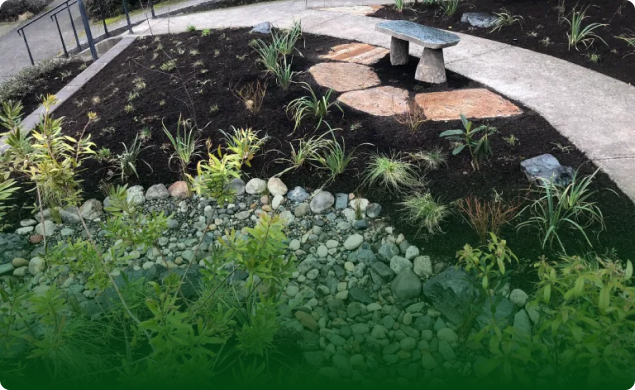
For loose gravel paths, the edge has to prevent lateral spread while allowing water to move. Steel, stone, timber, or a compacted shoulder can work depending on the setting, but the detail needs enough depth and firmness to keep the path from feathering into the bed. Gravel paths that are too shallow or too rounded at the edge often become messy in Seattle rain, especially where dogs, kids, or maintenance carts cross them.
For pavers, edge restraint matters because each unit depends on the field staying locked together. Paver joints also need attention. If joints are too open, weeds and soil movement increase. If the joint material is wrong for the surface and drainage goal, water can either pond on top or erode the bedding below.
For patios, the visible edge should match the load. A patio used for dining needs a perimeter that can tolerate chair legs and foot traffic, not just a decorative planting lip. When patios meet beds, a small reveal can keep mulch from spilling onto the surface while still allowing planting to soften the hard line.
Let planting spill over only where it belongs
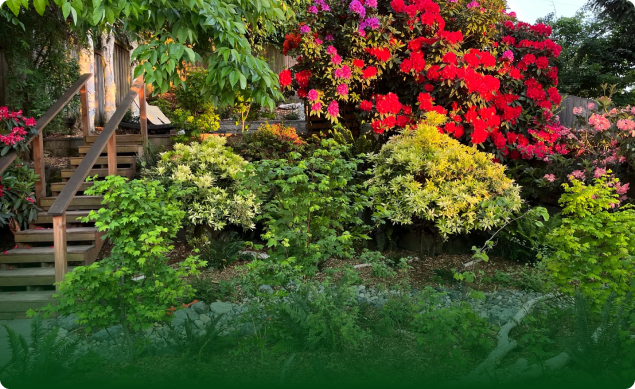
Planting spillover can make a path feel settled into the garden instead of cut through it. Low thyme, sedges, strawberries, ornamental grasses, or trailing perennials can soften stone and paver edges beautifully. But spillover needs to be intentional. Otherwise, it becomes a maintenance problem disguised as naturalism.
Good planting near hardscape considers:
- mature width, not nursery size
- whether stems flop after rain
- whether foliage creates a slippery surface
- how often the edge needs trimming
- whether roots will lift or invade joints
- how the plant looks in winter, not only peak bloom
A soft edge works best along slower garden routes, seating-adjacent beds, or places where brushing against foliage feels pleasant. It works poorly where people need sure footing, where a gate swings, where bins roll through, or where a narrow path is already tight.
For ecological gardens, the goal is not to keep plants rigidly separated from hardscape. The goal is to choose where softness supports the experience and where clean access protects everyday use. Native plant landscaping in Seattle can help shape the planting side of that decision.
Protect soil from construction and foot traffic
Hardscape projects can quietly damage the planting zones they are meant to improve. Soil gets compacted by equipment, materials are staged on future beds, and repeated foot traffic creates hardpan where roots should be expanding. The edge between path and bed is especially vulnerable because it is where installation work, maintenance access, and future garden use all overlap.
A better sequence protects planting soil early. That may mean marking future bed areas before excavation, keeping stockpiled gravel out of root zones, loosening compacted bed edges after construction, and adding compost or mulch where soil structure has been disturbed. In existing gardens, it may also mean working around tree roots and established shrubs rather than cutting a hard line through the healthiest root area.
If new planting is part of the project, soil preparation for Seattle planting projects is worth reading before paving details are finalized. The edge should leave the garden with better growing conditions, not exhausted soil.
Match the edge to maintenance habits
Some edge details look excellent on install day and then demand a level of upkeep the household does not want. A finely clipped lawn edge beside gravel may need constant attention. A lush planting edge may need seasonal cutback to keep the path usable. A patio with narrow joints may need periodic sweeping and moss control in shaded areas.
This is not a reason to avoid detail. It is a reason to choose details honestly.
Lower-maintenance edge choices often include:
- wider planting setbacks along high-use paths
- mulch held slightly below paving height
- durable edge restraint where gravel meets beds
- fewer tiny material transitions
- plants chosen for arching habit, mature size, and seasonal cleanup needs
Hardscape edges should support the same logic as replacing high-maintenance lawn in Seattle: make the routine easier by designing out recurring friction.
When edge design deserves professional attention
Professional help is useful when the edge is doing more than separating two materials. That is often the case when paths cross wet areas, patios meet sloped beds, tree roots limit excavation, or the yard needs a balance of durable use and ecological planting.
Edge planning is especially important when:
- a patio is being expanded near existing beds
- a path stays muddy through winter
- gravel keeps migrating into planting soil
- pavers are settling at the perimeter
- a planting bed receives roof or hardscape runoff
- the yard needs wheelchair, stroller, or aging-in-place access
In those cases, garden coaching or an on-site consultation can help clarify what the edge needs to do before materials are ordered.
FAQ
What is the best edging for Seattle garden paths?
There is no single best material. The right edging depends on the path surface, soil conditions, drainage, and how the route is used. Gravel paths usually need stronger lateral restraint than stepping-stone garden paths.
Can plants grow between pavers in Seattle?
Yes, but the joint design has to match the intended use. Planted joints can work in lower-traffic areas, while main paths and dining patios usually need firmer, cleaner joints for stability.
Why does gravel keep spreading into my beds?
The path may be too shallow, too rounded at the edge, missing a restraint, or receiving too much foot traffic or runoff pressure. Rebuilding the edge and base is often more effective than repeatedly raking gravel back.
Do hardscape edges affect drainage?
Yes. Edges can slow, direct, or concentrate water. If the surrounding grade is wrong, even a well-built edge can become a runoff problem during Seattle storms.
If your paths, patios, and planting beds are starting to fight each other, schedule a consultation with Rutheo Designs. We can help shape hardscape edges that stay usable in wet weather, protect soil, and let planting soften the garden without taking over the path.