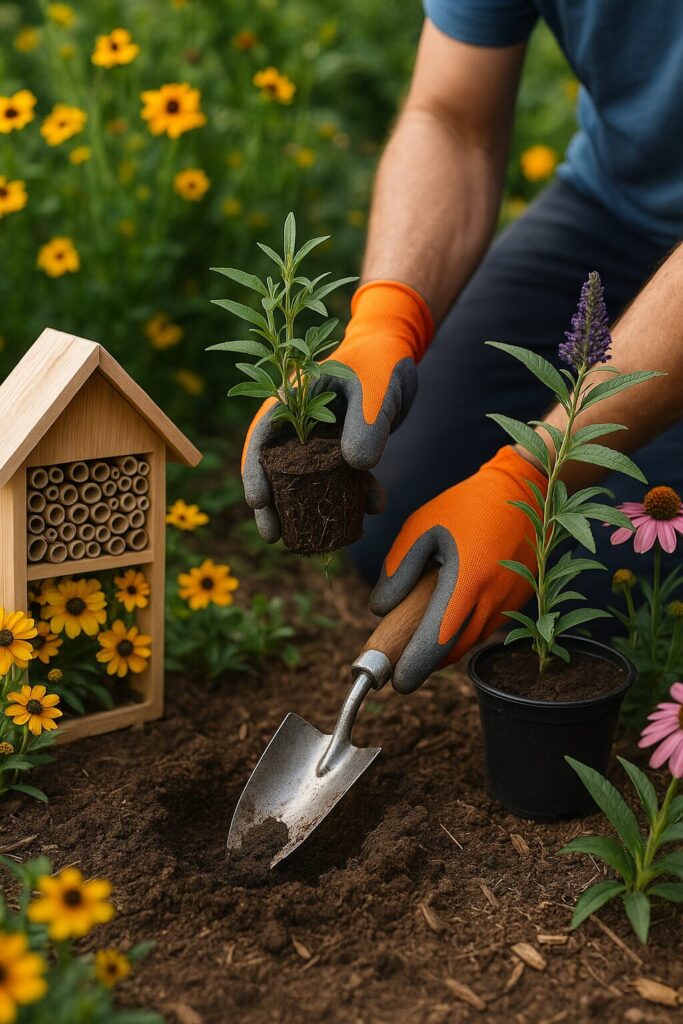
Creating a pollinator garden goes far beyond planting flowers; it’s about shaping a living, thriving ecosystem that supports wildlife and strengthens biodiversity. Our approach to wildlife habitat gardening integrates native plants, nectar-rich blooms, and seasonal food sources that attract bees, butterflies, hummingbirds, and other essential pollinators. By weaving in layered plant structures and designing with ecological balance in mind, we not only enhance the visual beauty of your outdoor space but also ensure it becomes a sanctuary for pollinators year-round. We carefully consider bloom succession, host plants, and sheltering opportunities so that your garden remains vibrant and functional across all seasons.
When planning and building these landscapes, we look at every detail through the lens of sustainability and long-term resilience. That means selecting regionally adapted species, designing water-wise planting layouts, and incorporating soil health practices that minimize chemical use while maximizing ecological benefits. Our pollinator gardens are crafted to become self-sustaining habitats that reduce maintenance needs and invite a diversity of beneficial species into your space.
Solitary bees, such as mason bees and leafcutter bees, are essential pollinators, yet they often struggle to find safe nesting spaces in modern landscapes. We install bee hotels made from untreated wood, hollow stems, and clay blocks to mimic the natural cavities these species prefer. Each structure is carefully designed to suit multiple species and placed in sunlit areas sheltered from wind and rain, ensuring optimal nesting success. These spaces provide a secure place for bees to lay eggs and rear their young, directly enhancing pollination within the garden.
In addition to above-ground bee hotels, we also incorporate nesting areas for ground-dwelling bees. Many solitary bee species prefer bare soil that is well-drained and free of mulch or turf. By leaving specific zones of open earth or using sandy soil mixes, we create safe habitats for them to burrow. This dual approach providing both cavity and ground nesting options, supports a wider diversity of bees, which in turn improves pollination for fruits, vegetables, and ornamental plants.
Beneficial insects, such as lady beetles, lacewings, and parasitic wasps, play an important role in natural pest control. By designing habitats tailored to their needs, we reduce dependence on chemical pesticides and allow ecosystems to regulate themselves. Our plant palettes include insectary species like dill, fennel, and yarrow, which offer continuous nectar and pollen sources. These plants are strategically interplanted within the landscape to attract and sustain beneficial insects throughout the growing season.
Beyond planting, we also consider structural habitats. Deadwood piles, perennial stems left standing over winter, and carefully placed leaf litter all provide overwintering sites for these insects. These features mimic natural conditions, offering safe places to reproduce and shelter. By prioritizing these habitats, the garden becomes a self-sustaining ecosystem where beneficial species keep pest populations in check while supporting pollinator diversity.
Designing for butterflies means creating more than a flower bed, it requires supporting their full lifecycle. Nectar-rich plants are essential for adults, but larval host plants are equally important for caterpillars. For example, milkweed supports monarchs, while fennel and parsley provide food for swallowtail larvae. Our designs incorporate both, ensuring butterflies have resources from egg to adult. Plant diversity and layered vegetation also create microclimates that provide resting and hiding spots for fragile species.
We also design butterfly gardens with seasonal variety in mind. Spring bloomers like phlox provide early nectar, while asters and goldenrods extend food availability into fall. This succession of flowering plants ensures that butterflies always have reliable food sources. By combining shrubs, perennials, and groundcovers, we create visually rich gardens that remain functional habitats across all seasons, encouraging butterflies to establish themselves and return year after year.
Butterflies require minerals and salts to supplement their diet, which they often obtain from puddling sites. We design shallow depressions filled with a mixture of sand, soil, and mineral salts that hold small amounts of water. Unlike birdbaths or fountains, these areas are specifically engineered to be accessible and safe for butterflies. Their placement in sunny, sheltered spots encourages butterflies to gather, adding both ecological value and visual activity to the garden.
To make these spaces even more functional, we integrate flat stones around puddling areas. These provide basking platforms where butterflies can regulate their body temperature after feeding. The stones also double as observation points for homeowners, allowing them to enjoy close-up views of butterfly behavior. These simple yet effective additions transform gardens into fully supportive habitats that go beyond nectar provision.
Hummingbirds and bees are drawn to flowers that match their feeding styles. Tubular blooms like salvia, columbine, and bee balm are favored by hummingbirds, while bees prefer open-faced flowers such as coneflowers, lavender, and sunflowers. We design plantings that combine both types, ensuring gardens support a diversity of pollinators. The use of native species is prioritized, as these plants are more resilient and often more nutritious for local wildlife.
Bloom succession is central to our design process. Early spring flowers like crocus provide food when few resources are available, while late-season bloomers such as goldenrod sustain pollinators into autumn. This careful timing ensures that bees and hummingbirds have consistent nectar sources throughout the year. By weaving together plantings that serve multiple species, the garden becomes a hub of activity and ecological resilience.
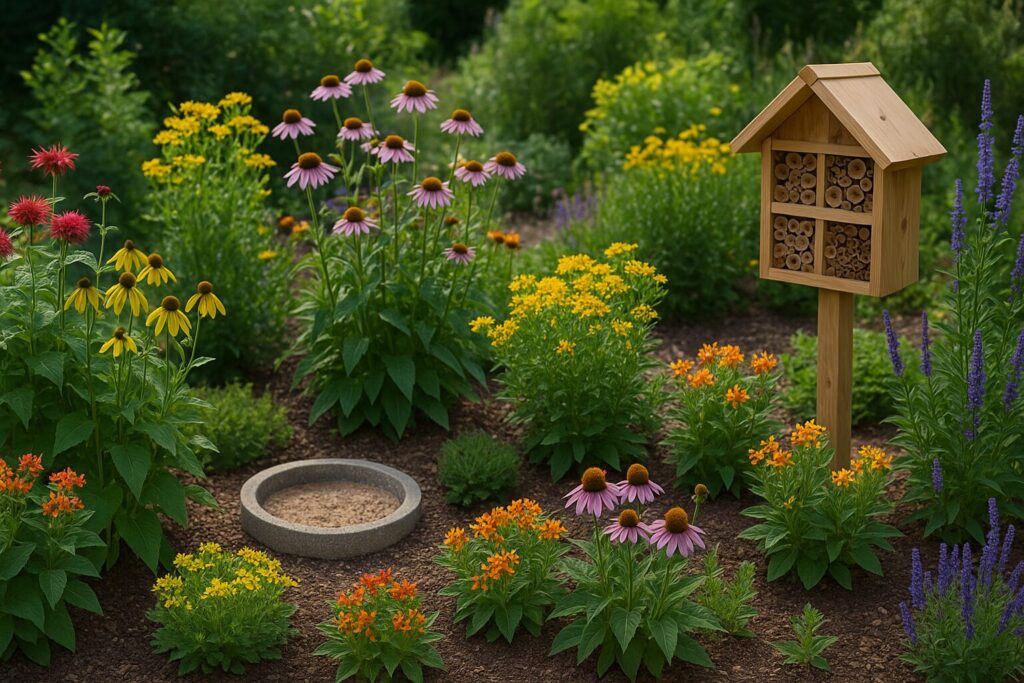
A pollinator garden cannot thrive without the right plants. We focus on native nectar plants, such as echinacea and black-eyed Susan, which are adapted to local climates and support a wide range of pollinators. These are paired with host plants that serve as breeding grounds and food sources for larvae, like violets for fritillary butterflies or milkweed for monarchs. This dual focus ensures that pollinators are supported at every life stage.
The installation process is as important as plant selection. We prepare soil to promote strong root systems, ensuring that plants establish quickly and require less supplemental water. By planting in cohesive groupings, we increase visual appeal and help pollinators locate food sources more efficiently. This approach not only supports wildlife but also creates striking visual patterns that make the garden both functional and beautiful.
Every pollinator garden must be tailored to its location. We begin with a full site analysis, studying soil conditions, sunlight exposure, and water availability. This information guides plant selection, ensuring species are chosen for long-term success rather than short-term impact. For instance, drought-tolerant perennials may be used in sandy soils, while moisture-loving plants thrive in shaded low areas.
Plant selection also considers seasonal succession and habitat layering. By designing a mix of canopy, shrub, and groundcover layers, we create varied microhabitats that support more species. Each plant is chosen not only for its ecological value but also for its ability to integrate aesthetically into the overall design. This method ensures the garden remains sustainable, low-maintenance, and visually cohesive for years to come.
A pollinator garden is never static, it evolves with the seasons and grows richer each year. The combination of bee hotels, butterfly puddling areas, insect habitats, and diverse plantings creates a dynamic ecosystem that sustains itself. Over time, these landscapes attract more species, increase local biodiversity, and even improve soil and water quality through natural processes.
The beauty of these gardens lies in their dual function: they are both ecological sanctuaries and stunning visual spaces. Homeowners gain a daily connection with nature, observing the rhythms of pollinators and the changes of each season. With thoughtful planning and sustainable practices, these landscapes become living environments where people and wildlife thrive together.
We specialize in helping you design pollinator gardens that support bees, butterflies, hummingbirds, and other essential wildlife while creating a beautiful and sustainable outdoor space. Our services include bee hotel and nesting site installation, butterfly-friendly garden planning, puddling area creation, hummingbird and bee-focused plant design, and site-specific plant selection that ensures year-round nectar and host availability. During your initial consultation, we’ll evaluate soil health, sun exposure, and existing habitat features to create a tailored plan that enhances biodiversity and strengthens the ecological balance of your property.
We invite you to reach out and start transforming your garden into a thriving pollinator sanctuary with Rutheo Designs’ expertise. Email us at connect@rutheodesigns.com or call (360) 844-2989. Whether you’re interested in creating butterfly habitats, integrating native nectar plants, or installing sustainable insect habitats, we’re here to guide you every step of the way.
We use cookies to improve your experience on our site. By using our site, you consent to cookies.
Manage your cookie preferences below:
Essential cookies enable basic functions and are necessary for the proper function of the website.
Google Tag Manager simplifies the management of marketing tags on your website without code changes.
Statistics cookies collect information anonymously. This information helps us understand how visitors use our website.
Google Analytics is a powerful tool that tracks and analyzes website traffic for informed marketing decisions.
Service URL: policies.google.com (opens in a new window)
Google reCAPTCHA helps protect websites from spam and abuse by verifying user interactions through challenges.
Marketing cookies are used to follow visitors to websites. The intention is to show ads that are relevant and engaging to the individual user.
Facebook Pixel is a web analytics service that tracks and reports website traffic.
Service URL: www.facebook.com (opens in a new window)
You can find more information in our Cookie Policy and Privacy Policy.